Building Tomorrow at the Speed of Now
In a world racing toward smarter, faster, and more sustainable solutions, three startups have stepped forward not just with ideas, but with execution.
Bee is turning conversation into action, transforming a simple wristband into a personal AI assistant that captures thoughts and creates clarity. In Amazon’s hands, this quiet technology could redefine how we manage time, tasks, and even our memories.
Dash Bio is taking science out of slow motion. By automating the laboratory with intelligent robotics, they’re collapsing the long and costly journey from hypothesis to healing. The result? A world where medical breakthroughs arrive not in decades, but in months.
And iRocket is proving that the sky is no longer the limit. With reusable engines and sustainable fuel, it’s not just launching rockets it’s launching access. In a renewed space race, they’re betting on cleaner propulsion and faster turnaround to get humanity one step closer to the stars.
Each of these ventures is pushing a boundary of time, of biology, of gravity.
Amazon to Acquire AI Wearables Startup Bee, Reviving Its Wearable Tech Ambitions

In a significant move that signals renewed ambitions in the wearable technology space, Amazon has announced its acquisition of Bee, a San Francisco–based artificial intelligence startup that recently gained attention for its innovative $50 AI-powered wristband. The acquisition was confirmed following a LinkedIn post by Bee’s CEO, Maria de Lourdes Zollo, who described the deal as a “pivotal milestone” in the company’s mission to transform human interaction with technology.
Founded in 2023, Bee specializes in AI-enabled wearables that combine real-time audio processing, natural language understanding, and seamless cloud integration. The company’s flagship product a sleek wristband named “Bee” listens to user conversations, transcribes them, and instantly generates to-do lists, summaries, and action points using generative AI. Marketed as a productivity enhancer for professionals and students alike, the wristband has already sold thousands of units across North America and Europe, receiving praise for its affordability and intuitive design.
While Amazon has not disclosed the financial terms of the acquisition, sources familiar with the matter suggest that the tech giant sees the deal as a strategic opportunity to re-enter the wearables space following the quiet shutdown of its previous health-tracking device, the Amazon Halo, in 2023. The Halo, which launched in 2020, struggled to gain traction amid concerns over data privacy and stiff competition from Apple and Fitbit.
Bee’s technology, however, offers Amazon a distinctly different path. Instead of focusing on health and fitness, the Bee wristband integrates AI-powered voice analysis and summarization tools capabilities that Amazon is likely to expand by leveraging its Alexa and AWS infrastructure. Analysts say this move could allow Amazon to position itself more competitively in both the AI and productivity-tech markets, especially as consumers increasingly seek AI-driven tools that blend into their everyday lives.
“Bee’s wristband represents a new category of wearables one where audio context and generative intelligence work together in real-time,” said James Walker, a tech analyst at AltSight Research. “It’s not about counting steps anymore. It’s about augmenting memory, streamlining tasks, and reducing cognitive load. Amazon acquiring Bee is a sign they’re watching where this space is headed.”
The acquisition also raises questions about data privacy and user consent issues that were central to the criticism Amazon faced with the Halo device. In her statement, Zollo addressed this directly, noting that the deal includes a shared commitment to implementing “rigorous, transparent privacy protocols” and giving users full control over their data.
Amazon’s hardware division is expected to continue developing the Bee wristband under its Devices & Services unit, with potential integrations into Alexa-enabled ecosystems already under exploration. Internal reports suggest that future versions of the device could offer tighter syncing with Amazon’s Echo products, Kindle Scribe, and even Prime Video, making the AI wearable a multifunctional tool in both personal and professional settings.
The deal has not yet received regulatory approval but is expected to close by Q4 2025. Until then, Bee will continue to operate independently, with its current team remaining in San Francisco. Zollo, who previously worked at Microsoft and OpenAI, is expected to take on a senior role within Amazon’s wearables division following the transition.
This acquisition follows a broader trend of big tech companies doubling down on AI-driven personal technology. With Apple’s recently unveiled “iNote” smart glasses and Google’s reentry into the wearable market via Pixel Fit+, Amazon’s Bee acquisition could place the company back into competitive territory this time with a sharper focus on generative AI and user productivity.
As the race for next-gen AI devices accelerates, Amazon’s latest move may prove crucial in redefining what wearable technology looks like in the second half of the decade.
Dash Bio Raises $11 Million to Revolutionize Lab Automation with AI-Driven Robotics
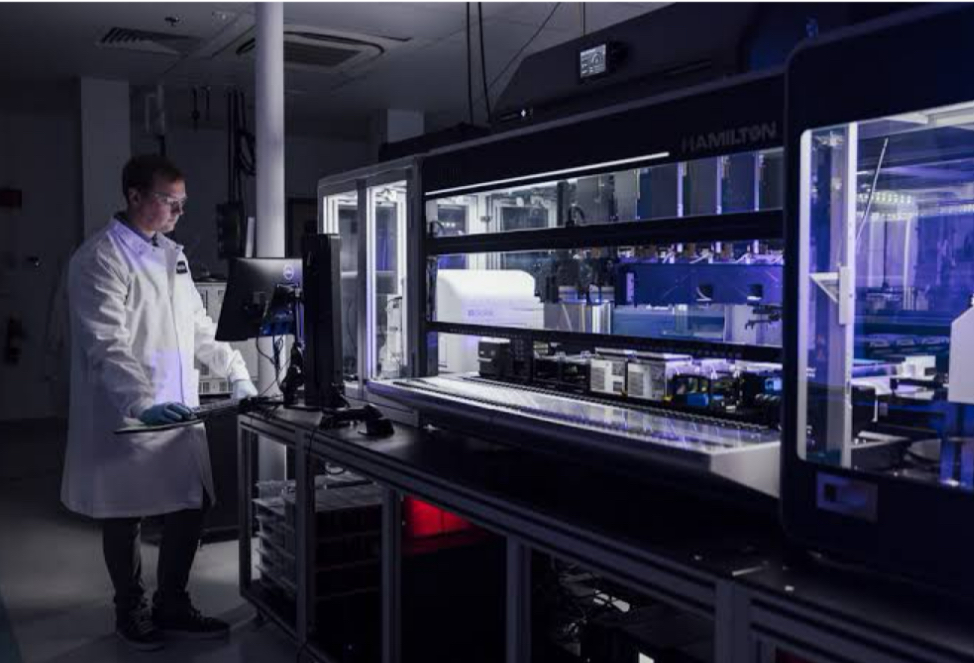
In a significant boost to the future of biotech innovation, Dash Bio, a robotics and artificial intelligence startup focused on laboratory automation, has raised $11 million in seed funding to advance its mission of streamlining drug discovery through cutting-edge automation technology. The round was led by Aligned Fund, with participation from Drive Capital, Cybernetix Ventures, and several prominent angel investors in the biotech and AI sectors.
Founded in 2024 by a team of former Moderna scientists and engineers, Dash Bio emerged in response to one of the pharmaceutical industry’s most persistent challenges: the inefficiency and bottlenecks associated with manual laboratory processes during the early phases of drug development. The startup has developed an end-to-end automation platform that combines robotics, machine learning, and real-time data processing to handle complex tasks such as clinical sample preparation, compound screening, and high-throughput analysis all without human intervention.
The company’s core product, known as DashOne, is a modular AI-powered laboratory automation system that operates with precision and speed. It has already been deployed in a pilot capacity at three pharmaceutical R&D labs in the United States, where it demonstrated the ability to reduce sample processing times by over 60% while significantly minimizing human error.
“Our vision is to accelerate the journey from molecule to medicine,” said co-founder and CEO Dr. Liana Voss, who previously led automation strategy at Moderna. “Traditional lab processes are labor-intensive and often inconsistent. By combining robotics with intelligent decision-making, we can compress timelines, cut costs, and ultimately bring life-saving treatments to market faster.”
According to Dash Bio, the $11 million funding will be used to expand engineering and scientific talent, scale up production of the DashOne system, and increase its deployment across biotech firms and academic research institutions. The company also plans to invest in the development of a second-generation platform, DashTwo, which will incorporate self-correcting algorithms and integration with cloud-based drug discovery databases.
Investors backing Dash Bio see its offering as a critical solution for the evolving demands of the pharmaceutical and biotech sectors, particularly in a post-pandemic world where agility, precision, and scale are more important than ever.
“Dash Bio is uniquely positioned at the intersection of robotics and bioscience,” said Marcus Lin, general partner at Aligned Fund. “We believe they’re building the technological foundation for the next decade of therapeutic innovation. Their team has deep domain expertise, and their vision for intelligent lab automation aligns perfectly with where the industry is headed.”
Cybernetix Ventures, known for backing early-stage robotics companies, echoed that sentiment. In a statement, they described Dash Bio as “a high-impact startup addressing one of the most critical inefficiencies in life sciences today.”
Industry analysts note that the lab automation market, currently valued at over $6 billion, is projected to grow rapidly, driven by demand for faster research cycles, rising R&D costs, and a global push for decentralized clinical trials. Dash Bio’s platform arrives at a time when pharmaceutical companies are aggressively seeking tools to reduce delays and improve accuracy in pre-clinical development.
While still in its early stages, Dash Bio’s traction has been notable. In addition to the pilot partnerships, the company has secured letters of interest from two top-10 pharmaceutical firms and is in discussions with leading academic institutions to automate parts of their genomics and proteomics workflows.
With this fresh capital, Dash Bio is expected to double its team size by early 2026 and open a new R&D facility in Boston, Massachusetts, where it is currently headquartered.
As AI continues to reshape every facet of healthcare and life sciences, Dash Bio’s technology could become an essential pillar in the future of drug development bridging the gap between discovery and delivery with speed, intelligence, and surgical precision.
iRocket to Go Public via $400M SPAC Merger Amid Renewed Investor Interest in Commercial Space

In a bold step toward accelerating its commercial space ambitions, Innovative Rocket Technologies, Inc. (iRocket) has announced that it will go public through a $400 million merger with special purpose acquisition company (SPAC) BPGC Acquisition Corp. The transaction, expected to close in the fourth quarter of 2025, marks one of the largest space-related SPAC deals since the 2021 boom and signals a potential revival of investor appetite in the new space economy.
Founded in 2021 and based in Long Beach, California, iRocket is a next-generation aerospace startup specializing in the development of fully reusable launch systems powered by liquid oxygen (LOX) and methane a cleaner, more sustainable fuel alternative that has gained traction in recent years. The company’s focus is on creating efficient, low-cost, and environmentally-conscious launch vehicles that serve both commercial and government customers seeking to place satellites and cargo into low Earth orbit (LEO).
At the heart of iRocket’s technology is its Shockwave Engine, a LOX-methane propulsion system designed for full reusability, minimal refurbishment, and rapid turnaround between launches. The engine has successfully completed multiple static fire tests and is slated for its first orbital demonstration flight in early 2026. iRocket claims that its system could reduce launch costs by over 40% compared to traditional expendable rockets, placing it in direct competition with legacy providers and newer players like SpaceX and Rocket Lab.
“Our mission is to build the most sustainable and cost-efficient launch systems in the industry,” said iRocket CEO and founder Asher Monroe during a press conference announcing the merger. “With this transaction, we gain the capital and public market access needed to accelerate engine testing, ramp up production, and expand our launch services globally.”
The $400 million deal includes a mix of cash in trust from BPGC Acquisition and additional PIPE (private investment in public equity) commitments from institutional investors who see long-term value in space infrastructure and technology. The merger will result in iRocket being listed on the NASDAQ under the ticker symbol IROC.
The timing of the deal is notable. While SPAC transactions cooled significantly in 2023 and 2024 due to regulatory tightening and underwhelming post-merger performances, 2025 has seen a modest rebound in interest particularly in sectors tied to defense, climate tech, and space exploration. Analysts point to iRocket’s focus on reusability and its ties to clean propulsion as key differentiators in a crowded field.
“This merger puts iRocket in a strong position to compete in a market that is expanding rapidly,” said Kaitlyn Evers, aerospace sector analyst at Orion Research. “Their LOX-methane engine tech is more than a buzzword, it’s a scalable solution that meets the future demand for sustainable, repeatable space launches.”
iRocket has also secured several key contracts ahead of its public debut. These include a development agreement with the U.S. Space Force for orbital debris mitigation and a commercial launch services agreement with HorizonSat, a global satellite communications firm. The startup has also received interest from academic and research institutions seeking small payload deployment capabilities.
The proceeds from the SPAC merger will be allocated toward expanding iRocket’s 200,000-square-foot manufacturing facility in California, completing orbital flight testing of its first reusable vehicle (code-named IR-1), and hiring top engineering talent. The company currently employs around 120 people and plans to double its workforce within 18 months.
If successful, iRocket’s public listing could boost confidence in a commercial space market that continues to attract innovation, despite challenges such as geopolitical tensions, supply chain instability, and fluctuating launch demand. It may also inspire renewed interest in SPACs as a viable funding route for capital-intensive sectors like aerospace and defense.
As the deal heads toward regulatory approval and shareholder vote, all eyes will be on iRocket’s ability to deliver on its technological milestones and position itself as a serious competitor in the space launch industry. With its focus on sustainability, reusability, and next-gen propulsion, iRocket is making a calculated bet on the future of space and inviting public investors to come along for the ride.