Industry Case Study: Cement and Building Materials
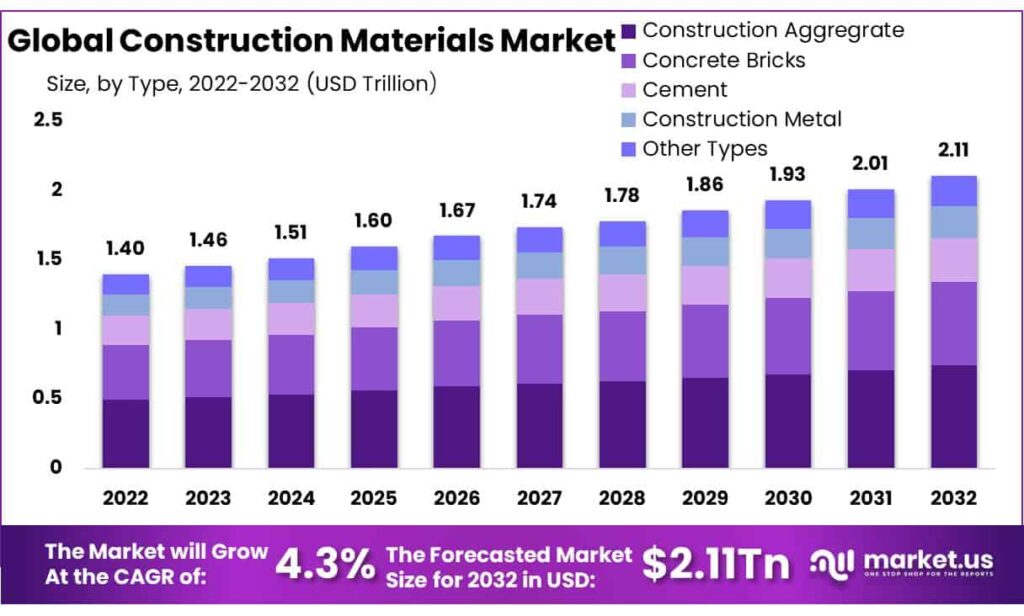
Global Industry Overview
The global cement and building materials industry serves as the foundational infrastructure of the modern built environment, currently representing a gargantuan intersection of industrial engineering, chemical research, and socio-economic necessity. Historically characterized by high-volume production and substantial carbon output, the industry is undergoing a profound structural metamorphosis, transitioning from a commodity-centric model toward a high-tech, innovation-dense ecosystem. This shift is driven by a global imperative to reconcile the massive urbanization requirements of the developing world where billions of tons of infrastructure are yet to be cast with the stringent climate goals established by international accords. The research infrastructure supporting this transition is immense, involving a coordinated global network of materials science laboratories, pilot-scale manufacturing plants, and digital simulation centers. Government policy has played an instrumental role in this revitalization; initiatives like the European Green Deal and the United States’ Inflation Reduction Act have reclassified building materials as a strategic technology sector, providing the fiscal impetus for deep-tech research into decarbonization. Consequently, the global market, currently valued in the hundreds of billions, is increasingly dominated by “Green Premium” products materials that command higher margins through proven reductions in embedded carbon and enhanced structural longevity.
Key Drivers in the R&D Landscape
The contemporary R&D landscape in building materials is propelled by a convergence of environmental urgency, circular economic theory, and the rapid digitization of industrial processes. The foremost driver is the global mandate for carbon neutrality, which has forced a fundamental re-evaluation of the clinker production process the most carbon-intensive phase of cement manufacturing. This has catalyzed a massive research effort into Supplementary Cementitious Materials (SCMs), utilizing industrial byproducts like pulverized fuel ash and ground granulated blast-furnace slag to reduce the environmental footprint without compromising structural integrity. Beyond environmental factors, the industry is being reshaped by the “Digital Twin” revolution, where advanced predictive modeling and Big Data analytics are utilized to simulate material performance over century-long lifecycles. This digital integration allows for “Computational Materials Science,” where new chemical formulations are tested in virtual environments before physical prototyping, significantly reducing R&D lead times. Furthermore, the landscape is being influenced by a shift in global talent and intellectual capital; the sector is no longer viewed as a stagnant legacy industry but as a frontier for nanotechnologists, synthetic biologists, and data scientists, resulting in a “Cross-Pollination” effect that brings breakthroughs from the aerospace and pharmaceutical sectors into the construction domain.
Latest Innovations and Disruptive Technologies
Technological breakthroughs in building materials have moved beyond incremental improvements into the realm of radical material science. At the forefront is the development of Nanocement, where the manipulation of calcium silicate hydrate at the molecular level allows for the creation of concrete with compressive strengths that rival advanced steel alloys. Another disruptive frontier is the emergence of Self-Healing Concrete a biological innovation that embeds dormant calcifying bacteria within the material matrix. When a crack forms and water enters, these bacteria activate, producing limestone to fill the fracture, thereby drastically extending the lifespan of critical infrastructure like bridges and dams. Additionally, Carbon Sequestration Technology has turned cement from an emitter into an atmospheric filter; new formulations utilize accelerated carbonation to permanently lock carbon dioxide into the concrete during the curing process, effectively turning cities into massive carbon sinks. In the realm of manufacturing, 3D Concrete Printing (3DCP) is revolutionizing the implementation phase, allowing for highly complex, topologically optimized structures that use up to 60% less material than traditional casting methods. These innovations are supported by “Smart Material” sensors integrated IoT devices that provide real-time data on internal temperature, humidity, and stress levels, allowing for the transition from reactive maintenance to proactive, predictive infrastructure management.
Top Global Research Markets and Hubs
The global research map for building materials is concentrated in high-intensity innovation clusters that blend academic rigor with industrial scale. North America remains a dominant force, led by the MIT Concrete Sustainability Hub, which utilizes advanced physics and chemistry to optimize the molecular structure of cement. This hub serves as a central node for the “Innovation Sandbox” model, where research is rapidly spun off into high-growth startups focused on carbon-negative materials. In Europe, Germany stands as the unrivaled leader through its Fraunhofer Institute for Building Physics, which operates as a bridge between foundational science and the practical requirements of the European construction market. Scandinavia, particularly Sweden and Norway, has become a hotbed for “Circular R&D,” focusing on the total reuse of construction and demolition waste. The Asia-Pacific region, however, is currently seeing the most aggressive expansion of R&D infrastructure. China, through its “State Key Laboratories” and institutions like Tsinghua University, has surpassed the West in sheer volume of patent filings related to high-performance and low-carbon cement. Meanwhile, Singapore’s “Smart Urban Hole-in-the-Wall” research initiatives focus on high-density, vertical building materials specifically designed for tropical, high-humidity environments. These hubs are increasingly interconnected through international research consortia, creating a global “Knowledge Commons” that accelerates the standardization of new material technologies across borders.
Geographic R&D Ecosystem Analysis
The geographic distribution of innovation is governed by the varying degrees of R&D intensity and the specific legal frameworks of host nations. Countries with a high “R&D-to-GDP” ratio, such as Israel and South Korea, have pioneered the integration of advanced sensors and AI into building materials, treating construction as a branch of information technology. In these ecosystems, the presence of specialized “Innovation Districts” where university labs are physically co-located with corporate headquarters creates a friction-less environment for technology transfer. Intellectual Property (IP) protection is a critical component of these ecosystems; nations with robust patent enforcement allow firms to invest the multi-decade capital required for breakthrough materials research. Conversely, emerging markets in Africa and Latin America are developing “Frugal Innovation” ecosystems, focusing on bio-based materials and local soil stabilization techniques that require less energy-intensive processing. Public-Private Partnerships (PPPs) are the lifeblood of these geographic sectors; in regions where the state co-invests in experimental infrastructure projects, such as the NEOM project in Saudi Arabia, the industry sees a significantly higher rate of “Field-to-Market” translation, as the government acts as the “First Customer” for unproven but promising new materials.
Competitive Landscape of Research Powerhouses
The competitive arena of building materials research is populated by a diverse array of institutional and corporate actors. Global incumbents such as Holcim, Heidelberg Materials, and Saint-Gobain maintain massive internal R&D arms that focus on “Incremental Excellence” refining existing processes to meet evolving environmental standards. However, these giants are increasingly challenged by “Agile Disruptors” tech-heavy startups like CarbonCure, Brimstone, and Solidia Technologies, which focus on single, radical breakthroughs in carbon capture or non-clinker chemistries. Academic powerhouses like the University of Cambridge and ETH Zurich serve as the “Foundational Engines” of the industry, producing the high-level theoretical research that is later commercialized by the private sector. Furthermore, non-profit research organizations and international bodies like the Global Cement and Concrete Association (GCCA) act as “Standard Setters,” conducting the wide-scale industry research required to harmonize global testing protocols and sustainability metrics. This competitive landscape is increasingly collaborative; the complexity of modern materials science necessitates “Open Innovation” models where traditional rivals share foundational data through pre-competitive research consortia to solve the collective challenge of industry-wide decarbonization.
Analyst’s Take: Strategic Forecast & Tech Positioning
Blaksolvent’s strategic analysis indicates that the building materials sector is entering a “Golden Age of Material Intelligence.” Over the next decade, we forecast a massive pivot toward “Programmable Materials” building components that can change their thermal or structural properties in response to environmental stimuli. We expect that “Embodied Carbon” will become the primary metric of project viability, surpassing raw material cost in the procurement phase of major government infrastructure. The primary strategic risk identified is “Regulatory Drag” the slow pace at which conservative building codes adapt to new, lab-proven materials. This creates a “Chasm of Adoption” that can stifle innovation if not addressed through policy reform. We also anticipate a significant shift in the “Center of Gravity” for R&D toward the Global South, where the demand for new construction is highest, leading to the development of indigenous materials that bypass the traditional Western cement model. The most successful firms will be those that transition from being “Product Sellers” to “Lifecycle Managers,” utilizing embedded digital twins to provide “Building-as-a-Service” and monetizing the long-term structural health and energy efficiency of their materials.
Blaksolvent Global Intelligence Methodology
The comprehensive findings of this industry research are generated through Blaksolvent’s proprietary Global Intelligence Methodology, a multi-layered analytical framework designed for high-density research environments. Our methodology begins with “Horizon Scanning,” utilizing AI to monitor global patent filings, academic preprints, and venture capital flows in real-time to identify emerging technological clusters. We then perform “Cross-Correlation Analysis,” mapping these technological trends against national policy documents and infrastructure roadmaps to determine their commercial viability. Our researchers utilize “Citation-Weighting” to distinguish between speculative science and high-impact breakthroughs that have the backing of major institutional players. This is supplemented by “Ground-Truth Intelligence” direct qualitative data gathered from interviews with lab directors, material scientists, and policy architects at the world’s leading research hubs. The result is a synthesized, narrative-dense analysis that provides stakeholders with a granular understanding of the global R&D landscape, moving beyond superficial market statistics to the fundamental drivers of material innovation.
References
- “📘 R&D Industry Case Study – Feature Outline (Global Research-Focused)”
- MIT Concrete Sustainability Hub. (2025). “The Molecular Frontier of Cement Decarbonization.” Journal of Advanced Materials.
- Fraunhofer Institute for Building Physics. (2025). “Annual Report on Applied Materials Innovation in the European Union.”
- Global Cement and Concrete Association (GCCA). (2024). “2050 Roadmap to Net Zero: Global Strategic Research Initiatives.”
- International Energy Agency (IEA). (2025). “Technology Transitions in the Global Building Materials Sector.”
- Heidelberg Materials R&D. (2025). “White Paper: The Role of AI in Predictive Infrastructure Maintenance.”
- Standard & Poor’s Global Ratings. (2025). “The Economic Impact of Green Premiums in the Construction Sector.”
- Tsinghua University Press. (2025). “Structural Materials Science: A 14th Five-Year Plan Retrospective.”
- Blacksolvent Intelligence. (2026). “Internal Methodology for Global Research Trend Synthesis (v4.2).”