BLACKSOLVENT NEWS. 5TH AUGUST, 2025
Across Borders, the Fight for Humanity
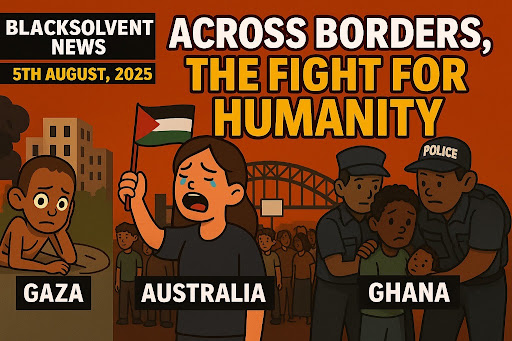
In Gaza, children too weak to walk are dying before food reaches them. In Australia, a bridge became a river of voices, crying out before there is “no Palestine left to recognise.” In Ghana, 82 human beings; boys, girls, young women, were pulled from the hands of traffickers, their futures rewritten in the space between violence and rescue.
Different worlds, same truth: dignity is under siege.
Gaza’s skies burn while hunger eats at the living. Political leaders speak of “solutions” but hesitate at the edge of action. And in the shadows of fishing boats and brothels, the trade in human lives thrives when no one is looking.
These are not just news stories. They are proof that injustice is borderless, and so must be our courage. Whether it’s marching in the streets, breaking chains on the lake, or refusing to be silent in the face of war crimes, change only comes when humanity refuses to turn away.
Because somewhere, right now, the difference between life and death still depends on whether the world is watching, and whether it will finally act.
Death Toll Mounts as Israel Expands Air and Ground Assaults in Gaza
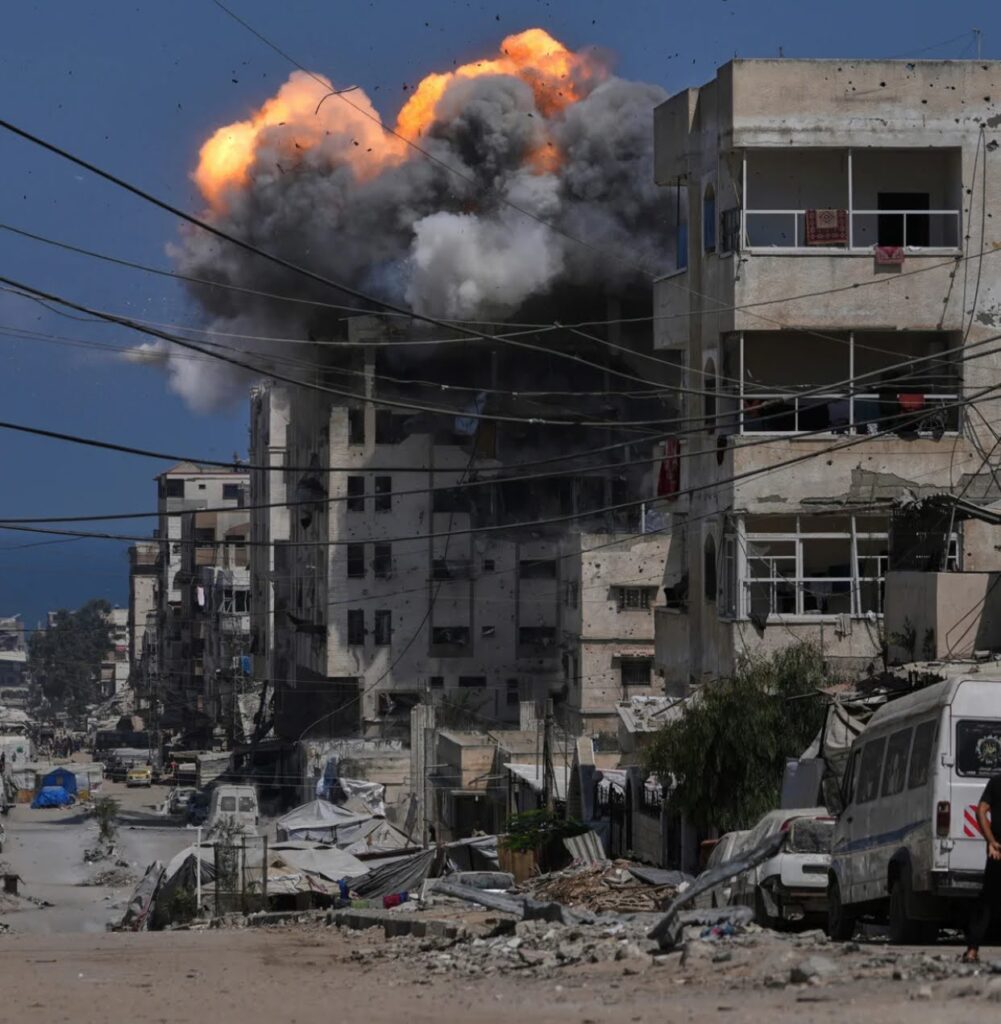
The humanitarian crisis in Gaza has entered a new phase of devastation, as Israeli forces intensify their ground and aerial assaults across the besieged enclave. On Monday alone, at least 74 Palestinians were killed, including 36 individuals reportedly shot while trying to access humanitarian aid, according to medical sources on the ground.
Israeli military operations have continued to escalate, with widespread bombardment targeting areas in the north and south of Gaza, leaving communities reeling under relentless fire. The strikes have not only decimated infrastructure but also created an environment where aid delivery is increasingly perilous and, in many cases, lethal.
A Region on the Brink of Collapse
According to Gaza’s Government Media Office, Israel is permitting only 86 trucks of humanitarian aid per day, a mere 14% of the 600 daily trucks required to meet even the most basic needs of the population. Food, clean water, medicine, and fuel are in dire shortage, pushing Gaza’s civilian population further into survival mode.
“People aren’t dying just from bombs anymore, they’re dying from hunger, thirst, and despair,” said a local aid coordinator.
"Blood Aid": The Risk of Receiving Help
A recent report from the Danish Refugee Council (DRC) has painted an alarming picture of the human cost of this blockade and ongoing violence. A survey conducted between May 22 and July 27 revealed that 70% of Palestinians in key areas, including Deir el-Balah, Khan Younis, Gaza City, and North Gaza, are suffering from severe weakness caused by starvation.
Most cannot walk long distances to distribution points, and even when aid is within reach, it often comes at the cost of life and limb.
Interviewees spoke of witnessing soldiers deliberately targeting civilians during aid distributions. The violence has led some to describe humanitarian supplies as “blood aid” , a chilling term capturing the lethal risks associated with trying to survive.
Key findings from the DRC survey include:
46% of respondents reported access to clean drinking water only twice a week.
28% received a hot meal just once a week.
31% had not received any services in the month prior to being interviewed.
Mounting Casualties and Growing Outcry
To date, at least 60,933 Palestinians have been killed and 150,027 wounded since the conflict began. In Israel, the initial October 7, 2023, attacks claimed 1,139 lives and resulted in more than 200 hostages taken by Hamas.
International observers have increasingly raised alarms over what they call the systematic targeting of civilians and infrastructure critical to survival.
Hamas: “A Crime Against Humanity”
Senior Hamas official Osama Hamdan condemned the siege, referring to Israel’s tactics as “engineered starvation” and accusing the Israeli government of committing genocide. He called on the international community to intervene before Gaza’s population faces irreversible destruction.
“This is not a military campaign, it’s a deliberate erasure of a people. What more needs to happen before the world says, ‘Enough’?” Hamdan said in a press briefing.
A Bleeding Lifeline
As violence intensifies, the humanitarian lifeline to Gaza grows thinner by the day. International aid groups warn that without a dramatic increase in access and protection for humanitarian operations, famine-like conditions could become widespread in the coming weeks.
Civilians, aid workers, and medical professionals continue to bear the brunt of a crisis that shows no signs of abating, while diplomatic resolutions remain out of reach.
“No Palestine Left to Recognise”: Australia Confronts Public Outcry Over Gaza War
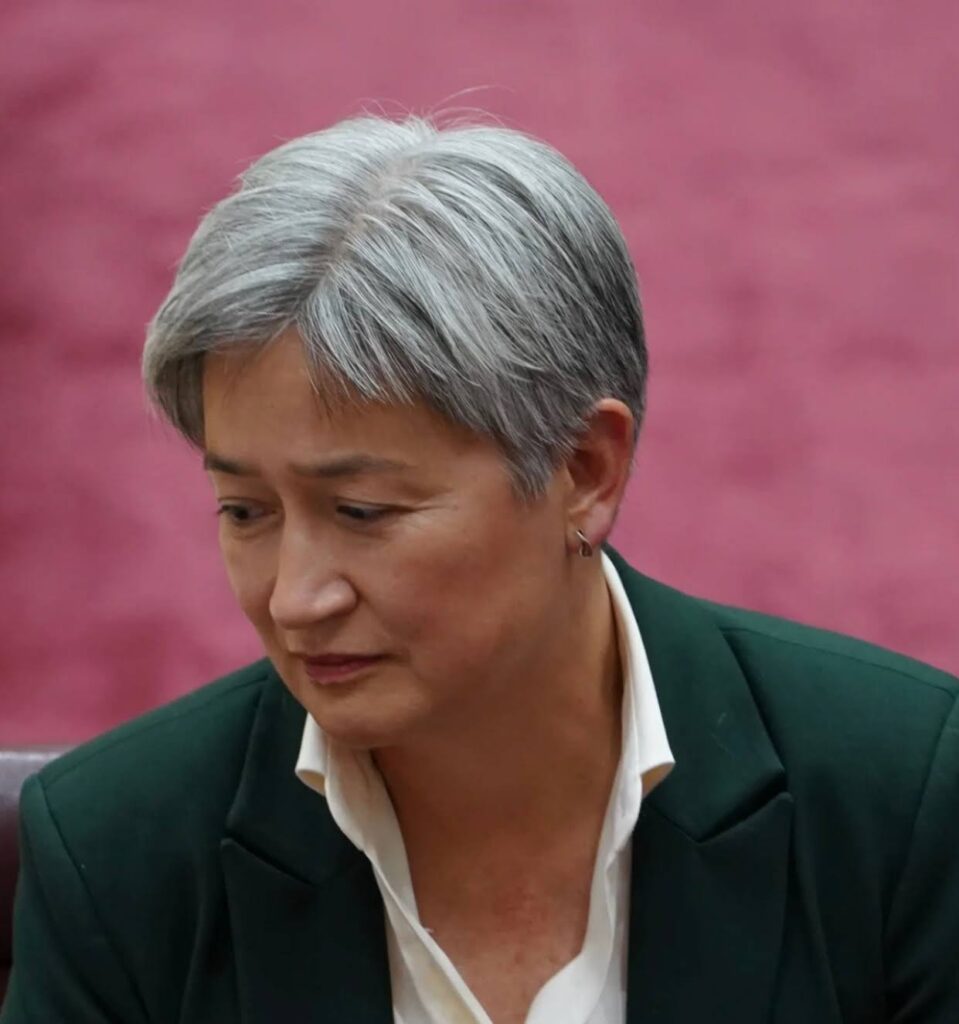
As Israel’s military campaign in Gaza intensifies and violence surges in the occupied West Bank, Australia is facing rising domestic pressure to act. In a statement that captured global attention, Foreign Minister Penny Wong warned that “there is a risk there will be no Palestine left to recognise”a rare acknowledgment of the scale of devastation unfolding in Gaza.
Speaking to the Australian Broadcasting Corporation (ABC) on Tuesday, Wong expressed sympathy for the hundreds of thousands of Australians who took to the streets over the weekend, demanding an end to Israel’s offensive. However, she stopped short of announcing any immediate policy shifts, particularly regarding sanctions or the formal recognition of Palestinian statehood.
Sydney Bridge Becomes a Symbol of Protest
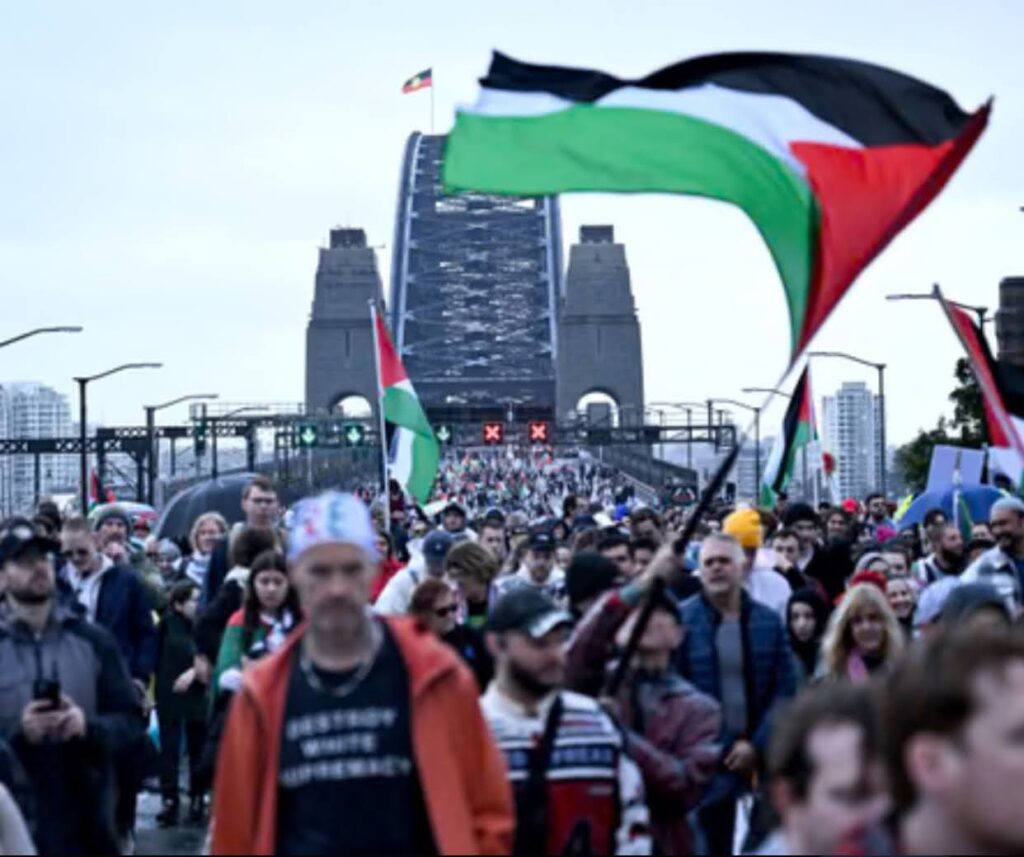
An estimated 200,000 to 300,000 people crossed the iconic Sydney Harbour Bridge in a mass march for Gaza on Sunday, one of the largest political demonstrations in Australia’s recent history. Protesters denounced Israel’s assault on Gaza and criticized the Australian government’s perceived inaction.
Though initial police estimates placed the crowd at 90,000, organizers said the true turnout reflected deep public frustration with the ongoing war, which has now claimed over 60,900 Palestinian lives, with more than 150,000 wounded.
Government Under Growing Scrutiny
Wong acknowledged the protest as a reflection of “the Australian community’s horror”over “the catastrophic humanitarian situation” in Gaza, including the deaths of women and children and the denial of humanitarian aid.
However, she maintained the government’s strategic silence on possible future sanctions, stating:
“We don’t speculate on sanctions… they have more effect if they are not flagged.”
Australia has so far imposed limited sanctions, targeting two far-right Israeli ministers, Itamar Ben-Gvir and Bezalel Smotrich, as well as certain extremist settlers, but has yet to move further.
On Palestinian statehood, Wong reiterated her previous statement:
“It’s a matter of when, not if.”
Yet, unlike France, Spain, Norway, and Canada, Australia has not officially joined the growing number of countries recognizing a Palestinian state.
Calls for Accountability, Not Just Rhetoric
Critics say the time for talk is over.
Rawan Arraf, head of the Australian Centre for International Justice, argued that Prime Minister Anthony Albanese should end Australia’s arms trade with Israel and push for international legal accountability.
“The only business Albanese should be discussing with Netanyahu is Netanyahu’s one-way trip to the International Criminal Court,”she posted on X.
Albanese, who has confirmed his intent to speak with Israeli Prime Minister Benjamin Netanyahu, has insisted Australia remains committed to a two-state solution. He also held a phone call with Palestinian Authority President Mahmoud Abbas on Tuesday, their first publicly recorded call in over eight months.
Rising Tensions Inside Labor Party
Despite the Labor government’s diplomatic posture, internal tensions are mounting. Several Labor ministers joined Sunday’s protest, defying efforts by the **New South Wales Labor-led government to block the march.
Only a last-minute court ruling by Justice Belinda Rigg allowed the protest to proceed, declaring the march “motivated by the horror and urgency of the situation in Gaza” and backed by substantial public support.
Independent journalist Antony Loewenstein, who spoke at the rally, summed up the national mood:
“Australians are outraged, not just by what Israel is doing, but by the Australian government’s complicity.”
He noted that Australia is part of the global supply chain for F-35 fighter jets, which Israel uses in daily bombardments over Gaza.
“Parts of those planes are likely coming from Australia,” Loewenstein added.
A Defining Test for Australia’s Moral Standing
As civilian casualties mount in Gaza and international outrage grows, Australia’s balancing act, between alliance commitments and rising public demand for action, is becoming increasingly untenable.
Penny Wong’s warning may have been stark, but to many, it’s still not enough. The world is watching, and for Australians demanding accountability, the question remains:
Will their government step beyond words, or be remembered for silence?
82 Human Trafficking Victims Rescued by Challenging Heights and Ghana Police in 2025
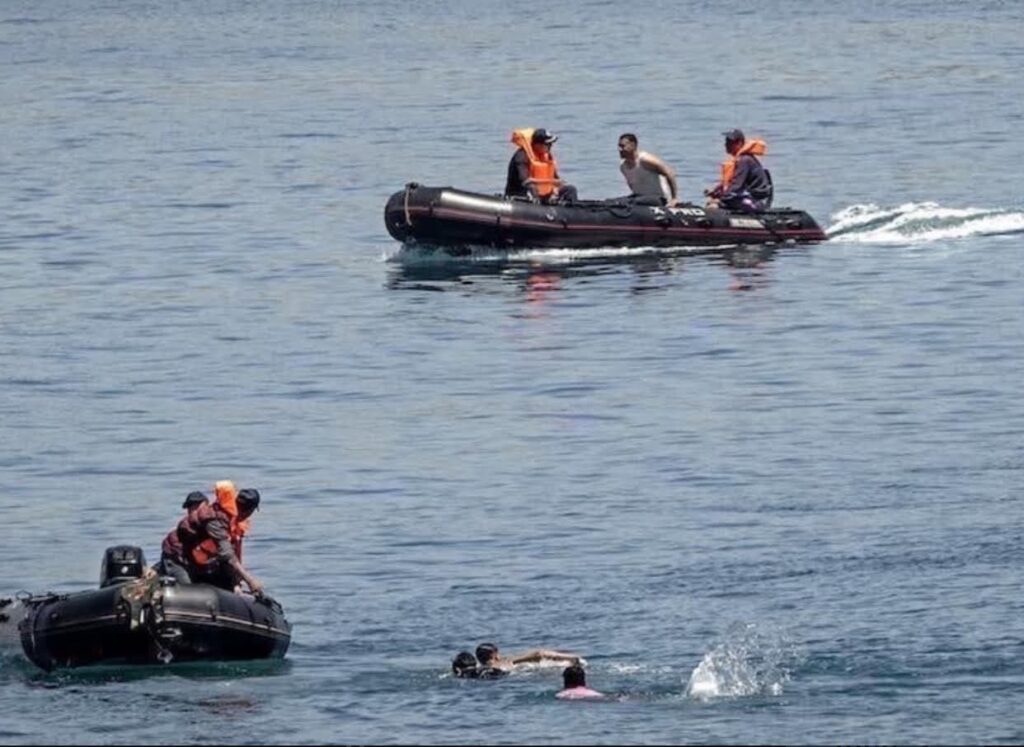
Accra, Ghana. In a significant breakthrough in the fight against modern slavery and exploitation, Challenging Heights, a leading Ghanaian human rights organization, has announced the successful rescue of 82 human trafficking and forced labor victims since the beginning of 2025. The operation, carried out in close collaboration with the Ghana Police Service, underscores the growing urgency to address the entrenched systems of child labor and sexual exploitation across West Africa.
Children Freed from the Grip of Lake Volta’s Fishing Industry
Among those rescued are 57 children, comprising 31 boys and 26 girls, many of whom were found enslaved within the fishing industry along Lake Volta, one of the largest man-made lakes in the world and a known hotspot for child trafficking and forced labor.
“These children were subjected to harsh, dangerous conditions and robbed of their childhoods,” said Dr. James Kofi Annan, President of Challenging Heights. “Our collaboration with law enforcement has once again saved lives, but this is only the beginning. There are still thousands more in need.”
Each of the 57 Ghanaian child victims is now receiving rehabilitation, psychosocial support, and access to formal education, as part of Challenging Heights’ holistic reintegration program.
Cross-Border Victims of Forced Prostitution Rescued
In a separate but connected operation, 25 Nigerian girls were identified as victims of cross-border trafficking for commercial sexual exploitation. These young women had been lured or coerced into forced prostitution and were found in various locations within Ghana.
All 25 survivors have since been safely repatriated to Nigeria, following collaboration between Challenging Heights, Ghanaian authorities, and Nigerian counterparts.
A Legacy of Advocacy and Action
Founded by Dr. James Kofi Annan, himself a survivor of child trafficking, Challenging Heights has spent the past two decades working to dismantle the trafficking networks that target vulnerable children and women in Ghana and beyond.
The organization operates Ghana’s largest rehabilitation shelter for trafficking survivors, and has, since its inception, rescued thousands of children from exploitation in sectors such as fishing, mining, domestic servitude, and agriculture.
In this year’s milestone, Dr. Annan lauded the Ghana Police Service and particularly the Criminal Investigations Department (CID) for over 20 years of unwavering partnership.
“This work cannot be done alone,” he said. “We are grateful for the relentless efforts of law enforcement in combatting human trafficking alongside us.”
Modern Slavery: A Global and National Crisis
According to the Global Slavery Index, more than 49.6 million people worldwide are trapped in modern slavery, a term that includes both human trafficking and forced labor. Of that number, over 91,000 are estimated to be in Ghana alone.
Lake Volta, a focal point in Ghana’s trafficking crisis, is believed to harbor more than 21,000 children engaged in forced labor within its vast fishing industry. These children face hazardous conditions, physical abuse, and deprivation of education and family life.
A Call to Government: Funding, Reform, and Accountability
As Ghana prepares its 2026 national budget, Challenging Heights is urging the Minister of Finance to allocate a minimum of GHS 20 million to the Human Trafficking Fund, which supports survivor care, law enforcement efforts, and public education.
“Fighting trafficking is not just about rescue, it requires sustained investment in prevention, rehabilitation, and justice,” Dr. Annan emphasized.
He also issued a public appeal to the Minister of Gender, Children and Social Protection, calling for the amendment of Ghana’s Human Trafficking Act of 2005 to align with current realities and threats, including cross-border trafficking and digital exploitation.
Legal Framework and Public Responsibility
Under Ghanaian law, human trafficking is a criminal offence punishable by 5 to 25 years in prison. However, enforcement remains a challenge, and community involvement is crucial to preventing new cases from emerging.
Dr. Annan concluded with a strong message to the public:
“We urge every Ghanaian to reject practices that contribute to trafficking, whether through child labor, false recruitment, or silence in the face of exploitation. This is a national emergency that demands collective action.”
About Challenging Heights
Challenging Heights is a Ghana-based, survivor-led non-governmental organization (NGO) that works to protect children’s rights and end child trafficking. The organization focuses on prevention, rescue, rehabilitation, and advocacy, and operates Ghana’s largest shelter for rescued trafficking victims.