Bridging Gaps, Building Futures: The Unfinished Story of Startup Capital
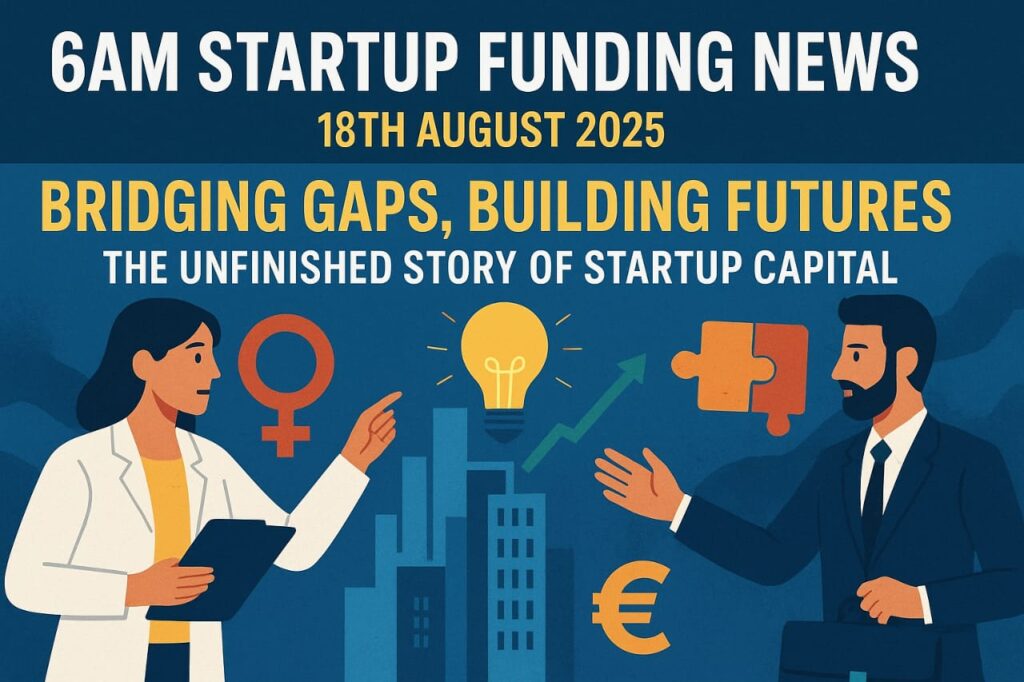
In the swirling currents of global finance, three stories emerge that reveal both the promise and the paradox of modern investment. The Gates Foundation’s $2.5 billion bet on women’s health may seem like a historic step forward, yet the shadow of the gender gap in research and funding still lingers. Across Europe, Genow is quietly tackling a problem that affects every knowledge-driven business: the fragmentation of corporate intelligence. With just €1.65 million, they are not just raising capital, they are raising efficiency standards for the way companies remember, connect, and grow. And in Milan, Bending Spoons, already a household name in app development, is reaching for the public markets, armed with over €500 million in debt financing, a bold move that signals both ambition and risk. Together, these stories highlight a new era of funding where philanthropy, seed-stage ambition, and late-stage IPO preparation all intersect. The common thread is clear: money may fuel innovation, but vision and the courage to address systemic gaps is what will ultimately determine impact. These headlines are not isolated updates; they are chapters of a larger narrative on how capital shapes the world we want to live in.
Gates Foundation’s $2.5B Women’s Health Push Exposes the Persistent Gender Gap

The Bill & Melinda Gates Foundation has announced a staggering $2.5 billion commitment to women’s health over the next decade, a move that underscores both the urgency of the issue and the inadequacy of current global investment in women’s well-being. While the sum is historic in scale, experts argue it still scratches the surface of what is required to bridge one of medicine’s most persistent divides: the gender gap in research, treatment, and funding.
For decades, women’s health has been marginalized within mainstream medicine. Clinical trials historically excluded women or failed to consider gender differences in biology and physiology, leading to a landscape where diseases that disproportionately affect women remain understudied. From endometriosis to maternal mortality, the gaps are wide and the stakes are life-and-death. According to the World Health Organization, less than 2% of global healthcare research is dedicated specifically to female conditions, a shocking figure when juxtaposed against women making up more than half of the world’s population.
The Gates Foundation’s investment aims to turn the tide, focusing on areas like reproductive health, maternal care, contraception access, and innovation in women-specific treatments. The funds will also support scientific studies designed to close knowledge gaps that undermine women’s care across continents. Speaking at the announcement, Melinda French Gates highlighted the urgency: “When women are healthy, families are healthy. When women thrive, societies thrive. Yet, for far too long, women have been overlooked by the very systems designed to protect them.”
However, critics warn that philanthropy alone cannot solve systemic bias. Dr. Sharmila Rao, a global health policy analyst, notes that unless governments prioritize gender equity in healthcare budgets, the impact of even $2.5 billion will remain limited. “Philanthropy can catalyze change,” she argues, “but the deeper problem lies in structural inequality. Women’s health should not depend on charitable funding; it must be baked into the DNA of healthcare systems.”
The gender health gap is not just a medical issue, it is economic. Research shows that closing health disparities could add trillions to global GDP by boosting female participation in the workforce. Poor reproductive health outcomes and untreated chronic conditions rob economies of productivity and force women to shoulder disproportionate caregiving burdens.
The Gates Foundation is betting big that targeted funding will spark both innovation and awareness. Still, the initiative raises the uncomfortable question: Why did it take until 2025 for one of the world’s richest philanthropic organizations to make women’s health a headline cause? The billions are a start, but whether they can ignite lasting structural change remains to be seen.
Genow Secures €1.65M to Solve Corporate Knowledge Chaos

In a digital age where companies are drowning in information yet starving for clarity, French startup Genow has raised €1.65 million to tackle a problem that haunts boardrooms and Slack channels alike: knowledge fragmentation.
At its core, Genow is building a platform that organizes, centralizes, and makes corporate knowledge usable. Think of it as a living, breathing knowledge brain for organizations, a way to ensure that insights don’t vanish when employees leave, projects end, or teams shift focus. This is not just about information management; it’s about protecting intellectual continuity, a challenge that costs companies billions annually in inefficiency and duplicated effort.
The round was backed by early-stage investors who see the growing demand for solutions in the “knowledge economy.” Remote and hybrid work environments have only worsened the problem. With teams spread across geographies and communication scattered across multiple tools, emails, chats, project boards, the average employee spends nearly 30% of their time simply searching for information they need to do their job. That’s not just wasted time, it’s wasted money.
Genow’s founders, veterans of enterprise software, argue that the existing tools like SharePoint, Google Drive, and Notion, while useful, do not solve the fragmentation issue at scale. Their platform promises AI-powered search, context preservation, and adaptive learning, so that companies not only store knowledge but also surface it at the right time, for the right person.
The €1.65 million seed raise will go into expanding Genow’s engineering team, enhancing its AI features, and piloting the system with major corporate clients. While modest in size compared to mega funding rounds that dominate headlines, this raise reflects the growing investor appetite for niche enterprise solutions that solve unglamorous but costly problems.
Analysts see a promising market. As businesses increasingly automate and digitize, the one resource that cannot be lost is institutional knowledge. A McKinsey report estimates that poor knowledge management costs Fortune 500 companies a staggering $31.5 billion annually. If Genow can even make a dent in this figure, its valuation could skyrocket far beyond the modest millions it currently commands.
The company faces competition, of course. Enterprise knowledge platforms are a crowded space, and giants like Microsoft and Google are not standing still. Yet, startups often have the agility to innovate where incumbents are too slow to adapt. Genow’s challenge will be to prove it can scale its technology across industries without being swallowed by a bigger fish. For now, the €1.65 million injection buys time, credibility, and a chance to redefine how companies remember.
Bending Spoons Raises €500M+ Debt as IPO Ambitions Heat Up

Milan-based app developer Bending Spoons has secured more than €500 million in debt financing, a bold move that sets the stage for a highly anticipated initial public offering. The raise is one of the largest debt financings in the European tech ecosystem this year, signaling both investor confidence in the company’s trajectory and the scale of its ambitions.
Bending Spoons is no stranger to the spotlight. Founded in 2013, the company has quietly built one of Europe’s most successful app development studios, boasting a portfolio that spans productivity, editing, and fitness. Their apps, including Splice and 30 Day Fitness, have consistently ranked among the top in global app stores, driving steady revenues and cementing the company’s reputation as a digital powerhouse.
But debt financing of this scale raises eyebrows. Unlike equity funding, where investors buy into ownership, debt is borrowed money that must be repaid with interest. Taking on half a billion euros in debt is a sign of both confidence and high stakes. It suggests that Bending Spoons is gearing up for something transformative, likely a stock market debut that requires significant liquidity to scale operations, acquire new assets, and position itself as an attractive IPO candidate.
Industry insiders speculate that the funds may also be used for strategic acquisitions. Bending Spoons has a history of snapping up undervalued digital assets and scaling them profitably. With fresh debt, it could expand aggressively in the U.S. or double down on emerging markets where app growth is still untapped.
Still, the timing of an IPO will be critical. Public markets have been volatile, with tech valuations under pressure. Going public in 2025 could either cement Bending Spoons as a European unicorn success story or expose it to the brutal scrutiny of quarterly earnings. Investors will be watching closely to see if the company can maintain growth momentum in an industry where consumer preferences change overnight.
Debt financing has become a popular strategy for late-stage tech firms seeking to avoid equity dilution while preserving ownership stakes. For Bending Spoons’ founders, it’s a gamble worth taking: maintain control, fuel growth, and ride the IPO wave at maximum valuation. But as any seasoned market watcher knows, half a billion in debt is not just a tool, it’s a ticking clock. The pressure to perform has never been higher.
Bending Spoons is betting that its proven track record, global reach, and expanding app ecosystem will outweigh the risks. If successful, its IPO could mark a watershed moment for European tech, proving that global-scale digital companies can rise from Milan as easily as from Silicon Valley.