Trade, Culture, and Conflict in a Single News Cycle
This week’s headlines revealed how power now expresses itself across very different arenas.
Economic diplomacy reshaped alliances, culture reframed global conversations, and geopolitics tested fragile ceasefires.
The US–India trade deal showed how nations are hedging against uncertainty through deeper partnerships.
Kendrick Lamar’s Grammy moment reminded the world that cultural influence often travels faster than policy.
Meanwhile, Gaza’s border reopening underscored how humanitarian steps remain tightly bound to political realities.
Together, these stories capture a world negotiating stability in real time.
US–India Trade Deal Signals a New Phase of Strategic Alignment
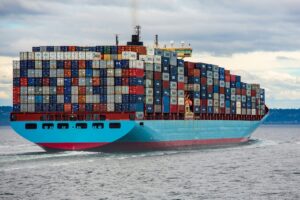
The newly announced US–India trade deal marks a significant step in the evolving economic relationship between the world’s largest and fifth-largest economies. At its core, the agreement is about reducing friction, cutting tariffs, easing regulatory barriers, and opening access across key sectors such as technology, manufacturing, defense, and energy. But beyond the numbers, the deal reflects a broader strategic calculation on both sides.
For Washington, India represents a crucial counterweight in Asia at a time when supply chains are being restructured away from overreliance on China. Strengthening trade ties is not only about commerce but about securing alternative manufacturing hubs, especially in semiconductors, pharmaceuticals, and clean energy components. For New Delhi, the deal offers increased access to US markets while reinforcing its ambition to position itself as a global manufacturing and services powerhouse.
The agreement also signals growing trust. Previous negotiations between the two countries often stalled over protectionism, data localization rules, and agricultural access. This time, both sides appear more willing to compromise, driven by shared concerns over global instability, inflationary pressures, and geopolitical competition.
Critics, however, warn that implementation will be the real test. India’s complex bureaucracy and domestic political sensitivities could slow reforms, while US lawmakers may push back on outsourcing and labor concerns. Still, the deal sends a clear message: economic partnerships are becoming strategic tools, not just growth engines.
In a fragmented global economy, the US–India trade deal stands out as an attempt to build resilience through alignment rather than isolation.
Kendrick Lamar’s Grammy Win Reinforces Culture as Global Influence

Kendrick Lamar’s latest Grammy win was more than a personal milestone, it was a cultural statement. In an era where music, politics, and social commentary increasingly intersect, Lamar’s recognition reaffirmed the power of art to shape public discourse. His work, long known for its depth and confrontation of systemic issues, continues to resonate far beyond entertainment circles.
What made this moment particularly striking was how widely it traveled. From social media debates to academic commentary, the win reignited conversations around race, inequality, mental health, and identity. Lamar’s music doesn’t simply reflect society; it interrogates it, forcing listeners to engage with uncomfortable truths.
The Recording Academy’s decision also reflects a broader shift in cultural institutions. Awards bodies, once criticized for conservatism, are increasingly acknowledging work that carries strong social narratives. In doing so, they validate culture as a legitimate arena for political and philosophical expression.
For the global audience, Lamar’s Grammy reinforces the idea that American cultural exports still wield enormous soft power, but that power is now more introspective and critical than celebratory. His influence reaches younger generations who consume music not just for pleasure but for meaning.
In a world saturated with content, Kendrick Lamar’s continued relevance shows that depth, authenticity, and storytelling still cut through noise, and that culture remains one of the most effective tools for shaping global consciousness.
Gaza Border Reopening Signals Fragile Progress Amid Ongoing Tensions

The reopening of the Gaza border has been cautiously welcomed as a humanitarian step after prolonged closures and intense conflict. For residents of Gaza, border access is not a political abstraction, it determines the flow of food, medicine, fuel, and people. Even limited reopening can dramatically affect daily life in a region under immense strain.
Officials describe the move as a confidence-building measure, aimed at easing humanitarian pressure while maintaining security oversight. Aid organizations have emphasized that sustained access is critical, warning that intermittent openings fall short of addressing long-term needs. Hospitals, already stretched thin, rely heavily on cross-border supplies, while civilians seek pathways for medical treatment and family reunification.
Politically, the reopening underscores the delicate balance between diplomacy and deterrence. Any progress remains vulnerable to breakdowns, as previous ceasefires have shown. Regional actors and international mediators continue to play a behind-the-scenes role, attempting to prevent escalation while pushing for incremental relief.
Skeptics argue that without a broader political framework, such gestures risk becoming symbolic rather than transformative. Still, for many on the ground, even small changes matter. Movement, access, and aid are tangible signs of hope in an environment defined by uncertainty.
The Gaza border reopening does not resolve the conflict, but it highlights how humanitarian actions often become the first test of whether dialogue can hold in deeply polarized conditions.