Innovation at the Crossroads of Institutions, Industry, and Imagination

The first half of 2025 has offered a compelling snapshot of how innovation is evolving across sectors and geographies. From the laser powered ambitions of Italy’s SunCubes to Saudi Arabia’s meteoric rise as MENA’s startup capital, and the ongoing challenges faced by university based founders, a common narrative emerges: innovation alone isn’t enough execution , mindset, and ecosystem matter just as much.
Saudi Arabia’s strategic investments, particularly in fintech , underscore the transformative power of state-backed venture support and a clear market vision. Meanwhile, the UAE and Egypt continue to shape a more inclusive and diversified regional startup landscape, despite persistent gender funding gaps.
In Europe, SunCubes exemplifies how frontier technology like wireless power beaming can capture investor imagination when paired with strong technical proof and market vision. Backed by institutional support from ESA BIC Milan, it shows the potential for deep tech to leap from lab to launchpad when nurtured by the right infrastructure.
But not all innovation journeys are equal. As Professor Alex Coad’s research reveals, startups born in academia often lack the commercial instincts, market literacy, and identity flexibility that fuel the success of corporate founders. Bridging this divide will require not only more accelerators and mentoring programs, but a cultural shift in how academic institutions view entrepreneurship not as an offshoot of research, but as a discipline in its own right.
Whether it’s state led scale, deep tech dreams, or scholarly startups seeking commercial relevance, 2025 has made one thing clear: the future belongs to those who can unite knowledge with market insight, vision with action, and invention with adaptability.
As capital flows, talent diversifies, and ecosystems mature, the next wave of global innovation won’t just be defined by what’s being built but by who’s building it, why, and how well they adapt when the world demands more than ideas.
Italian Startup Pioneers Laser Power Beaming for In-Flight Drone Charging
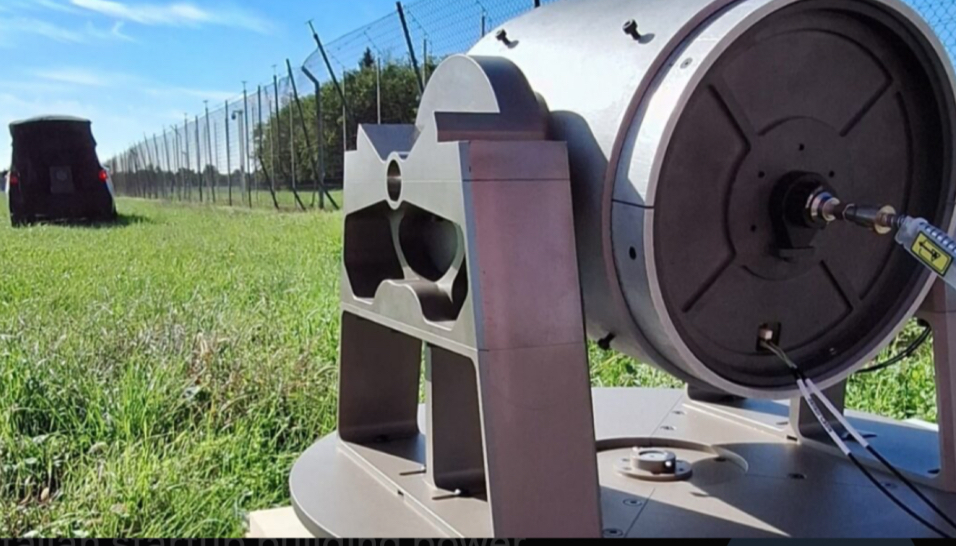
Italian startup SunCubes is advancing laser-based wireless energy transfer technology designed to recharge drone batteries mid flight. Following successful proof of concept trials and a 600 meter transmission test conducted in Italy last year, the company is now focused on building its minimum viable product (MVP).
“Our technology is specifically designed for in flight wireless drone charging, significantly extending operational range and time,” said CEO Alberto Chiozzi in a statement to pv magazine. “This required us to develop a highly precise, safe, and efficient system features that now also make the technology scalable for terrestrial and space based applications.”
SunCubes’ system uses laser beams to transmit energy to solar photovoltaic (PV) cell arrays embedded in distant, line-of-sight receivers. Similar laser power beaming technologies are being explored globally including in China, the U.S., U.K., Japan, and Australia for both ground and space applications.
To support MVP development, SunCubes has secured €1.1 million (approx. $1.28 million) in seed funding from a group of Italy-based investors.
The company’s flagship platform, SunCubes Lucy, is being designed to beam 500 W of optical power over distances up to 3 kilometers. The system will feature automatic pointing and a 200 W receiver tailored for compatibility with standard unmanned aerial systems (UAS).
On the subject of solar PV integration, Chiozzi noted that the startup has worked with both standard and custom PV arrays depending on specific use cases.
Founded in 2023, SunCubes is supported by the ESA BIC Milan, a European Space Agency incubator operated by Politecnico di Milano’s PoliHub.
Unlocking the Key to Success: Why Corporate Startups Outperform University Startups Insights from the 'Black Solvent' Phenomenon

While universities are known as hubs of cutting edge innovation, startups emerging from academic environments often struggle to match the performance of those launched by corporate professionals. Despite receiving generous institutional support and having access to world class scientific knowledge, university startup entrepreneurs (USEs) typically don’t perform as well as corporate startup entrepreneurs (CSEs).
Professor Alex Coad of Waseda Business School in Japan has investigated this puzzling phenomenon by drawing on existing research and theoretical frameworks. His study compares the fundamental differences between USEs and CSEs, shedding light on the reasons behind the performance gap.
USEs include faculty members, students, and staff from academic or public research institutions who found startups based on their scientific research. In contrast, CSEs are individuals who start businesses after leaving private sector jobs, often leveraging their industry knowledge and professional experience.
A major difference lies in entrepreneurial motivation. USEs are generally driven by a passion for intellectually stimulating research and the pursuit of academic success, rather than purely financial goals. Their academic roles often provide job security and autonomy, making entrepreneurship more of an intellectual opportunity than a financial necessity. Meanwhile, CSEs are often motivated by a desire for workplace freedom or to overcome dissatisfaction with corporate life, placing a higher value on autonomy, income, and market success.
Cultural values further distinguish the two. USEs often see entrepreneurship as a way to make a social impact or contribute to their community, aligning with a more “mission driven” or communal mindset. CSEs, on the other hand, are typically more commercially oriented, driven by competition and the desire for financial returns.
Another critical factor is the type of knowledge each group brings. While USEs are rich in theoretical and scientific understanding, they often lack the practical business knowledge needed to navigate markets or attract customers. Their knowledge is usually highly specialized and not easily transferable. CSEs, by contrast, benefit from industry experience and informal (tacit) knowledge, such as how to identify market opportunities or build networks skills that give them a strategic advantage.
Identity also plays a role. For many USEs, shifting from a research-focused academic identity to a business oriented entrepreneurial one can be psychologically challenging. This identity struggle can hamper their ability to adapt and succeed in the startup world.
Moreover, USEs often favor technical roles and shy away from essential business responsibilities such as management, regulatory compliance, and customer engagement. Their analytical, research-driven approach can limit their ability to respond quickly and flexibly to market needs unlike CSEs, who tend to take a more pragmatic approach.
Despite these obstacles, Professor Coad is optimistic about improving the success rates of university-based startups. With the right mentoring, support networks, and startup training programs, USEs can bridge the gap. He advocates for initiatives such as incubators and accelerators that encourage academic entrepreneurs to adopt lean startup methods and gain a better understanding of customer needs.
“Market insight isn’t rocket science,” says Coad. “With the right guidance and willingness to learn, USEs can thrive just as well as their corporate peers.”
Saudi Arabia Dominates MENA Startup Scene with $1.34B in H1 2025 Funding

Saudi Arabia has emerged as the leading startup investment hub in the Middle East and North Africa (MENA) region for the first half of 2025, attracting 64% of total capital, according to a report by Wamda and Digital Digest.
Driven by sovereign wealth support, government incentives, and a robust local venture ecosystem, the Kingdom secured $1.34 billion in funding marking a staggering 342% year on year increase.
Fintech Drives Saudi Growth
Fintech led the way in Saudi Arabia, drawing $969 million across 20 deals. Construction tech and property tech followed with $48 million and $39 million, respectively. Major local investors included STV, Wa’ed Ventures, and Raed Ventures.
MENA Funding Hits $2.1 Billion
Across the MENA region, startups raised $2.1 billion through 334 deals a 134% year-on-year rise. Debt financing accounted for \$930 million, or 44% of the total. Even without debt, equity funding rose 53%, signaling a gradual recovery in the venture landscape.
In Q2 alone, MENA startups closed 149 deals worth \$583.4 million, surpassing Q2 2024 performance despite a June slowdown. Fintech remained the top-funded sector at $170 million, followed by property tech ($77 million) and travel tech ($40 million).
UAE Maintains Strong Momentum
The UAE continued to show resilience, raising $541 million across 114 deals an 18% increase year on year. Fintech dominated with $265.8 million, followed by insurtech ($55 million), and Web and AI ($44.7 million each). Debt made up 19% of the total, indicating healthy equity participation.
However, gender disparities persisted. Female founded startups in the UAE secured just $17.6 million, while mixed-gender teams raised $91.7 million.
Egypt Sees Rebound Despite Economic Strains
Egypt also saw a funding revival, with startups raising $179 million across 52 deals a 106% increase. Fintech and property tech led with $85.3 million and $75 million, respectively. E-commerce followed with $24.8 million. Yet, women led startups garnered only $425,000; mixed gender teams received $23 million.
Mid Stage and B2B Deals Dominate
Mid-stage deals (primarily Series A) attracted $161 million across 10 rounds in Q2. However, early stage startups (pre-seed to Series A) remained most active, bringing in $568 million in H1. Later stage firms raised $431.7 million.
Business-to-business (B2B) startups captured the lion’s share of capital, raising $1.5 billion across 197 deals 70% of total funding. B2C and hybrid models made up the remainder.
Fintech Leads MENA Sectors
Fintech was the MENA region’s top-performing sector, securing 62% of capital through 77 deals. Venture studios, buoyed by a major investment in iMena Group, followed. Property tech ranked third, attracting \$119 million across 16 startups.
Gender Gap Remains Wide
Despite overall investment growth, the gender funding gap persisted. Male-founded startups received nearly 89% of capital in H1 2025. Female led startups raised $84.5 million across 27 deals, while mixed-gender teams secured $150 million from 48 transactions.