Innovation Frontiers Redrawn – From Rare Resources to Global Incubators
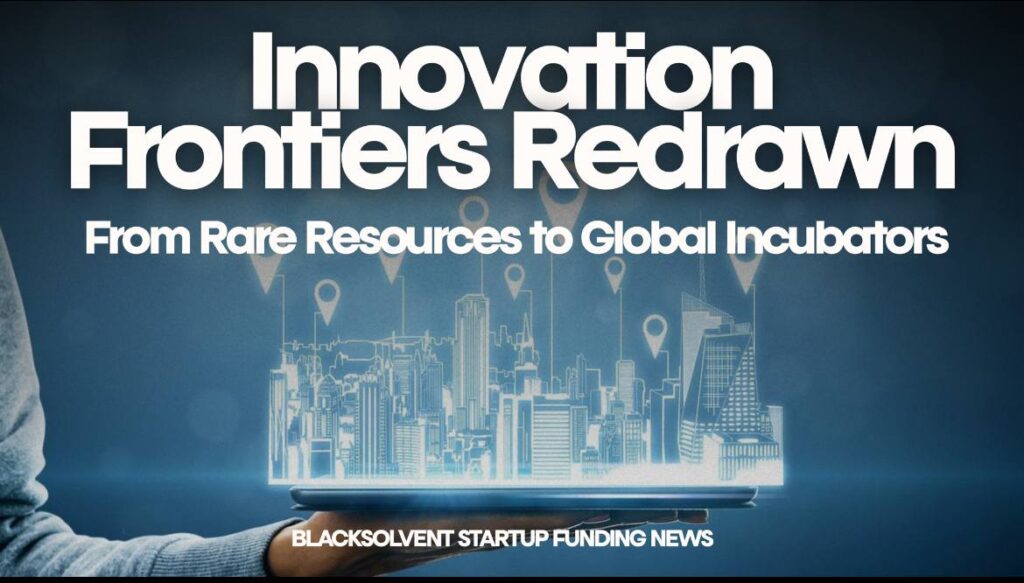
From Europe’s emerging market ambitions to Israel’s incubator-backed ingenuity and the global scramble for rare earths, today’s stories reflect a shifting venture landscape. one where scarcity, strategy, and state support are reshaping how and where innovation happens.
In Switzerland, the SECO Startup Fund’s €5M reboot is a signal that emerging market entrepreneurs are no longer on the periphery of global capital flows, they’re central to its future. With impact, inclusion, and localized funding at its core, the fund’s new direction sets a precedent for how public capital can build private dynamism.
Meanwhile, deep in the world’s supply chain trenches, startups mining and refining rare earth elements are suddenly the hottest targets for VC. What was once obscure is now essential. In this new green industrial age, the next unicorns may not be coding apps but refining neodymium, recycling lithium, or engineering supply chain sovereignty.
And then there’s Israel’s $6.25 million incubator wave, reminding the world why it remains a tech juggernaut. With government supported capital and tech specific incubators, Israel is future-proofing its innovation pipeline, not just for domestic gain but for global problem solving.
The startup world isn’t just expanding. It’s evolving. And it’s more geopolitically, materially, and ethically aware than ever before.
SECO Startup Fund Enters New Era with Over €5M Investment Drive for Emerging Market Startups
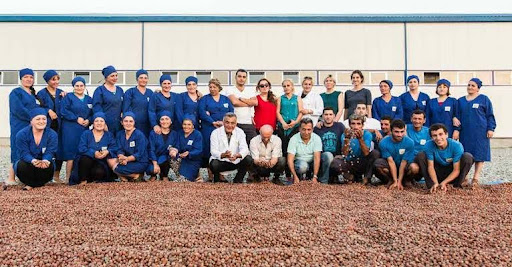
In a bold shift aimed at strengthening entrepreneurship in developing regions, the SECO Startup Fund has announced a strategic relaunch under new management. Backed by the Swiss State Secretariat for Economic Affairs (SECO), the fund is committing more than €5 million in new investments, with a refined focus on empowering innovative firms operating in emerging markets.
This overhaul signals more than just a change in leadership—it reflects a deeper alignment with the evolving challenges and opportunities faced by startups in regions like Africa, Southeast Asia, and Latin America. The fund, which has historically supported early-stage ventures through catalytic capital and technical assistance, is now refining its mission to better respond to local needs and global trends.
A Renewed Vision for Inclusive Growth
Under the new strategy, the SECO Startup Fund will prioritize startups that drive inclusive economic development, sustainability, and digital transformation. According to the new fund managers, the fund will not only provide financial backing but also facilitate access to international networks, business development services, and impact measurement tools.
“Emerging markets are brimming with entrepreneurial talent and untapped potential,” said the newly appointed fund director. “This new chapter is about meeting founders where they are, with flexible financing and tailored support that helps them scale responsibly.”
New Funding Structure and Focus Areas
The fund’s revised investment strategy includes:
- Equity and quasi-equity financing for startups at the seed and Series A stages.
- A focus on climate tech, fintech, agritech, and health innovation, where scalable solutions can directly improve lives and livelihoods.
- Gender-lens investing and support for underrepresented founders, especially women-led ventures.
- Enhanced collaboration with local ecosystem builders such as accelerators, angel investors, and policy partners.
The SECO Startup Fund is also set to work more closely with Development Finance Institutions (DFIs), impact investors, and regional banks to de-risk early-stage investments and crowd in private capital.
Strategic Partnerships and Long-Term Impact
To strengthen its presence on the ground, the fund will partner with regional incubators and innovation hubs, offering capacity-building programs and mentorship alongside capital. It also plans to deepen its engagement in countries where startup ecosystems are growing rapidly but still face barriers to scaling—such as regulatory uncertainty, limited access to growth-stage capital, and infrastructure gaps.
According to internal projections, the fund’s new strategy could unlock follow-on investments exceeding €50 million over the next five years, potentially creating thousands of jobs and supporting scalable businesses with measurable social and environmental returns.
A Global Model Rooted in Local Realities
By repositioning itself as a more agile and impact-driven investor, the SECO Startup Fund is hoping to set a new benchmark for public-private collaboration in startup finance. Its emphasis on “smart capital” blending funding with mentorship, governance, and partnerships—aims to close persistent gaps in the venture landscape across underserved markets.
With this relaunch, SECO joins a growing movement of global institutions recognizing that the future of innovation is decentralized and that the next generation of world-changing startups may just rise from Nairobi, Medellín, Dhaka, or Lagos.
Rare Finds, Big Funding: Startups in Scarce Materials and Rare Earths Attract Surging VC Investment
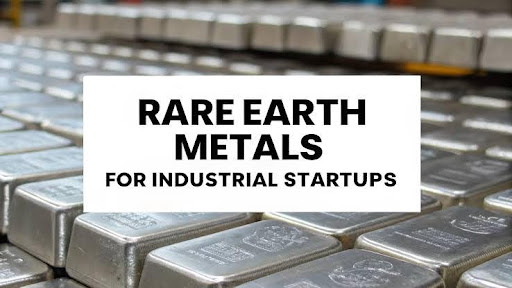
As the global race for clean energy and advanced technology intensifies, startups focused on rare earth elements and other scarce materials are witnessing an unprecedented surge in venture capital funding. Once considered a niche within the mining and materials sector, these companies are now seen as strategic assets for everything from electric vehicles and wind turbines to smartphones and defense systems.
Over the past 12 months, VC investments in startups developing innovative methods for sourcing, refining, and recycling rare earths have soared by more than 200%, according to industry analysts. This includes funding rounds for companies working on alternative mining techniques, urban mining (e-waste recovery), and sustainable extraction technologies.
A Strategic Shift Fueled by Geopolitics and Green Demand
Much of the investment momentum is being driven by the geopolitical urgency to diversify supply chains away from dominant players like China, which currently controls the bulk of global rare earth processing. Western governments are increasingly viewing these materials as critical to economic security and environmental goals.
“This is not just a supply issue—it’s a sovereignty issue,” said a senior partner at TerraNova Capital, one of several firms leading recent funding rounds. “Startups that can unlock local or circular sources of rare earths are going to be the new power players of the energy transition.”
Who’s Getting Funded?
Among the standout players are:
- RecyMiner (USA), which recently raised $45 million for its AI-powered e-waste sorting system.
- NovaCore Materials (Germany), developing eco-friendly processes to extract neodymium and dysprosium from tailings and discarded magnets.
- Elemental Labs (Australia), exploring deep-sea and geothermal sources with a $30 million seed round led by two climate-focused VC funds.
These startups are being funded not just for extraction but for their end-to-end innovation pipelines, including mineral separation, material refining, and component integration into batteries, chips, and magnets.
New Investor Types Joining the Rush
The funding boom has also drawn in non-traditional backers, including sovereign wealth funds, defense innovation units, and green infrastructure investors. There’s growing recognition that the race for scarce materials underpins broader strategic industries—clean energy, AI hardware, defense tech, and next-gen communications.
ESG and Ethical Sourcing Take Center Stage
In parallel with technical innovation, many of these startups are placing a premium on sustainable and ethical sourcing. With increasing scrutiny from regulators and climate-focused investors, startups that can trace their materials, reduce water use, or prevent ecosystem damage are commanding premium valuations.
“You can’t just be rare—you have to be responsible,” said the CEO of Elemental Labs. “The new funding ecosystem rewards traceability, not just tonnage.”
Future Outlook: A Modern Gold Rush
With governments across North America, Europe, and parts of Africa launching critical mineral strategies and offering new subsidies for domestic production, analysts predict that VC funding in this space could surpass $5 billion annually by 2027. The need for supply chain independence and decarbonization will only deepen investor interest.
Israeli Innovation Gets Boost as Startups Poised to Receive $6.25M in Incubator Funding

Israel’s thriving startup ecosystem is set to receive a fresh wave of support as the government and private partners prepare to disburse $6.25 million in incubator funding to early-stage ventures across key sectors. The funding, part of Israel’s strategic innovation policy, will be allocated through the Technological Incubators Program, managed by the Israel Innovation Authority (IIA).
Designed to accelerate the growth of high-risk, high-impact startups, the program combines public funding with private investment to provide startups with crucial capital, technical infrastructure, and mentorship during their formative stages.
Fueling Deep Tech, Health, Climate, and Defense Innovation
According to the IIA, the $6.25 million will be spread across a new cohort of incubator-backed startups, primarily in sectors such as cybersecurity, agritech, healthtech, climate innovation, AI, and dual-use defense technologies.
Each selected startup stands to receive funding of up to $1 million, along with office space, business development services, access to R&D labs, and exposure to global investors. The incubators themselves are operated by a blend of local venture capital firms, multinational tech companies, and academic institutions.
“This incubator round is more than capital—it’s a full-stack launchpad,” said Avi Hasson, Chairman of the Israel Innovation Authority. “We’re cultivating the next generation of technologies that will not only drive exports but also solve urgent global challenges.”
A Proven Model with Global Appeal
Israel’s incubator framework has long been a model for startup nations around the world. Over the past decade, more than 1,000 startups have passed through the incubator network, with many going on to raise significant Series A and B rounds or achieve exits via acquisitions or IPOs.
The new $6.25 million round will support both first-time founders and spinouts from universities or military R&D units, reinforcing Israel’s status as a global deep tech hub.
Public-Private Collaboration at the Core
The funding is made possible through a co-investment structure, where the Israel Innovation Authority provides up to 85% of the initial capital, while incubator operators and affiliated investors cover the remaining 15%. In return, the state holds an option for royalties or equity, depending on the startup’s trajectory.
Incubators participating in this round include:
- Trendlines Incubator (specializing in medtech and agritech)
- The Kitchen FoodTech Hub (focused on sustainable food innovation)
- Incubit Ventures (backed by Elbit Systems for defense and dual-use startups)
- Nielsen Innovate (with an emphasis on data, AI, and retail-tech)
A Strategic Moment for Israeli Startups
This announcement comes at a critical time, as many early-stage companies navigate a cooling global VC landscape and rising operational costs. By sustaining early innovation through government-backed incubators, Israel aims to maintain its edge in breakthrough technologies and safeguard long-term economic resilience.
Blacksolvent Insight:
At a time when early-stage capital is becoming scarce worldwide, Israel’s incubator funding model proves the value of strategic state intervention. This $6.25 million round is not just about protecting startups—it’s about doubling down on the innovation economy. With its focus on deep tech and dual-use innovation, Israel is reinforcing its position not just as a startup nation, but as a global force in frontier technology.
Want a headline version for social media or a comparison chart with similar programs in Singapore, the UAE, or the U.S.? Le