STARTUP FUNDING NEWS 1ST SEPTEMBER 2025
Capital Flows With Purpose
The global funding landscape is experiencing a profound shift. Beyond the cyclical ups and downs of venture markets, what’s becoming clear is that capital today is moving toward purposeful innovation. The Web3 ecosystem, once defined by speculation, is now redirecting its funding firepower toward sustainability projects with real-world impact. India, meanwhile, has proven its resilience as venture capital rebounds strongly, reaffirming its place as one of the world’s most dynamic startup ecosystems. And on the African continent, Arnergy’s $18 million raise underscores how clean energy startups are no longer just solving power problems, but positioning themselves as critical players in the continent’s economic transformation. These three developments, while unfolding in different regions, carry the same thread: investors are no longer only chasing growth at any cost, but growth that is sustainable, inclusive, and long-term. The face of startup funding is being redefined, not by hype cycles, but by where impact and capital meet.
Web3 Funding Shifts Toward Sustainability, Marking a New Phase for the Ecosystem
BY BLAKSOLVENT

The Web3 funding environment is undergoing a subtle but significant evolution. After years of heavy inflows into speculative tokens, flashy NFT projects, and quick-turn crypto plays, investors are now pointing capital toward sustainability initiatives that leverage blockchain in practical, long-term ways. The shift is both a reaction to past volatility and a recognition that Web3 technology, despite its controversies, has infrastructure-level potential to drive change in areas like supply chain transparency, carbon tracking, and decentralized clean energy projects.
In 2021 and 2022, Web3 funding was dominated by excitement. Venture capital poured billions into projects, many of which collapsed under the weight of poor governance, unclear value propositions, or simply overexposure to hype. The crash of Terra/Luna, the bankruptcy of FTX, and a string of regulatory crackdowns shook investor confidence. What followed was not the end of Web3, but a sobering recalibration. Now, funding is moving into projects that are applying blockchain not as a speculative asset, but as a tool for sustainability.
Take, for example, blockchain-based carbon marketplaces. By using smart contracts to tokenize carbon credits, startups are creating transparent systems where emissions reductions can be traced, verified, and traded without the opaque middlemen that plagued older markets. Investors, eager to align their portfolios with ESG priorities, are now backing these companies with enthusiasm. Similarly, startups are using blockchain to monitor supply chains in industries like agriculture and fashion, ensuring that sustainability claims are verifiable and traceable.
This is more than a fad. The EU’s Green Deal, coupled with the global pressure on corporations to decarbonize, is forcing accountability. Blockchain projects that can provide verifiable climate impact are suddenly not just attractive, they are essential. And unlike previous crypto cycles, these ventures often come with clearer regulatory compliance and more stable revenue models.
Funding rounds in 2024 and 2025 are already demonstrating this trend. Data from PitchBook indicates that while the overall amount invested in Web3 startups has dipped compared to 2021’s peak, the share of capital directed toward sustainability-focused blockchain firms has nearly doubled. Investors like Andreessen Horowitz (a16z) and Paradigm have pivoted some of their capital in this direction, while new climate-focused funds are also entering the space.
Critics argue that blockchain itself, with its energy-intensive history, is an odd vehicle for sustainability. Yet that narrative is also changing. With Ethereum’s move to proof-of-stake cutting its energy use by over 99%, and new consensus mechanisms being tested, blockchain is no longer synonymous with waste. The next frontier is building systems where blockchain enables sustainable outcomes rather than undermines them.
The implications are profound: Web3, once tainted by speculative excess, is quietly reinventing itself as a technology stack for climate action. Investors are still cautious, but the money flowing into these projects shows a willingness to bet on blockchain’s capacity to solve real-world challenges. If the last era of Web3 was about hype, the next may well be about responsibility.
India’s Venture Capital Landscape Rebounds, Signaling Renewed Investor Confidence
BY BLAKSOLVENT
India’s venture capital sector has emerged from its slowdown with fresh momentum, a rebound that underscores the country’s resilience in the face of global economic uncertainty. After a cooling-off period marked by cautious investor sentiment and tighter liquidity conditions, new funding rounds are picking up pace. This resurgence is being driven by structural strengths in India’s startup ecosystem, ranging from a massive consumer base to a robust digital infrastructure that continues to attract both domestic and international capital.
During 2022 and 2023, the global venture slowdown hit India hard. Valuations corrected, unicorn creation slowed, and some startups faced funding winter pressures. Layoffs were widespread, particularly in fintech and edtech, two sectors that had overheated during the pandemic years. Yet unlike in other regions where capital retreated and ecosystems faltered, India maintained steady deal flow even during its trough. Now, with inflation stabilizing, capital markets improving, and investor confidence returning, the country is poised for another phase of accelerated funding.
Data from Bain & Company and IVCA show that India’s VC funding volumes in 2024 rebounded by nearly 30% compared to the previous year. Sectors like SaaS, deep tech, and climate tech are leading the way, while fintech despite regulatory scrutiny remains attractive. Global investors like Tiger Global, Sequoia (now Peak XV), and SoftBank are recalibrating their strategies but continue to view India as a key growth market. Meanwhile, sovereign wealth funds from the Middle East are injecting large capital inflows, particularly into late-stage rounds.
The resurgence is also tied to India’s strong macroeconomic fundamentals. With GDP growth consistently above 6%, a rapidly expanding middle class, and government initiatives like Digital India, the startup landscape benefits from structural demand and infrastructure support. Additionally, India’s IPO pipeline is gradually reopening, with companies like Ola Electric and Swiggy preparing for listings that could unlock liquidity for investors and founders alike.
At the ground level, Indian founders are adapting to new realities. “Growth at all costs” is no longer the dominant mantra. Instead, efficiency, profitability, and governance have taken center stage. This maturation is reassuring investors, who now see India not just as a high-growth frontier, but as a place where scalable, sustainable businesses can be built.
The rebound doesn’t erase risks, regulatory changes, global interest rate fluctuations, and geopolitical tensions could all affect capital flows. But India’s resilience has once again been proven. For venture capitalists worldwide, the message is clear: the world’s third-largest startup ecosystem is back in business.
Arnergy Secures $18M to Expand Solar Energy Solutions Across Africa
BY BLAKSOLVENT
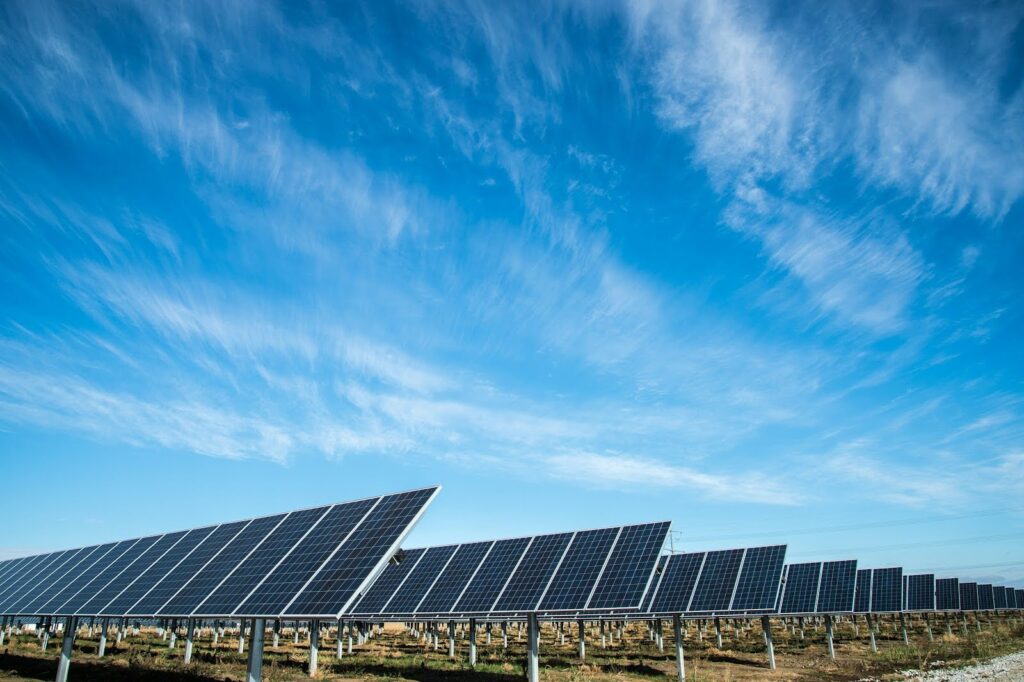
In a milestone for Africa’s clean energy sector, Nigeria-based Arnergy has raised $18 million in funding to scale its solar energy solutions across the continent. The funding round, backed by a mix of local and international investors, reflects both the urgent demand for reliable electricity in Africa and the growing recognition that renewable solutions are key to the region’s future.
Arnergy, founded in 2013, has positioned itself as a critical player in Africa’s energy transition. With over 600 million Africans lacking access to reliable electricity and businesses frequently crippled by grid failures, the company’s solar systems offer not just sustainability but economic resilience. Its hybrid solar and battery systems are already deployed in commercial and industrial settings, powering banks, schools, and small businesses. With this fresh funding, Arnergy plans to expand its footprint across West and East Africa, scale manufacturing, and invest in product innovation.
The $18 million raise comes at a time when climate finance in Africa is gaining traction. Global investors are increasingly looking to back solutions that not only deliver returns but also address systemic challenges like energy poverty. Organizations such as IFC and impact-focused funds have amplified their participation in clean energy deals, while local banks and pension funds are beginning to recognize the sector’s potential.
Arnergy’s CEO, Femi Adeyemo, has emphasized that the company is not just providing solar panels, but building integrated energy systems tailored for Africa’s unique environment. By combining solar with storage and smart energy management, Arnergy delivers uninterrupted power while reducing reliance on costly diesel generators. The model is scalable and adaptable, making it attractive for deployment across urban centers and rural areas alike.
The broader context is Africa’s race to meet its growing energy demand sustainably. With the continent projected to account for half of global population growth by 2050, the need for energy solutions that are both affordable and clean is urgent. Governments are setting ambitious renewable targets, but public funding alone cannot bridge the gap. Companies like Arnergy are demonstrating how private capital can accelerate the transition.
The deal also signals confidence in Africa’s ability to deliver investable clean energy opportunities. While risks remain from currency volatility to policy uncertainty, the long-term trajectory is undeniable. Renewable energy in Africa is no longer a niche play; it is a mainstream investment category. Arnergy’s raise is not just about one company, but about the future of how Africa powers itself.