Quiet Revolutions Changing Everything
In a world obsessed with speed and scale, the real revolutions often begin quietly—with a prototype in a lab, a deal in a boardroom, or a solar panel installed in a remote village.
This month, we’ve witnessed three such revolutions unfold.
Ampil Energy’s expansion into Kenya is more than a market move; it’s a signal that Africa is ready to lead—not follow—in the global energy transition. Rain AI’s analog chip reminds us that human-inspired design could reshape the way machines think, without the environmental cost of power-hungry data centers. And the Volkswagen–Rivian partnership reveals a maturing industry learning that collaboration is no longer a luxury—it’s a survival skill.
Together, these stories suggest something deeper: that the next wave of innovation will not be about the loudest disruption, but the smartest alignment—between vision and infrastructure, capital and conscience, founders and ecosystems.
Ampli Energy Launches in Kenya with a $10M Mission to Power Africa’s Off-Grid Future

In a bold entry into Africa’s renewable energy space, Ampli Energy, a clean tech startup based in Kenya, has officially launched operations with a $10 million seed round to electrify underserved communities across East Africa. The funding round—led by impact investors with a focus on climate tech—signals growing global interest in scalable, sustainable energy solutions for Africa’s rural and peri-urban populations.
Ampli’s mission is clear: to bring modular, solar-powered microgrids and energy-as-a-service (EaaS) systems to regions where the national grid cannot—or will not—reach. Its approach combines solar hardware, IoT-enabled batteries, and AI-powered consumption analytics, offering a complete off-grid energy solution for homes, schools, farms, and small businesses.
Kenya as Ground Zero for Energy Innovation
Kenya was a strategic choice for Ampli’s entry, thanks to its progressive energy policies, strong mobile money adoption, and a population eager for more reliable alternatives to diesel generators and kerosene lamps. Over 30% of Kenya’s rural population still lives without stable electricity, and Ampli believes that’s both a challenge and an opportunity.
“Our goal is to make clean energy not just accessible, but intelligent,” said Angela Munene, Co-founder and CEO of Ampli Energy. “We’re designing energy systems that learn from user behavior, optimize usage, and grow as communities grow. That’s how we redefine what energy means for the African household.”
A Smart Grid in Every Village: Tech-Driven Sustainability
Ampli’s microgrids are more than just panels and batteries—they’re smart systems capable of tracking usage, predicting shortages, and alerting technicians remotely. Using embedded AI and IoT sensors, the company can analyze energy patterns in real-time, optimize distribution, and ensure customers only pay for what they use through pay-as-you-go platforms integrated with M-Pesa.
The tech stack is designed to support growth. As a village’s demand for electricity increases, additional battery packs or panels can be deployed without rebuilding the entire system—making it flexible, affordable, and future-proof.
With a team of engineers trained in Nairobi and San Francisco, Ampli is building the infrastructure not just for electrification, but for energy equity, ensuring that even the most remote households have access to reliable power and data-driven energy insights.
Funding with a Purpose
Ampli’s $10 million raise was led by Acumen Resilience Fund and Better Tomorrow Ventures, with participation from energy-focused angel investors and climate tech funds in Europe and North America. The startup plans to expand to Uganda and Tanzania within the next 18 months.
“We invested in Ampli because they’re not selling light—they’re selling resilience,” said Marta Ebong, partner at Acumen. “From health clinics to agricultural cold chains, their impact is measurable and immediate.”
A New Energy Narrative for Africa
The launch of Ampli Energy represents more than a business milestone—it’s part of a broader shift toward decentralized, democratized power in Africa. As the continent grapples with climate threats, infrastructure gaps, and rising energy demand, startups like Ampli are redefining what’s possible.
By merging local insight with global engineering, and designing for the margins rather than the metropolis, Ampli Energy is illuminating not just homes—but a new vision of what progress in Africa looks like.
Rain AI Unveils the World’s First Analog AI Chip, Ushering in a New Era of Energy-Efficient Intelligence

In a milestone that could reshape the landscape of artificial intelligence and chip design, Rain AI, a San Francisco-based startup, has officially launched the world’s first analog AI chip—a cutting-edge leap in how machines process data, learn, and make decisions in real time with significantly less energy.
The announcement has sent ripples across the tech industry, drawing attention from top-tier investors, chip designers, and enterprise AI users. Unlike traditional digital processors, Rain’s analog chip processes data in a way that mimics how the human brain works—using currents and voltages instead of binary code to compute, store, and adapt, all in the same location.
Breaking the Bottleneck: Why Analog Matters
Conventional AI chips, like those from NVIDIA or AMD, rely on digital architecture that separates computation and memory, resulting in higher energy consumption, data latency, and hardware limitations. Rain’s analog chip changes this equation by enabling in-memory computing, where data is processed and stored simultaneously, reducing both time and energy cost.
“Our analog AI chip doesn’t just run models—it learns on the edge, adapts on the fly, and does so at a fraction of the energy footprint,” said Gordon Wilson, CEO of Rain AI. “This is the architecture that will unlock the next wave of AI innovation—especially for the devices and systems that can’t afford to rely on cloud power.”
This breakthrough holds enormous promise for sectors like robotics, wearables, autonomous vehicles, aerospace, and IoT, where real-time decision-making, power efficiency, and hardware compactness are crucial.
Neuroscience Meets Semiconductor Design
Rain AI’s chip is designed to mirror neuromorphic computing, drawing inspiration from how neurons and synapses interact in the brain. The analog circuitry allows it to execute learning algorithms natively, rather than emulating them through traditional code.
This shift from digital simulation to hardware-native intelligence could be a paradigm shift in how AI is embedded in everyday tools. Think of hearing aids that adjust themselves without internet connection, drones that learn flight paths autonomously, or AI wearables that continuously improve without cloud dependency.
“We are now at the intersection of biology and silicon,” said Dr. Julia Wong, a neural systems engineer on Rain’s team. “The possibilities this opens up for truly intelligent, offline, sustainable devices are profound.”
Investor Confidence and Silicon Synergy
Rain AI has secured funding from high-profile venture firms, including OpenAI’s Startup Fund, Sam Altman, and Radical Ventures, raising over $25 million to bring the analog chip from lab to market. Industry analysts suggest that this could be the beginning of a broader movement toward post-Moore’s Law innovation, where efficiency and intelligence—not just speed—become the core metric of success.
The chip is currently being tested with select enterprise and defense partners, with plans to enter commercial production by late 2025. Early tests show it consumes up to 10x less power than traditional digital accelerators on comparable AI tasks.
A New Era of AI: Lean, Local, and Limitless
Rain AI’s analog chip launch is more than a technological feat—it’s a statement. It declares that the future of artificial intelligence may not lie in massive GPU farms and centralized supercomputers, but in low-power, highly intelligent devices that learn and act at the edge.
As sustainability becomes a growing concern in AI’s carbon-heavy expansion, analog computing may provide the efficiency breakthrough the industry needs.
And for African innovators, startups, and energy-conscious developers, this could mark the beginning of a new chapter—where AI can be trained, embedded, and scaled in regions with limited power infrastructure, without compromising on capability.
The brain-like chip has arrived. And with it, the race to reimagine what AI can be.
Volkswagen Joins Forces with Rivian in $5 Billion EV Deal: A Bid to Catch Up in the Electric Future
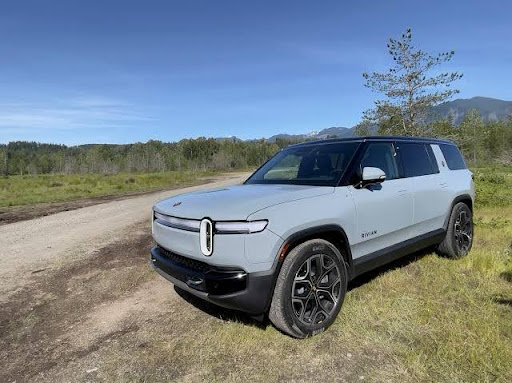
In a move that signals a dramatic shift in global EV strategy, Volkswagen Group has entered into a $5 billion joint venture with Rivian, the American electric truck manufacturer, to co-develop electric vehicle software and next-gen platforms. The deal, structured to roll out in stages, is one of the largest cross-continental collaborations in the EV space and a potential lifeline for two companies navigating different challenges on opposite sides of the Atlantic.
For Volkswagen, the partnership is a calculated push to revive its software division, which has faced years of delays, setbacks, and internal restructuring. For Rivian, the deal provides crucial capital and industrial leverage to scale production, expand its model range, and weather the cash-intensive EV market.
A Strategic Symbiosis: Europe Meets American Ingenuity
Volkswagen, once the paragon of combustion-era engineering, has struggled in the software-first EV age. Its in-house software arm, Cariad, has been plagued by technical issues, making its electric vehicles slower to evolve than competitors like Tesla or BYD. Rivian, though still unprofitable, is respected for its advanced in-vehicle software, over-the-air updates, and proprietary electronics architecture.
Under the deal, Volkswagen will inject $1 billion immediately, with an option to invest up to $4 billion more over the next three years, pending regulatory approvals and project milestones. The companies will jointly develop an EV software platform to be used across Rivian’s upcoming R2 series and potentially adapted into Volkswagen’s future ID vehicles.
“This partnership gives us access to proven tech without having to build it all from scratch,” said Oliver Blume, CEO of Volkswagen. “It’s about accelerating innovation, not reinventing it.”
What It Means for the EV Race
The EV industry is maturing fast—and so are its demands. While legacy automakers scramble to adapt to digital infrastructure, newer entrants like Rivian, Lucid, and Fisker are pushing the boundaries of both design and software. But production costs, supply chain volatility, and consumer price sensitivity remain persistent barriers.
By aligning with Rivian, Volkswagen not only benefits from cutting-edge software but gains credibility in North America, a market where its EV portfolio has yet to make a strong impact. Rivian, in turn, gets industrial scale, manufacturing expertise, and access to Volkswagen’s global supply chain.
“This isn’t just about code. It’s about survival,” said Emily Cho, an automotive analyst at GreenFleet Ventures. “Legacy OEMs need nimble innovation. Startups need capital and factories. This partnership is the blueprint.”
Implications for Africa’s EV Ecosystem
While the headlines focus on Silicon Valley and Wolfsburg, the ripple effects of this partnership could reach developing markets—including Africa. As EV components become modular and supply chains diversify, African nations may benefit from downstream partnerships in battery assembly, software testing, and component manufacturing.
Moreover, if Rivian and Volkswagen succeed in building scalable, affordable EV platforms, African governments may finally gain access to commercial EV fleets and utility-grade vehicles suitable for harsh terrains and long routes—especially in logistics and public transportation.
The Road Ahead
Volkswagen and Rivian say they will begin software integration by late 2025, with joint vehicles expected on the road by 2027. Rivian’s stock surged following the announcement, and industry watchers are already speculating whether this is the first of many legacy-startup pairings to come.
As the EV wars heat up, success may no longer belong to those who move the fastest—but to those who collaborate the smartest.
In the electric future, it seems, partnership is the new powertrain.