BLACKSOLVENT MARKETING NEWS -15:10:25
Marketing Forces Shaping Strategy
The marketing world of late 2025 is a living organism restless, adaptive, and unafraid to reinvent itself. The conversations dominating boardrooms now aren’t just about sales or impressions; they’re about trust, authenticity, and the ethics of attention. Brands are no longer speaking to consumers; they are expected to speak with them in real time, in their language, and with cultural awareness. Around the world, companies are reshaping their playbooks to stay human in an age of machines, stay relevant in a flood of noise, and stay ethical amid increasing regulation.
Three recent stories Unilever’s shift to a “social-first” strategy, Australia’s youth-protection campaign, and Anthropic’s creative approach to AI marketing reveal how the rules of engagement are changing right before our eyes.
Unilever’s “Social-First” Awakening
BY BLACKSOLVENT NEWS

Unilever, one of the world’s most influential consumer goods giants, has set a bold new direction for its marketing strategy in Australia and New Zealand. In a sweeping transformation, the company is redirecting half of its regional media spend into social media and influencer marketing a move that effectively rewrites the DNA of how a multinational brand communicates with its audience.
For decades, Unilever was known for the polished grandeur of its television commercials and global brand campaigns. But in 2025, that grandeur is giving way to something rawer, faster, and more alive. Instead of waiting months to craft perfect ads, Unilever is empowering its influencers real people with real audiences to shape content in their own tone and voice. It’s a recognition that consumers now crave authenticity over perfection, and conversation over broadcast.
This shift goes beyond budgeting; it’s a cultural reset. The company is re-engineering its internal teams and agency partnerships to prioritize agility, cultural literacy, and real-time relevance. Marketing cycles are shorter, decisions are quicker, and campaigns are designed to listen as much as they speak. The goal is not just to reach consumers, but to participate in the culture that surrounds them whether it’s a viral trend, a meme, or a social conversation about beauty, sustainability, or lifestyle.
By betting big on social media, Unilever is sending a clear message to the industry: relevance is now the highest currency. And to stay relevant, brands must move at the speed of culture even if it means trading glossy perfection for genuine connection.
“For The Good Of”: Australia’s National Marketing Experiment
BY BLACKSOLVENT NEWS

Across the Pacific, a different kind of campaign has captured global attention this time not from a brand, but from a government. In October 2025, the Australian government launched a $14 million national advertising campaign titled “For The Good Of”, designed to prepare citizens for a landmark law that will ban social media access for anyone under sixteen by December.
The ads are arresting. They feature children scrolling on phones, their names whispered in soft warning tones — “Lucy… Kirsty…” — while a narrator asks whether the cost of constant connection is too high. The campaign aims to make parents think deeply about the mental health toll of unfiltered digital spaces, cyberbullying, and the distorted ideals perpetuated by social media. It’s both a communication effort and a moral statement: that protecting children online is a collective social responsibility.
Yet the move has sparked fierce debate. Tech companies argue the law will be nearly impossible to enforce without invasive age-verification systems. Youth advocates fear it might isolate teenagers from important support networks or creative communities. But regardless of one’s stance, the marketing behind the campaign is undeniably powerful. It frames legislation not as punishment, but as care a narrative crafted as much for hearts as for headlines.
In an era when misinformation spreads faster than truth, Australia’s approach shows how marketing can extend beyond brands and into governance. It’s proof that even policy needs storytelling and that emotional resonance can drive behavioral change where regulations alone cannot.
Anthropic’s “Zero Slop Zone”: When AI Goes Analog
BY BLACKSOLVENT NEWS
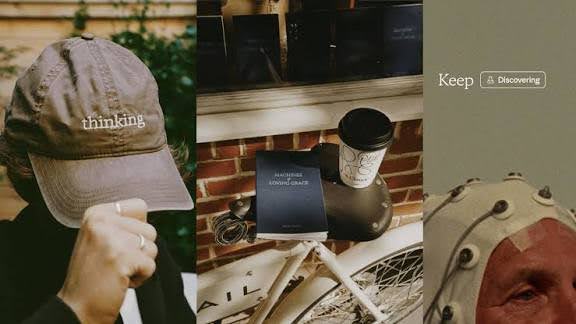
While governments wrestle with the consequences of the digital age, one AI company is trying to humanize it. Anthropic, the creator of the AI model Claude, recently debuted its first major brand campaign under the quietly provocative slogan: “Keep Thinking.”
Rather than flooding the internet with synthetic content, the company went in the opposite direction. In New York’s West Village, it opened a tiny pop-up called the “Zero Slop Zone” a physical café-like stand that served free coffee, gave away notebooks, and banned screens. Visitors were encouraged to write, draw, or simply think a cheeky rebellion against what Anthropic calls the “slop” of low-quality AI-generated content saturating the web.
The result was an instant hit. Over five thousand people visited in two days, and the activation generated more than ten million social impressions. But beyond numbers, it struck a deeper chord: in a world where AI dominates headlines, Anthropic’s campaign reminded people that creativity still begins in the human mind.
Through both its digital ads and physical presence, the company positioned Claude not as a replacement for human intelligence, but as a partner to it a thinking companion. The campaign’s restrained, almost philosophical tone stood out amid the noise of tech marketing. It made AI feel less like a threat and more like a tool for intentional, meaningful creation.
In essence, Anthropic managed to do what few tech companies achieve: bridge the digital and physical worlds with elegance and humility. It demonstrated that even the most advanced technology benefits from being grounded in real human experience.