From wine racks to memory boxes to fashion runways.
Three very different campaigns are making waves, and each tells us something about how brands are fighting for attention in 2025.
In Germany, Georgian wine is staging a full-bodied takeover, pouring into more than 300 premium stores, climbing online shelves, and turning centuries old tradition into the newest must have for autumn tables. It’s proof that heritage, when packaged right, can be just as marketable as novelty.
Back in London, Amy Childs is swapping glamour shots for baby shoes and crayon drawings, teaming up with Attic Self Storage to help parents preserve the moments that matter most. It’s marketing with a heart,a reminder that not all campaigns have to shout to be heard; sometimes they just need to strike the right emotional chord.
Then there’s Zara, which just found itself in the ASA’s crosshairs for ads that regulators say crossed the line into “unhealthily thin” imagery. Even with medical certificates in hand, the controversy shows how fragile the balance is between fashion’s creative edge and its social responsibility.
One lesson runs through all three: in today’s marketing world, every image, product, and partnership sends a message, and the audience is watching closely enough to decide whether it becomes a toast, a tear, or a takedown.
From the Vineyards of Georgia to Germany’s Top Wine Shelves, A Bold Campaign Puts Georgian Wine in the Spotlight
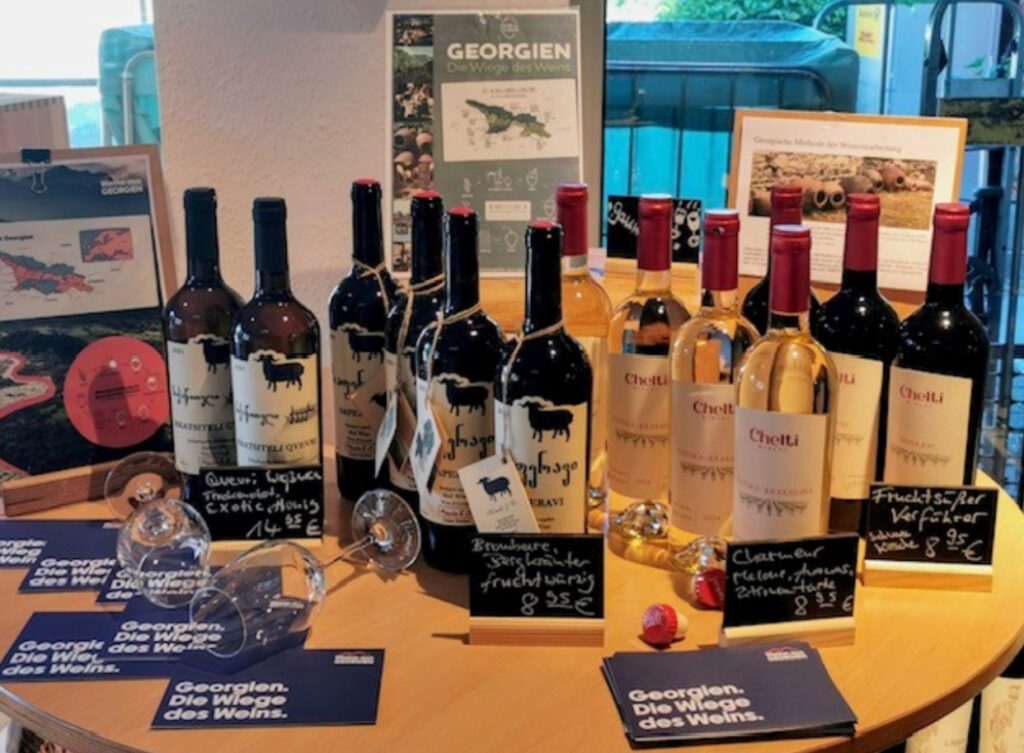
Germany’s wine lovers are about to get a taste of Georgia like never before. A new nationwide campaign is flooding premium wine stores across the country with bottles from one of the world’s oldest winemaking regions and it’s designed to make Georgian wine the next big thing in Europe’s wine scene.
Backed by the National Wine Agency of Georgia and powered by its marketing partner ff.k Public Relations, the campaign has taken over more than 300 Jacques’ Wein Depot locations,one of Germany’s most prestigious wine retail chains. Shoppers will now find dedicated promotional sections filled exclusively with Georgian wines, putting centuries-old winemaking traditions directly in the hands (and glasses) of curious customers.
The push doesn’t stop in-store. Online, the premium wine giant HAWESKO, Germany’s largest and most renowned wine retailer has created a dedicated Georgian wine page and an “online shelf” showcasing the country’s best bottles. Since partnering with Georgia’s National Wine Agency in 2023, HAWESKO has steadily expanded its Georgian wine offerings, and this latest campaign is their biggest spotlight yet.
Timing is everything.
The campaign will ramp up this autumn, right as wine sales typically surge. But the reach will go beyond Jacques’ Wein Depot and HAWESKO major importers and retail names like Mack & Schule, Interpartner, and Rindchen’s are set to join the movement, making Georgian wine more accessible than ever across Germany.
This isn’t Georgia’s first big play in Germany. Since 2021, the National Wine Agency has been collaborating with ff.k Public Relations to grow awareness and demand for its wines. Over the years, the strategy has included:
- Tasting seminars in major German cities for both industry pros and everyday wine enthusiasts.
- International exhibition appearances showcasing Georgian vintages on the global stage.
- Targeted advertising and media campaigns to tell the story of Georgian wine.
- Immersive wine tours to Georgia for journalists, trade leaders, and sales teams, giving them a first-hand look at the country’s unique winemaking culture.
With Germany’s wine retail powerhouses now fully on board, this campaign signals a major step in Georgia’s mission: to cement its place not just as a niche curiosity, but as a serious player in the European premium wine market. And if the timing, placement, and storytelling hit the mark, this autumn might just mark the start of a long-term love affair between German wine drinkers and Georgian vintages.
Your Child’s First Shoes Deserve Better Than the Attic; Amy Childs Teams Up With Attic Self Storage to Help Parents Keep Their Kids’ Memories Forever

We’ve all been there, the moment you find your child’s first pair of shoes, a smudged finger paint masterpiece, or their old teddy tucked away in a box, and suddenly you’re hit with a wave of nostalgia. But how many of those treasures get lost, damaged, or tossed out simply because there’s “no space” to keep them?
Attic Self Storage is on a mission to change that. And they’ve called in one of London’s most recognisable mums, British TV star and Barking native Amy Childs to lead a brand-new campaign dedicated to helping parents preserve their children’s most precious keepsakes.
The campaign arrives right as Attic opens two new facilities, one in Barking (806 Ripple Road) and another in Enfield (720 Great Cambridge Road), giving more families the chance to protect the items that tell their family story.
Amy, who’s a mother of four, knows firsthand how quickly time passes. “They have so many things, and it can be hard to know what’s worth holding on to,” she says. “I’ve made a memory box for each of my kids, and it’s so special to look back on. I’m thrilled to work with Attic on a campaign that encourages other parents to do the same.”
As part of the initiative, Attic and Amy have co-created a practical guide showing parents exactly:
- What to keep: sentimental items like first clothes, certificates, and childhood artwork.
- What to donate: items your child has outgrown but could be loved by another family.
- How to store safely: expert tips on preventing damage from moisture, pests, and time.
But they’re not stopping at advice, Attic has also released a limited run of beautifully designed Memory Boxes perfect for keepsakes like baby shoes, holiday photos, and that much loved plush toy. Families can even win these boxes (plus a £100 Attic gift card) in special giveaways running across social media channels for Amy, Attic, and other local influencers.
“Storage is about more than just square footage, it’s about making space for the things you love,” says Sophie Bagnall, Attic’s Marketing Director. “With our new store openings, we wanted to give back to the communities we serve by helping families protect and preserve their most meaningful memories.”
Founded in 2006, Attic Self Storage has grown into one of London’s most trusted storage providers, offering not just secure units but a range of thoughtful extras: conference rooms, moving and packing supplies, and even mailbox rentals. Their facilities have become more than storage spaces, they’re community hubs where people can organise, protect, and celebrate the things that matter most.
With Amy Childs bringing her warmth and relatability to the campaign, Attic’s message is clear: childhood doesn’t last forever, but the memories can. And with the right care, they’ll be there to look back on, and share, for decades to come.
"Zara Just Got Called Out for ‘Unhealthily Thin’ Models And the UK’s Ad Watchdog Isn’t Having It"

The UK’s Advertising Standards Authority (ASA) has pulled the plug on two Zara advertisements, ruling they portrayed models who appeared “unhealthily thin” and violated social responsibility rules.
The investigation targeted four product listings spotted on Zara’s UK website in May 2025. Two of them now banned, featured female models whose styling, lighting, and poses the ASA said accentuated visible collarbones, gaunt features, and overly slim limbs.
In one image, a model wearing an oversized pocket shirt drew attention to her protruding collarbones and slim arms. Another showed a model in a voluminous short dress where shadows exaggerated thin legs, while slicked-back hair emphasized a slightly gaunt facial appearance. The regulator concluded both created “an impression that the model was unhealthily thin.”
Two other ads survived the probe. One showed the first model in a ruffle bodysuit, visible collarbone, but proportionate overall, while another featured the second model in wide-leg jeans, where slimness was apparent but not to a level the ASA deemed irresponsible.
The Verdict: Zara must remove the banned images and ensure future ads don’t depict models in a way that promotes unhealthy body ideals.
Zara Responds: The brand pushed back, saying its hiring follows “Fashioning a Healthy Future” guidelines from the UK Model Health Inquiry, which require models to present medical certificates from specialists in eating disorders confirming good health. Both models in the ads had such certification, Zara stressed. The company also noted the images weren’t heavily edited aside from light colour and brightness tweaks and immediately updated its listings once the complaint came in.
Not the First Clash with ASA: Earlier in 2024, Calvin Klein’s campaign featuring singer FKA Twigs was banned for “irresponsibly objectifying women.” The ad, showing Twigs partially exposing her buttocks and breast, was labelled overtly sexual. Twigs fought back, saying she saw a “beautiful, strong woman of colour” in the imagery, and called out possible double standards. Months later, the ASA reversed its decision, ruling the images empowering rather than objectifying.
The Zara ruling adds another chapter to the ongoing tug of war between fashion brands, regulators, and the public over how women’s bodies are portrayed, and where the line between artistic expression and social responsibility should be drawn.
Now, with Zara in the hot seat, the debate is heating up again: when does “fashionably slim” cross the line into “irresponsibly thin” and who gets to decide?