In the Cost of Uncertainty

In a week marked by expanding rights, shrinking safety nets, and fire traded across desert skies, the world once again reminds us: progress and peril often walk side by side.
From Sky Sports’ landmark deal redefining the shape of televised football to FEMA’s budget cuts revealing fault lines in national resilience, and the spiraling violence between Israel and Iran threatening to redraw the lines of diplomacy each headline carries the echo of a system under strain, adjusting, resisting, or exploding under the pressure of change.
Some shifts happen in air-conditioned boardrooms. Others unfold in burning cities or policy memos. But in every case, a deeper question lingers: who gets protected, who gets seen, and who gets left behind when decisions are made?
We do not always choose the urgency of our era. But we live in it. And this week across screens, borders, and battle lines we were asked, again, to witness not just the events, but the values they uncover.
Sky Sports Secures Landmark Premier League Rights Deal, Expanding Live Coverage to 215 Matches Next Season

Sky Sports has significantly strengthened its hold on English football broadcasting, announcing an expanded deal that will see the network air 215 live Premier League matches per season starting next year which is a dramatic increase from its current 128-match offering. The new agreement, which takes effect from the 2025/2026 season, marks the largest number of games Sky has ever broadcast in a single campaign, accounting for approximately 80% of all televised Premier League matches in the UK.
The deal comes as part of the Premier League’s most extensive domestic media rights sale in its history, with a total of five broadcasting packages made available to bidders. Sky Sports secured four out of the five packages, ensuring an even stronger grip on the nation’s most-watched sporting league.
Under the terms of the new arrangement, Sky will offer almost every first-pick match, more Sunday 2 p.m. kick-offs, a significant increase in Saturday 12:30 p.m. games, and for the first time, every match played on the final day of the season will be shown live across Sky platforms. This bolstered coverage is expected to bring fans closer to the drama, rivalries, and intensity of Premier League action than ever before.
In a statement, Sky Sports described the deal as a “historic moment” for both the network and football fans. “Our expanded rights ensure viewers get unprecedented access to live Premier League action with deeper insights, expert analysis, and more immersive coverage,” said Sky’s Managing Director of Content.
This agreement also reflects a broader shift in the media landscape, where networks are investing heavily in premium live sports content to retain subscribers in an increasingly competitive streaming era. While Amazon Prime Video, which previously held a small package of games, did not renew its Premier League rights, TNT Sports (formerly BT Sport) retained a single package of matches, mainly focusing on Saturday early kick-offs.
The Premier League, for its part, welcomed the outcome, calling it a win for fans and a testament to the enduring value of the league. “This deal ensures long-term stability and wide-reaching access for supporters across the country,” said a Premier League spokesperson.
As the countdown to the 2025/2026 season begins, fans can expect not only more live games but also a deeper, more integrated viewing experience solidifying Sky Sports as the go-to home for Premier League football.
FEMA Budget Cuts Spark Political and Ethical Debate as Trump-Leaning Counties Bear the Brunt
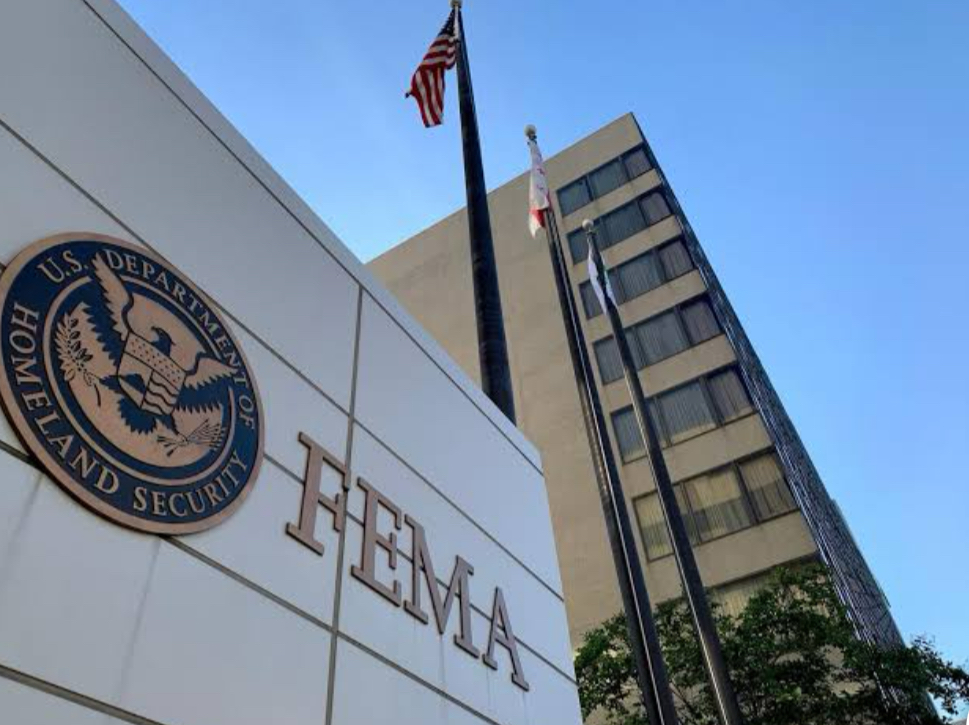
As hurricane season intensifies and wildfires continue to spread across parts of the U.S., budget reductions at the Federal Emergency Management Agency (FEMA) are beginning to reveal a stark reality: many of the regions hardest hit by funding shortfalls are counties that overwhelmingly supported former President Donald Trump in past elections. The trend is reigniting a heated national conversation about disaster preparedness, federal resource allocation, and political equity.
FEMA, the federal agency responsible for coordinating disaster response and resilience, has faced significant budget constraints following a string of costly emergencies over the past five years. With rising climate-related risks and a finite pool of federal funding, officials say they’ve had to prioritize grants and resources toward densely populated urban areas deemed to have the highest impact-per-dollar ratio. While the agency defends its strategy as efficient and data-driven, critics argue that it leaves smaller, rural, and often conservative communities exposed and underprepared.
According to a recent internal FEMA analysis reviewed by congressional aides, several counties in Florida, Texas, and parts of the Midwest all of which voted heavily Republican in 2020 are receiving noticeably less per capita funding than in previous disaster cycles. These reductions are affecting not only storm-preparedness programs but also infrastructure upgrades, emergency shelter provisions, and local hazard mitigation projects.
Local leaders have begun to speak out. In Bay County, Florida devastated by Hurricane Michael in 2018 and a Trump stronghold officials say FEMA’s reduced support has stalled key levee reinforcements and shelter expansions. “We don’t care who’s in the White House,” one emergency coordinator told a local paper. “Our people need to be safe. These cuts are not just numbers on a spreadsheet, they’re lives and livelihoods.”
Meanwhile, in Congress, the issue has become a flashpoint. Several Republican lawmakers are demanding hearings into the funding formulas FEMA uses, suggesting there may be political or ideological bias in how disaster dollars are distributed. “If rural America is footing the bill for disaster relief, they should also benefit from it,” said one GOP senator during a recent committee meeting. “This is not just a budgeting issue, it’s a question of fairness.”
Democrats have pushed back, pointing to FEMA’s long-standing use of metrics such as risk exposure, population density, and economic impact to determine funding. “This is about making sure the most people get the most protection,” said a senior Democratic aide. “It’s not partisan. It’s practical.”
Still, the debate has highlighted a deeper divide in the national conversation around climate policy and disaster readiness. Rural and conservative regions, which may have fewer resources or older infrastructure, often face greater obstacles in preparing for extreme weather but may also be skeptical of federal intervention or climate-driven spending.
As FEMA continues to navigate its shrinking budget and mounting crises, the tension between political geography and federal responsibility remains unresolved. With more storms on the horizon, the stakes are only growing. For many communities on the ground, the question isn’t whether help is coming but whether it will arrive in time.
Israel and Iran Trade Blows for Fourth Consecutive Day as Regional Crisis Deepens
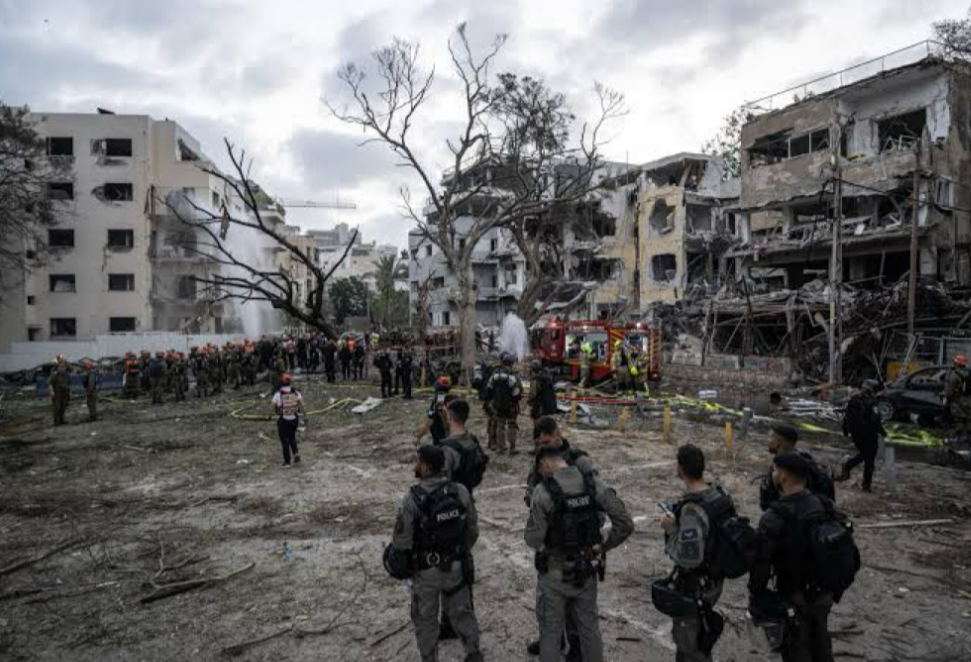
Tensions in the Middle East have reached a new high as Israel and Iran exchange strikes for the fourth straight day, plunging the region deeper into instability and raising alarm bells across global diplomatic circles. The intensifying conflict, which has already resulted in dozens of casualties and widespread infrastructure damage, is drawing in international leaders and testing the limits of military restraint on both sides.
On Tuesday, Israeli airstrikes reportedly intensified around key Iranian military and communications infrastructure near Tehran, prompting a rare, mid-transmission interruption of Iran’s state-run television broadcast. Local media reported explosions audible in central Tehran as air-raid sirens blared across several districts. Shortly after, Iranian civil defense authorities issued urgent evacuation advisories for citizens in parts of the capital, citing a potential risk of “unidentified aerial threats.”
In response, Iran launched a new wave of missile attacks on Israeli military outposts in the northern Galilee region and claimed responsibility for cyberattacks that temporarily disabled several Israeli government websites. While Israel’s Iron Dome defense system intercepted many of the projectiles, several blasts were confirmed by regional media near the border town of Metula. The Israeli Defense Forces (IDF) described Iran’s latest moves as a “deliberate escalation” and warned of “widening operational responses” if attacks persist.
In a dramatic turn, U.S. President Donald Trump cut short his attendance at the G7 summit in Paris, departing early Monday evening to return to Washington and oversee the American response to the unfolding crisis. “This is a fast-moving situation,” Trump told reporters aboard Air Force One. “We’re working closely with our allies to restore calm and protect American interests in the region.” The U.S. State Department has since upgraded travel advisories for Israel, Iran, and neighboring Lebanon, and several U.S. embassies have increased security presence or restricted public access.
Diplomatic efforts to de-escalate have so far failed. Emergency sessions at both the United Nations Security Council and the European Union’s foreign policy council have yielded statements of “deep concern” but no concrete resolution. Russia and China have urged restraint on both sides, while France and Germany have called for an immediate ceasefire and the establishment of a neutral mediation channel.
The renewed violence stems from a months-long pattern of proxy confrontations, targeted assassinations, and cyber warfare. Analysts warn that this direct confrontation between Israel and Iran marks a dangerous shift from proxy conflicts in Syria and Iraq to more open warfare between the two adversaries.
Back in the region, the humanitarian toll is growing. According to the Iranian Red Crescent, at least 48 civilians have been injured in Tehran, primarily from collapsing buildings and panic-related accidents. In Israel, emergency services have responded to multiple incidents of injury and trauma, including several cases of children wounded by shrapnel.
As both nations dig in and rhetoric hardens, the international community faces a narrowing window to prevent a broader war. For now, the skies over the Middle East remain tense, as two of its most powerful nations stare down the possibility of sustained armed conflict.