Fragile Threads in a Tense Global Fabric
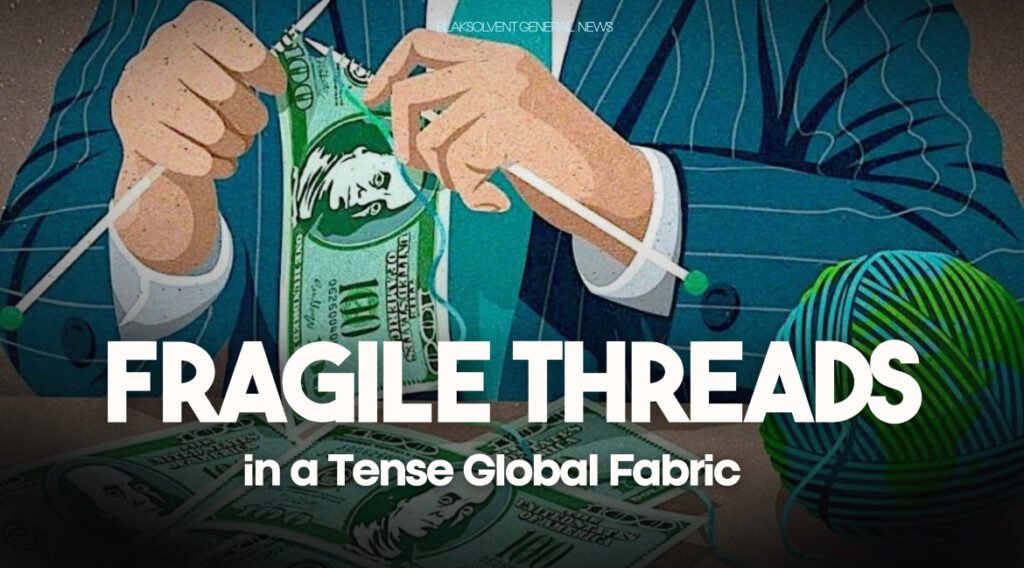
Across continents, a delicate pattern is emerging one stitched not by triumph, but by tension, uncertainty, and quiet urgency. In Stockholm, the world’s two largest economies meet not in celebration, but in caution, trying to hold together a global trade framework that has frayed under years of tariffs and technological rivalry. In Abuja, leaders are being asked to look again not just at oil prices, but at the weight of public need and the limits of borrowed time. And in Gaza, that time has already run out for some, as the human body becomes the last battleground in a war no convoy has yet been allowed to end.
These stories are not isolated. They are signals. In one, the price of crude. In another, the cost of compromise. And in Gaza, the measure of human survival itself. What connects them is a shared vulnerability, a reminder that in a world so deeply interlinked, shocks in one system echo through another. Trade falters, economies bend, borders harden, and in the midst of it all, people wait: for food, for policy, for peace.
As nations negotiate, revise, and respond, the test of leadership is no longer just growth or diplomacy. It is care. It is timing. It is who is fed first and who is forgotten.
In this moment, the world stands at a fragile crossroads. The choices made in boardrooms, in parliaments, and at border crossings are no longer abstract. They are the choices that will determine whether this global fabric tears or holds.
U.S.–China Trade Talks Resume in Stockholm as August Deadline Looms
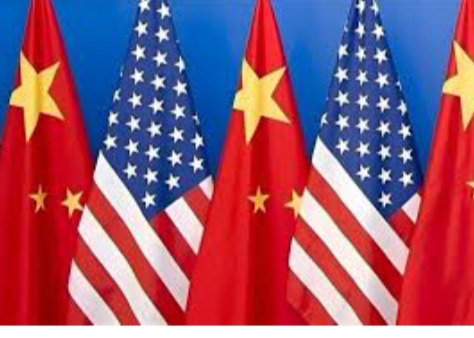
Senior trade officials from the United States and China met in Stockholm on Monday to resume high-level negotiations aimed at extending a fragile tariff truce between the world’s two largest economies. The talks mark the first formal meeting between both delegations in over four months and come as the current suspension of retaliatory tariffs is set to expire on August 12, 2025.
The closed-door discussions are taking place amid heightened global attention, as the U.S.–China trade relationship continues to influence international markets, global supply chains, and geopolitical stability. Both countries are under pressure to avoid a new wave of tariff hikes that could disrupt commerce and weaken recovery momentum in key sectors, including semiconductors, electric vehicles, and rare earth exports.
According to sources familiar with the matter, the Stockholm meeting is focused on assessing progress made since the 2024 Trade Framework Agreement and exploring avenues for extending the tariff moratorium beyond August. U.S. officials are reportedly seeking greater transparency from China regarding intellectual property protections and data security protocols, while Chinese negotiators are pushing for eased restrictions on technology imports and increased access to U.S. agricultural products.
While neither side has publicly disclosed details of the negotiations, analysts suggest the talks are unlikely to produce sweeping new agreements. However, the meeting itself is viewed as a positive sign of continued dialogue amid growing tensions over trade, technology, and global regulatory standards.
This round of talks also precedes potential bilateral meetings on the sidelines of the Asia-Pacific Economic Cooperation (APEC) summit scheduled for later this year in Malaysia. Some observers speculate that U.S. President Donald Trump and Chinese President Xi Jinping may meet during the APEC summit if sufficient progress is made in Stockholm and follow-up rounds.
Global financial markets reacted cautiously on Monday. The Dow Jones Industrial Average edged up by 0.3% in early trading, while Asian and European markets showed modest gains as news of resumed talks filtered in. Crude oil prices also saw a slight uptick, with Brent crude rising to $79.12 per barrel, amid hopes that a truce extension could support trade and energy flows between both economies.
Economists warn that a failure to reach an extension could result in the reactivation of suspended tariffs affecting over $300 billion worth of goods, potentially triggering retaliatory measures from both sides. Such an outcome would affect a range of industries, from consumer electronics and auto manufacturing to agriculture and logistics.
In a recent brief, the World Trade Organization (WTO) emphasized that protracted tariff disputes between major economies could have long-term consequences for global trade flows, especially at a time when inflation and currency volatility remain significant challenges for developing nations.
As of press time, neither the U.S. Trade Representative’s Office nor China’s Ministry of Commerce had issued an official statement on the outcome of the day’s sessions. However, a joint press briefing is tentatively expected on Wednesday, following further technical consultations.
The Stockholm talks are expected to continue into the week, with both sides keeping diplomatic channels open. Although substantial breakthroughs are not anticipated, the resumption of direct negotiations signals a shared interest in avoiding immediate escalation and preserving a degree of economic stability ahead of the August 12 deadline.
IMF Urges Nigeria to Recalibrate 2025 Budget Amid Falling Oil Prices
The International Monetary Fund (IMF) has advised the Nigerian government to review and adjust its 2025 national budget in response to persistent declines in global crude oil prices, which have fallen below the government’s revenue benchmark. In its latest economic surveillance report on Nigeria, the IMF noted that Brent crude has hovered around $68 per barrel in recent weeks well below the federal government’s $75 per barrel assumption underpinning the 2025 fiscal plan.
This development has raised concerns over Nigeria’s ability to meet its revenue targets and sustain public sector obligations, especially in light of increased spending on fuel subsidies, infrastructure, and social intervention programs. The IMF cautioned that failure to recalibrate the budget could lead to deeper fiscal imbalances, widening the budget deficit and increasing the government’s dependence on domestic borrowing.
“Given the deviation from projected oil prices, the current fiscal framework requires urgent realignment,” the IMF stated. “Nigeria must consider expenditure prioritization and revenue mobilization measures to maintain macroeconomic stability.”
The warning comes as Nigeria continues to grapple with post-pandemic economic recovery, ongoing currency instability, and sluggish non-oil sector growth. Crude oil remains the country’s largest export and main source of foreign exchange, making Nigeria particularly vulnerable to volatility in global energy markets.
Budget Risks and Revenue Shortfalls
Nigeria’s 2025 national budget approved in December 2024 was based on an oil production target of 1.78 million barrels per day at a benchmark price of $75 per barrel, with a projected revenue of ₦17.3 trillion and a deficit of ₦9.1 trillion. With actual oil prices now over 9% lower than projected, the Ministry of Finance faces growing pressure to revise its assumptions and reallocate resources.
In response, Nigeria’s Minister of Finance, Budget and Economic Planning, Wale Edun, acknowledged the IMF’s concerns but emphasized that contingency frameworks were already in place. He stated that the government is exploring alternative financing sources, including public-private partnerships and concessional loans, while also considering adjustments to subsidy spending.
Social Sector Concerns
The IMF also called on Nigerian authorities to expand targeted social support measures for vulnerable populations, warning that current inflation levels particularly in food and transport are eroding household incomes. Headline inflation stood at 22.22% in June 2025, according to the National Bureau of Statistics, with food inflation remaining the dominant driver.
“Fiscal tightening must not come at the cost of social protection,” the IMF noted. “Spending cuts should avoid sectors like healthcare, education, and food security, which directly impact poverty and inequality.”
Analysts at several economic think tanks, including the Nigerian Economic Summit Group (NESG), have echoed these concerns, urging the government to introduce a supplementary budget that reflects updated macroeconomic realities while protecting priority sectors.
Implications for Borrowing and Debt Servicing
Nigeria’s public debt stock reached ₦102.3 trillion as of the first quarter of 2025, with debt servicing costs consuming a significant portion of government revenues. The IMF stressed the need for enhanced debt transparency, reduced reliance on short-term domestic borrowing, and more efficient tax collection.
To mitigate revenue shortfalls, the Fund recommended a broader implementation of the Finance Act 2025, which includes provisions for digital tax collection, luxury goods levies, and streamlined Value Added Tax (VAT) compliance.
Market Reaction and Next Steps
Financial markets responded moderately to the IMF’s report. The Naira, which had recently stabilized following Central Bank interventions, traded slightly lower at ₦1,032 to the U.S. dollar on Tuesday. Meanwhile, foreign investor sentiment remained cautious pending signals of fiscal adjustment or official budget review announcements from Abuja.
A supplementary budget may be tabled in the National Assembly before the end of Q3 2025, though no formal statement has been made. Economic observers are closely monitoring developments, especially given the broader global context of weakening oil demand and shifting trade dynamics.
The IMF concluded its report by reaffirming its support for Nigeria’s economic reform agenda and expressed willingness to provide technical assistance on budget restructuring and debt sustainability planning.
Global Hunger Monitor Warns of Escalating Famine Conditions in Gaza
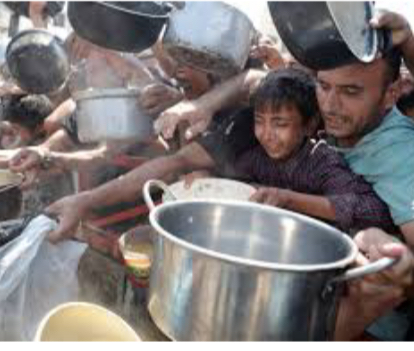
A global humanitarian alert has been issued as food insecurity in the Gaza Strip reaches critical levels. According to data released this week by the Integrated Food Security Phase Classification initiative, commonly known as IPC, parts of Gaza are now facing famine-like conditions due to severely restricted aid access, ongoing conflict, and the collapse of essential services.
The IPC report states that an alarming percentage of the population is experiencing extreme levels of hunger. It confirms that over fifty percent of Gaza’s remaining civilian population is now in IPC Phase 4 or 5, meaning emergency or catastrophe levels of food insecurity. Phase 5 signifies conditions equivalent to famine.
Recent satellite imagery, combined with field assessments from humanitarian agencies, shows significant damage to food distribution infrastructure. Warehouses, markets, and storage facilities have been destroyed or rendered inaccessible. The collapse of the public water system, the prolonged electricity blackout, and the breakdown in supply chains have made the situation more dire for children, the elderly, and displaced families.
The report notes that aid deliveries have slowed drastically since mid-July. Crossings into Gaza remain closed or severely limited, and convoy approvals are often delayed. Medical and food supplies are piling up at checkpoints on the border with Egypt, as diplomatic efforts to establish a consistent humanitarian corridor have yet to produce results.
Humanitarian officials warn that the risk of a full-scale famine increases with each passing week of restricted access. Children under five years old are particularly affected, with rising cases of acute malnutrition and dehydration being reported by field hospitals operated by international aid organizations. Many of these clinics are functioning without electricity, fuel, or clean water.
Since the escalation of hostilities earlier this year, more than one million people have been displaced within Gaza. The coastal enclave, which has been under blockade for over a decade, now faces what experts describe as one of the worst hunger crises of the last twenty years.
In recent briefings, humanitarian groups working in the region have called for an immediate ceasefire, unimpeded access for aid convoys, and the restoration of basic services. They have also appealed for donor countries to expedite funding for emergency food and medical relief. Several nations have pledged support, but delivery remains inconsistent due to security constraints.
The United Nations Office for the Coordination of Humanitarian Affairs is expected to hold a closed session later this week with international stakeholders to assess next steps. A formal famine declaration could follow if the situation continues to deteriorate and food access remains blocked.
While diplomatic negotiations continue, the humanitarian toll on civilians continues to rise. Analysts note that without swift intervention, the situation in Gaza could become a case study in preventable starvation during conflict.
The IPC and supporting agencies have urged the global community to act immediately to prevent further loss of life. As of now, no official ceasefire has been announced, and the delivery of life-saving assistance remains a race against time.