When National Interests Meet Global Stakes
Today’s headlines remind us that the intersection between national ambition and global responsibility is more complex—and more consequential—than ever before.
Nigeria’s move to open two lithium processing plants with Chinese backing signals an assertive step in the nation’s industrial evolution. As global demand for lithium surges, Nigeria is no longer content to export raw materials—it wants a bigger seat at the value chain. But this pursuit of economic independence must reckon with broader implications: who truly controls the technology, the profits, and the land?
At the South Summit in Uganda, developing countries raised their voices in unison, demanding a financial system that no longer sidelines them. The call for reform isn’t just about loans and interest rates; it’s about the right to shape one’s own development path. As the world faces climate crises, inflation, and geopolitical instability, a rebalanced financial order may be the only path to shared resilience.
Across the ocean, the halted gene therapy trial from Rocket Pharmaceuticals casts a stark light on the ethical challenges of medical progress. Innovation may offer hope, but when risks are fatal, questions must be asked: How much oversight is enough? Who bears the burden of experimental medicine? And how do we protect human life while still pushing the boundaries of what’s possible?
Together, these stories speak to a central truth: as countries and corporations pursue national or commercial interests, they do so in a deeply interconnected world. The stakes are rarely local, the consequences rarely contained. From biotech to banking to battery metals, today’s decisions are shaping tomorrow’s shared future.
Nigeria Advances Lithium Industry with Launch of Two Chinese-Funded Processing Plants
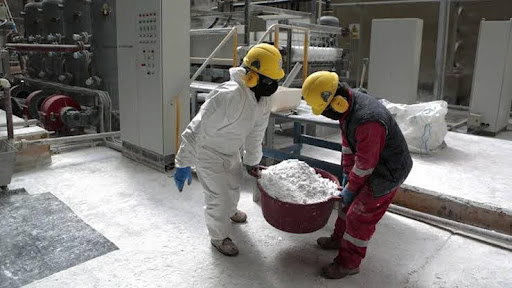
Nigeria is set to bolster its position in the global lithium market with the inauguration of two significant lithium processing plants, both backed by Chinese investments. These developments are poised to enhance the country’s role in the global supply chain for electric vehicle (EV) batteries and renewable energy storage solutions.
Nasarawa State: Jiuling Lithium’s $200 Million Investment
In Nasarawa State, Jiuling Lithium Mining Company, a Chinese firm, is investing over $200 million to establish a state-of-the-art lithium processing facility in the Endo community of Nasarawa Local Government Area. The plant is designed to process up to 6 million tonnes of lithium ore, aiming to become one of Africa’s largest lithium processing centers .
Governor Abdullahi Sule has assured Jiuling Lithium of the security of its investment and emphasized the state’s commitment to providing necessary infrastructure support. He also encouraged local youths to pursue technical education to qualify for employment opportunities at the plant, where graduates are expected to earn a minimum salary of ₦500,000 .
Kebbi State: El-Tahdam’s $500 Million Lithium Processing Hub
Simultaneously, Kebbi State is on track to become a major lithium processing hub with El-Tahdam Global’s ambitious project, backed by a $500 million investment from TSG Mining Group. The plan includes constructing three lithium processing plants across Kebbi, Kwara, and Kaduna states, each with a daily processing capacity of 3,000 metric tonnes of lithium ore. Additionally, a lithium carbonate plant is slated for Lagos, aiming to produce 80,000 metric tonnes of high-purity lithium carbonate annually .
This integrated approach is expected to significantly enhance the value of Nigeria’s lithium exports, attract global battery manufacturers, and stimulate the domestic EV industry.
Federal Government’s Stance on Sustainable Mining
President Bola Tinubu has welcomed these investments, highlighting Nigeria’s potential as a hub for solar panels and EV battery manufacturing. However, he has cautioned foreign investors against practices that could harm local communities, urging them to prioritize environmental protection and corporate social responsibility .
Implications for Nigeria’s Economy
The establishment of these processing plants marks a significant step in Nigeria’s efforts to diversify its economy and capitalize on its mineral resources. By moving up the value chain from raw mineral exports to processing and manufacturing, Nigeria aims to create jobs, increase foreign exchange earnings, and position itself as a key player in the global clean energy transition.
Global South Nations Rally for Overhaul of Global Financial System
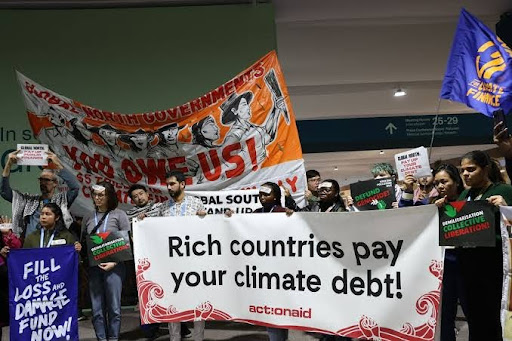
In a powerful call to action at the Third South Summit in Kampala, Uganda, leaders from the Group of 77 and China (G-77/China) demanded a sweeping reform of the international financial system to better serve the needs of developing nations. Representing 135 countries, the coalition urged global financial institutions to adopt more equitable structures and provide urgent debt relief to struggling economies.
Global Inequity at the Center of Financial Reform Calls
Ugandan President Yoweri Museveni, the new chair of the G-77, criticized current international financial institutions—including the International Monetary Fund (IMF) and the World Bank—for perpetuating systems that disadvantage the Global South. “We support the urgent reform of the international financial architecture to ensure that it is fit for purpose,” Museveni said, stressing the need for loan terms that respect national sovereignty and development priorities.
The summit, themed “Leaving No One Behind,” framed reform as essential to achieving sustainable development goals (SDGs) across climate, education, infrastructure, and healthcare in the Global South.
UN Pushes for $500 Billion SDG Stimulus
UN Secretary-General António Guterres echoed the concerns raised by G-77 leaders. He declared that the global financial system is failing developing countries, especially during times of crisis. Guterres proposed a new SDG Stimulus—a $500 billion annual fund offering long-term, affordable financing to help developing nations achieve sustainable development and climate resilience.
He also called for a fundamental transformation in how multilateral development banks (MDBs) operate, urging them to scale up their capital base, offer concessional financing, and develop new models that attract private investment without burdening developing countries with unsustainable debt.
Debt Relief and Climate Finance at the Forefront
The summit’s final communiqué called for immediate solutions to the debt crisis, including large-scale debt-for-climate and debt-for-nature swaps. These mechanisms would enable countries to redirect debt payments toward sustainable development and environmental conservation projects.
Leaders also urged global lenders to provide concessional finance—not just to low-income countries, but to middle-income nations as well, recognizing their growing vulnerabilities in the face of economic shocks and climate change.
A Unified Front from the Global South
The Kampala gathering demonstrated growing unity among Global South nations in demanding a fairer global order. The push for financial reform is expected to feature prominently in upcoming international negotiations, including the 2025 United Nations Climate Change Conference (COP29).
As the world grapples with inequality, climate urgency, and sluggish global growth, developing countries are making it clear: the rules of the global financial game must change—and the time is now.
FDA Suspends Rocket Pharmaceuticals’ Gene Therapy Trial Following Patient Death
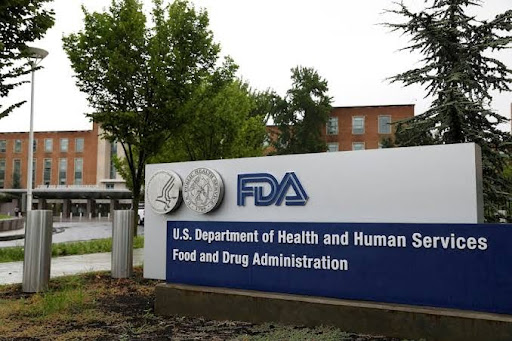
The U.S. Food and Drug Administration (FDA) has placed a clinical hold on Rocket Pharmaceuticals’ Phase 2 trial of its experimental gene therapy, RP-A501, after a patient died due to severe complications. The trial was aimed at treating Danon disease, a rare genetic disorder that affects heart and muscle function.
Details of the Adverse Event
The patient developed capillary leak syndrome, a serious condition where fluids and proteins leak from small blood vessels into surrounding tissues, leading to swelling and low blood pressure. Despite initial signs of improvement, the patient later succumbed to an acute systemic infection. Rocket Pharmaceuticals had voluntarily paused dosing in the study prior to the FDA’s intervention on May 23, 2025.
Investigating the Cause
Rocket Pharmaceuticals is conducting a comprehensive analysis to determine the cause of the adverse event. Preliminary findings suggest that a newly introduced immune suppression agent, intended to mitigate complement activation, may have contributed to the development of capillary leak syndrome. This agent was specific to the Danon disease program and had been added to the pre-treatment regimen.
Company Response and Future Steps
Gaurav Shah, M.D., CEO of Rocket Pharmaceuticals, expressed deep sorrow over the patient’s death and emphasized the company’s commitment to patient safety. “We are heartbroken by this loss and are fully committed to our mission to develop gene therapies that address the underlying cause of devastating diseases like Danon,” Shah stated. The company is working closely with the FDA, an independent data monitoring board, and clinical investigators to address the clinical hold and ensure the safety of all study participants.
Market Impact
Following the announcement, Rocket Pharmaceuticals’ stock experienced a significant decline, dropping 63% in premarket trading to $2.30 from a previous close of $6.27.
Background on RP-A501 and Danon Disease
RP-A501 is an investigational gene therapy designed to deliver a functional copy of the LAMP2B gene to heart cells using an adeno-associated virus serotype 9 (AAV9) vector. Danon disease is caused by mutations in the LAMP2 gene, leading to severe cardiac and skeletal muscle dysfunction. The therapy aims to restore normal cardiac function through a single intravenous infusion. The Phase 2 trial was evaluating the safety and efficacy of RP-A501 in 12 patients, including a pediatric safety run-in.