Earth Spins Faster: July 22 Marks the Second-Shortest Day Ever Recorded

Across continents and contexts, the stories from July 22, 2025, offer a telling snapshot of a world grappling with imbalance some of it economic, some political, and some deeply elemental.
In the UK, rising grocery inflation has tilted the delicate scale of everyday survival. Essentials are now luxuries, and for many families, a routine supermarket visit has become a monthly crisis. In Australia, parliamentary halls echo with urgent debates—about war, justice, and domestic equity—as leaders are forced to confront both international brutality and inequality at home. Meanwhile, in the realm of science, the Earth itself has sped up, reminding us that even nature’s rhythms are not as constant as we once believed.
Each story is different yet all speak to a world under pressure, moving faster than its people can adjust.
For citizens, the questions are deeply personal:
How do I feed my family? Whose suffering matters to my leaders? Can I rely on time, truth, or even the ground beneath me?
For governments, the challenge is to answer not with slogans or delay, but with clarity, courage, and care.
In an era defined by uncertaintywhether economic, political, or planetary these stories reveal the cost of delay and the demand for action. Because whether it’s 1.34 milliseconds lost, a child going to bed hungry, or a government hesitating to confront injustice, every moment matters.
World Out of Sync

In a discovery that’s as scientifically fascinating as it is technically challenging, scientists have confirmed that today, July 22, 2025, will go down in history as the second-shortest day ever recorded on Earth.
According to international timekeeping and geophysical monitoring stations, the Earth completed its full rotation approximately 1.34 milliseconds faster than the standard 24-hour day. While this fraction of a second may seem insignificant, it has far-reaching implications for global timekeeping systems, satellite synchronization, and even long-term climate observations.
Why Is the Earth Spinning Faster?
The Earth does not spin at a perfectly constant rate. Its rotation can be influenced by various factors, including atmospheric pressure, ocean currents, core-mantle interactions, seismic activity, and even glacial rebound. In recent years, scientists have noticed a trend: the Earth has been subtly but steadily rotating faster.
“We’ve been observing micro-variations in Earth’s spin, but this particular shift is remarkable,” said Dr. Elsa Reinhardt, a geophysicist with the International Earth Rotation Service (IERS). “It’s not catastrophic, but it definitely gets the attention of those working in precise fields like navigation and telecommunications.”
What Does It Mean?
A day that’s 1.34 milliseconds shorter doesn’t affect our daily lives in any obvious way. You won’t miss a cup of coffee, a text message, or even a breath. But in fields that rely on hyper-accurate timing like GPS, satellite communications, high-frequency trading, and astronomy even a millisecond can cause disruptions.
“Atomic clocks keep the world synchronized. When Earth spins faster than expected, even by a tiny fraction, we need to recalibrate,” explained Dr. Lian Zhou, a satellite systems engineer at a leading aerospace firm.
Systems like GPS are designed to work with time so precisely that even a minor drift in the planet’s rotation can lead to a mismatch between where satellites think we are and where we actually are. Over time, if not corrected, this could affect everything from car navigation systems to financial transactions timestamped in nanoseconds.
Could There Be a “Negative Leap Second”?
To keep our timekeeping aligned with Earth’s rotation, scientists sometimes insert a “leap second” into our clocks usually adding a second to the day. But as Earth begins to spin faster, scientists are now contemplating the rare possibility of a negative leap second, where a second would be removed from universal time.
This would mark the first time in human history that time had to be “shortened” in this way something not all systems are prepared for. In fact, some major tech companies like Meta (formerly Facebook) have publicly opposed leap seconds due to the risk they pose to global systems.
A Glimpse Into Earth’s Dynamic Nature
Beyond the technical implications, this event reminds us that Earth is a living, shifting planet. Its spin is not set in stone, and neither is our understanding of the systems that govern time and motion.
“We often think of a day as fixed 24 hours, 86,400 seconds,” said Dr. Reinhardt. “But that’s an approximation. Earth has its own rhythm, and occasionally, it surprises us.”
As scientists continue to monitor Earth’s rotational speed, further anomalies may surface. For now, July 22, 2025, will be remembered not for a natural disaster or political headline but for a blink-and-you-miss-it shift in the heartbeat of the planet.
Tensions Rise in Canberra as Australian Parliament Debates Gaza Conflict and Domestic Reform Priorities
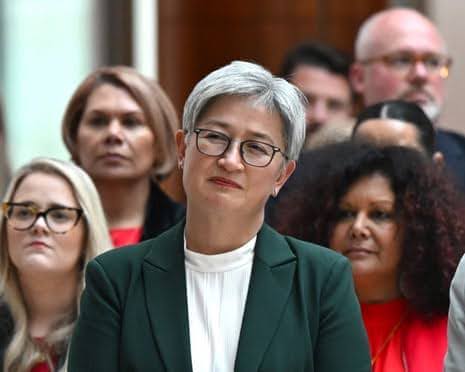
Australia’s Parliament saw a heated and emotionally charged session today, as lawmakers debated a complex slate of domestic reforms alongside urgent foreign policy questions stemming from the ongoing conflict in Gaza. The session, which lasted several hours, reflected mounting public and political pressure for stronger humanitarian action abroad and immediate relief at home.
On the international front, Independent Senator David Pocock made headlines by demanding that the federal government summon the Israeli ambassador to explain the deaths of aid workers and civilians in Gaza. The deaths linked to Israeli airstrikes on humanitarian convoys have sparked outrage both within the international community and among Australian civil society groups.
“The Australian government must stand firmly for international law and human dignity,” Pocock said during the session. “Silence in the face of such grave violations is complicity.” He also criticized the government’s cautious tone on the matter, arguing that moral leadership requires more than diplomatic restraint.
Adding to the call for a more assertive stance, Greens Senator Mehreen Faruqi described the government’s response to the Gaza conflict as “morally cowardly,” urging Prime Minister Anthony Albanese and Foreign Minister Penny Wong to consider sanctions on Israeli officials responsible for targeting civilians and aid workers. Faruqi’s comments sparked applause from some corners of the chamber, but also visible discomfort from others, highlighting the deep divides within Parliament over how Australia should engage in Middle Eastern affairs.
“We should not be picking and choosing when to defend human rights,” Faruqi stated. “When children are being buried under rubble funded by our military export partners, we cannot hide behind bureaucratic neutrality.”
Domestic Reforms Dominate Morning Debate
While foreign policy took center stage later in the day, the morning session was largely devoted to critical domestic policy reforms, many of which have been promised by the Albanese government since the last federal election.
Key agenda items included:
- HECS-HELP Debt Relief: Parliament is reviewing a proposal to freeze student loan indexation and introduce partial forgiveness for graduates earning under $65,000 annually. The move is intended to address Australia’s growing student debt crisis, which has left many young workers struggling with rising repayments due to inflation-linked interest rates.
- Childcare Regulation Overhaul: Lawmakers also reviewed new national standards for early childhood education providers, focusing on affordability, staff-to-child ratios, and rural access.
- Labor Rights and Casual Employment Protections: Another hot topic was the overhaul of casual work contracts. The proposed bill would require employers to convert eligible long-term casuals to permanent staff, a move heavily backed by unions and worker rights groups.
Independent MP Dr. Monique Ryan spoke passionately in favor of increased education funding. “We cannot expect a skilled, healthy workforce if we continue to treat education like a political bargaining chip,” she said. Dr. Ryan also called for an audit of federal higher education spending to ensure that funding reforms are targeted and transparent.
A Divided Parliament, A Restless Public
The juxtaposition of domestic urgency and foreign policy morality was not lost on the public, as demonstrations were staged outside Parliament House by both student unions and pro-Palestinian solidarity groups.
Polls conducted earlier this week by Essential Research revealed that 58% of Australians support stronger diplomatic pressure on Israel, while 65% support reforms to reduce student debt burdens.
Still, critics argue that the Albanese government is trying to juggle too many high-stakes issues at once without delivering strong action on any single front. Some backbench MPs have urged a more cautious approach, warning that sweeping legislative changes could backfire if rushed or politicized.
With both the Gaza crisis and key reforms gaining momentum, the coming weeks in Parliament are expected to be both politically volatile and socially significant. For now, Australians are watching closely expecting not just words from their elected leaders, but action.
UK Grocery Inflation Hits 18-Month High, Squeezing Consumer Budgets as Prices Surge
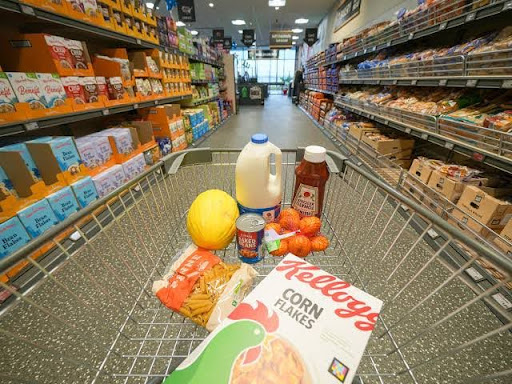
Shoppers across the United Kingdom are once again feeling the pinch, as the country’s grocery inflation rate surged to its highest level since January 2024. According to new data released by Worldpanel by Numerator (formerly Kantar), grocery prices rose by 5.2% in the four-week period ending July 13, renewing concerns about the rising cost of living and food affordability.
This sharp increase comes after a relatively stable period earlier in the year, when inflationary pressures had begun to ease. Analysts had hoped that consumer prices would continue to cool following aggressive interest rate hikes by the Bank of England and falling wholesale food costs. However, the latest figures suggest a worrying reversal.
Core Essentials Driving the Price Hike
The data points to notable increases across several essential categories, including:
- Bread and bakery items
- Dairy products like cheese, milk, and yogurt
- Packaged meats and chilled convenience foods
- Fruits and vegetables, particularly imported produce
Retailers attribute the hike to a combination of global supply chain issues, increased energy and packaging costs, and the lingering effects of extreme weather events, including flooding in parts of Europe and drought conditions in North Africa, which have disrupted agricultural yields.
“The supply chain is still recovering from global shocks,” explained Sarah Allen, a senior economist with the Retail Economics Group. “And while raw material costs are stabilizing, the cumulative impact of higher labor, transport, and energy costs is being passed on to shoppers.”
Budget Households Hit Hardest
The rising prices are most acutely felt among low- and middle-income households, many of whom have already cut back on discretionary spending. More shoppers are turning to budget ranges, loyalty schemes, and supermarket own-brand products in an attempt to manage costs.
“A £50 grocery trip barely covers the basics now,” said Angela Morris, a single mother of two from Birmingham. “Every week I walk away from the checkout wondering what I even bought.”
To help ease the burden, major retailers like Tesco, Aldi, and Sainsbury’s have increased promotions and price-matching schemes. However, consumer advocates say such measures are not enough.
“The government needs to take a closer look at how inflation is disproportionately affecting food security,” said Leila Grant from the National Food Alliance. “We’re seeing a rise in food bank use, even among full-time workers.”
Broader Economic Implications
The sharp rise in grocery inflation also complicates the broader economic outlook for the UK. While the Bank of England has paused its rate hikes to avoid slowing the economy too aggressively, rising food prices could force policymakers to reconsider their stance.
Inflation overall remains above the Bank’s 2% target, and food inflation typically a leading indicator may increase pressure on household spending, consumer confidence, and retail sales in the coming months.
“If food prices continue to rise into the autumn, it will pose a serious challenge to economic recovery,” warned Dr. Jerome Patel, a policy analyst at the London School of Economics. “Households are already stretched, and inflation in essentials like groceries leaves very little room for anything else.”
Looking Ahead
Analysts are cautiously watching upcoming harvest yields and commodity forecasts to determine whether this price surge is temporary or part of a renewed inflationary trend. Much depends on global stability in key food-producing regions, exchange rate fluctuations, and energy prices as winter approaches.
In the meantime, shoppers are advised to plan strategically, make use of discounts, and monitor their expenses closely.
“We hoped the worst of the inflation storm was behind us,” said Sarah Allen. “But this spike is a reminder that the food economy is still on very shaky ground.”