BLAKSOLVENT GÉNÉRAL NEWS -22/12/25
Lines of Fracture and Flux: Diplomacy, Division, and Market Ripples
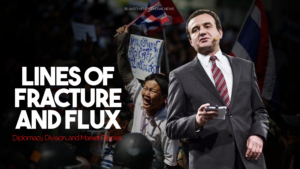
Across regions, the world is navigating moments of strain where diplomacy, governance, and economic stability intersect under pressure. Efforts to contain violent border tensions in Southeast Asia underscore the fragility of regional cooperation, while political deadlock in parts of Europe reveals how stalled governance can quickly translate into financial risk and public uncertainty. At the same time, developments in global energy markets show how geopolitical actions whether on land or at sea can send immediate ripples through prices and policy calculations. Together, these events reflect a global environment shaped by interconnected vulnerabilities, where decisions in one sphere reverberate across others, influencing not only states and markets but the everyday realities of people living amid uncertainty.
ASEAN Mediation as Thailand–Cambodia Conflict Escalates
BY BLAKSOLVENT NEWS
In response to renewed violence between Thailand and Cambodia, foreign ministers from ASEAN countries met in Kuala Lumpur, Malaysia on December 22, 2025, to seek pathways toward halting hostilities that have flared along their shared border. The meeting, convened amid persistent clashes that began earlier in December, marked the first direct engagement between high-level diplomats from both states since fighting resumed. Previous efforts led by ASEAN and external partners had brokered a ceasefire in October, but accusations of violations, including alleged cross-border attacks, have strained relations in the region.
Both Thai and Cambodian officials accused each other of breaching ceasefire terms, citing incidents such as drone attacks, landmine deployment, and firing across border posts. These hostilities have reportedly led to at least 60 deaths and displaced more than 500,000 people as both governments reinforced military positions. Malaysia, as the rotating ASEAN chair, urged constructive dialogue and regional diplomatic engagement to prevent further bloodshed and foster long-term trust.
The ASEAN initiative also involved technical support including satellite data provided by the United States to help clarify conflict incidents and de-escalate tensions. Malaysian Prime Minister Anwar Ibrahim emphasized that the goal was not simply to pause fighting but to lay foundations for a durable political solution that respects territorial sovereignty and regional stability.
Observers have noted that ASEAN’s handling of the crisis will test its ability to manage intra-regional disputes independently and establish the bloc as a credible diplomatic mediator. With geopolitical actors such as the U.S. and China also engaged in the region, ASEAN’s success or failure could influence broader Southeast Asian security architecture going into 2026.
Kosovo Elections Amid Political Deadlock and Financial Strain
BY BLAKSOLVENT NEWS
Kosovo is preparing for parliamentary elections on December 28, 2025, following a prolonged political deadlock that has jeopardized crucial external funding. Prime Minister Albin Kurti’s Vetevendosje party has struggled to secure a governing majority since the previous election, as deep divisions with opposition parties have repeatedly prevented the formation of a stable coalition. This stalemate has not only impaired legislative functioning but also led to delays in significant financial support from the European Union and World Bank, threatening essential public services such as health and education.
The impasse has seen more than €1 billion in aid held up, including €880 million from the EU and €127 million from the World Bank. These funds are critical for infrastructure projects, economic recovery, and social programs areas that many Kosovo citizens depend on for daily stability and growth. Voter frustration has grown, with many citizens expressing concern that continued political stalemate could prolong economic hardships and delay reforms.
The opposition has campaigned on pledges to break the deadlock and accelerate governance, while critics point to rising tensions with the ethnic Serb minority as a central factor in the political crisis. Analysts warn that if the upcoming election fails to produce a decisive majority for any party, Kosovo could face renewed instability just months before a scheduled presidential election, further complicating efforts to secure long-term political and financial stability.
International actors, including the EU, have closely monitored the situation, urging peaceful and democratic processes. The outcome of the election will have implications not only for Kosovo’s domestic trajectory but also for its diplomatic relations with neighboring Serbia and broader European integration aspirations goals that hinge significantly on political cohesion and economic viability.
Oil Market Reaction Following U.S. Interception of Venezuelan Tanker
BY BLAKSOLVENT NEWS
Oil markets reacted sharply on December 22, 2025, after reports emerged that the U.S. had intercepted an oil tanker off the coast of Venezuela, leading to an uptick in crude prices. Brent crude futures rose by about 0.8 % to around $60.93 per barrel, while U.S. West Texas Intermediate crude also climbed by a similar margin. Traders attributed the movement to concerns about geopolitical risk and supply disruptions following increased U.S. enforcement actions in international waters to counter perceived sanctions evasion.
The interception marked the second U.S. operation against Venezuelan oil tankers over a weekend, and the third in under two weeks, reflecting a tightening of maritime scrutiny under the Trump administration’s foreign policy approach. This heightened activity has coincided with broader geopolitical tensions, including the ongoing Russia–Ukraine conflict, which has also influenced energy market sentiment.
In addition to the tanker interception, separate reports noted a Ukrainian drone strike on a Russian vessel in the Mediterranean, compounding concerns about potential supply-side impacts from global conflicts. Although long-term disruptions have not yet materialized, traders responded to these developments as signals of volatility that could tighten crude availability should geopolitical frictions escalate further.
Market analysts also noted that uncertainty surrounding peace talks between Russia and Ukraine, despite being described as “productive” by some U.S. officials, has so far failed to ease risk premiums in energy pricing. As policymakers and diplomats navigate these complex international pressures, energy markets are likely to remain sensitive to signs of tension or resolution in global hotspots.