Escalation Without End – The Fragile Threads of War and Diplomacy
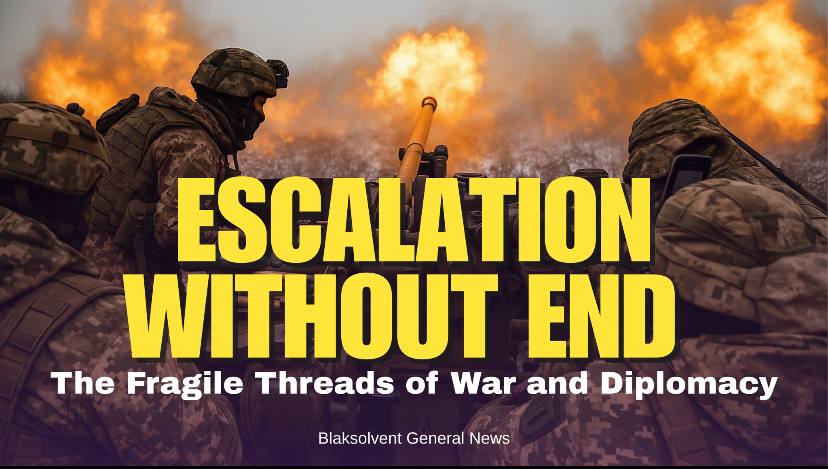
In a week marked by shattered truces, disputed investigations, and deepening front-line hostilities, the global stage was once again gripped by the harsh realities of war. From Russia’s symbolic recapture of a war-torn monastery in Kursk, to the Israeli military’s admission of fatal misjudgments in Gaza, and the collapse of Putin’s brief Easter ceasefire in Ukraine, each headline underscored a common truth: even the promises of peace remain dangerously fragile in the shadow of unchecked aggression. As diplomacy strains under the weight of mistrust and mounting civilian tolls, the world watches—uneasily—while conflict continues to outpace resolution.
Russia Regains Control of Kursk Monastery After Ukrainian Incursion
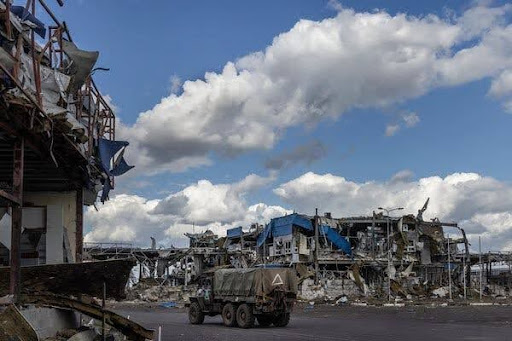
In a significant battlefield development, Russian forces have reasserted control over the historic St. Nicholas Belogorsky Monastery in the Kursk region, following months of conflict triggered by a rare cross-border Ukrainian military operation. According to state-owned TASS News Agency, the monastery, located in the village of Gornal near the Russia-Ukraine border, had been a focal point of fighting since Ukrainian troops launched an incursion into Russian territory in August 2024.
The monastery, which holds religious and cultural significance in the Orthodox Christian community, became a target in the early stages of Ukraine’s offensive. Russian authorities reported heavy damage to the structure, including the near-complete destruction of its main church during shelling in August. Prior to that, in July 2024, a drone strike reportedly carried out by Ukrainian forces killed a 60-year-old worshipper and wounded others, escalating tensions on both sides.
The Russian Ministry of Defense claims that over 250 Ukrainian servicemen were killed in recent operations to reclaim the area, adding to what they estimate to be a total of more than 28,000 Ukrainian casualties in the Kursk region since the offensive began. In response to the attacks, Russia’s Investigative Committee has launched criminal cases against Ukrainian military personnel suspected of targeting religious sites.
Despite the symbolic victory for Russia, Ukraine maintains that its actions were part of a broader strategy to dismantle Russian military launch points used to fire into Ukrainian territory. Officials in Kyiv clarified that the operation was not an attempt to occupy Russian land but to neutralize artillery and drone bases close to the border.
The cross-border campaign marked one of Ukraine’s boldest moves since the full-scale war began in 2022, temporarily displacing more than 120,000 civilians in the region. Humanitarian groups and religious leaders, including Russian Patriarch Kirill, have condemned the fighting near sacred sites and called for restraint.
As of today, Blacksolvent News has verified satellite and ground reports confirming Russian troops are firmly stationed around the monastery grounds, and reconstruction efforts may begin in the coming months. However, the broader security situation in the border regions remains volatile, with new skirmishes reported daily.
Russia’s symbolic reclamation of the monastery highlights the enduring religious and nationalist undertones of the conflict, as both sides continue to battle not only for territorial control but also for cultural and ideological dominance.
Israeli Military Blames ‘Professional Failures’ for Gaza Medic Deaths, Sparking Global Backlash
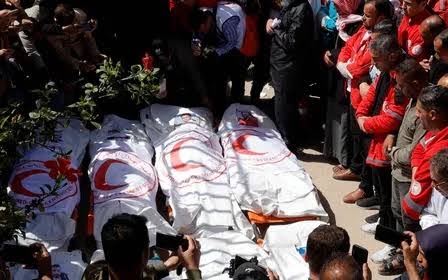
The Israeli military has admitted that a series of “professional failures” led to the fatal targeting of a convoy of Palestinian medics and humanitarian workers near Rafah in southern Gaza. The March 23 strike, which killed 15 individuals—including eight from the Palestinian Red Crescent Society, six from Gaza Civil Defense, and a staff member from the United Nations—has drawn widespread condemnation and renewed calls for independent investigations.
Following weeks of mounting international pressure and the release of video footage contradicting earlier military claims, the Israel Defense Forces (IDF) concluded an internal review of the incident. Initially, the IDF alleged the convoy did not display appropriate emergency markings and was suspected of transporting Hamas operatives. However, verified footage showed the vehicles were clearly marked ambulances with emergency lights visibly active at the time of the strike.
The investigation, made public this week, resulted in the dismissal of a deputy battalion commander and the formal reprimand of another officer. The IDF attributed the deadly error to poor judgment, visibility issues, and a failure to properly verify the identity of the convoy. Nevertheless, the military insisted that some of those killed were affiliated with Hamas—an assertion strongly disputed by humanitarian groups.
Organizations such as the United Nations and the Palestinian Red Crescent have rejected the IDF’s internal findings, labeling the review as inadequate and lacking transparency. They argue the incident represents a grave violation of international humanitarian law, potentially amounting to a war crime. Calls are growing for an independent, international probe that could bring more definitive accountability.
The incident is one of the deadliest strikes on humanitarian personnel in the current Gaza conflict, which has raged since October 2023. Human rights groups report that over 150 emergency workers have been killed in the line of duty since the escalation began, many of them while performing rescue or evacuation operations.
As of today, the Israeli military continues to face international scrutiny not only for the Rafah incident but for its broader conduct in Gaza. The situation remains tense as diplomatic pressure mounts for greater accountability and adherence to the principles of humanitarian protection during armed conflict.
Putin Accused of Violating Own Ceasefire as Easter Truce in Ukraine Ends in Renewed Attacks
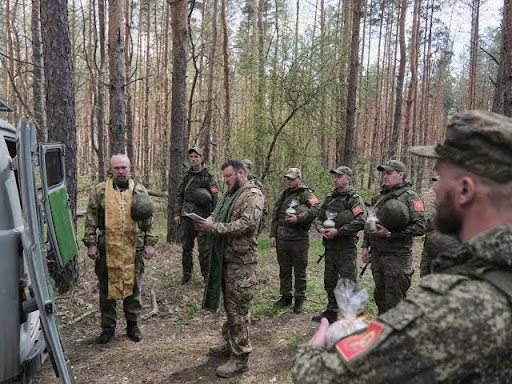
Russian President Vladimir Putin is under mounting international scrutiny following reports that Russian forces breached a self-declared Easter ceasefire in Ukraine, reigniting hostilities across multiple frontlines. The 30-hour truce, announced by Moscow and intended to coincide with Orthodox Easter observances, ended in what Ukrainian officials describe as a barrage of missile strikes, drone attacks, and artillery fire targeting both military and civilian areas.
The temporary ceasefire, which began Saturday evening, was pitched by the Kremlin as a humanitarian gesture to allow Orthodox Christians on both sides of the conflict to mark the religious holiday in peace. However, Ukraine’s military command reported that Russian forces violated the ceasefire nearly 3,000 times, with attacks recorded in Kherson, Mykolaiv, Donetsk, and Zaporizhzhia. Civilian infrastructure was reportedly damaged, and several deaths have been confirmed.
Ukrainian President Volodymyr Zelenskyy had earlier proposed a 30-day extension of the truce to reduce civilian suffering and build momentum for peace talks. Kyiv claims its military adhered to the spirit of the pause by refraining from targeting civilian infrastructure during the ceasefire window. The rapid escalation that followed the truce’s expiration has prompted accusations from Ukrainian officials that the ceasefire was merely a propaganda tool used by Moscow to manipulate global opinion.
In contrast, the Russian Ministry of Defense released its own statement accusing Ukraine of violating the ceasefire over 4,900 times, alleging that Kyiv conducted numerous drone strikes and artillery attacks along the Russian border and in occupied territories. Russian state media reported civilian injuries and damage in Belgorod and Kursk, though these claims have not been independently verified.
The renewed fighting comes at a particularly sensitive moment in the broader geopolitical landscape. Western allies of Ukraine, including the United States, France, and Germany, are preparing for a high-stakes diplomatic summit in London later this week, where a potential framework for peace negotiations will be discussed. French officials have already voiced skepticism about Moscow’s commitment to de-escalation, calling the ceasefire announcement a “calculated ploy” to gain leverage ahead of negotiations.
As the war enters its third year, confidence in diplomatic progress remains low. The breakdown of the ceasefire underscores the deeply entrenched distrust between both sides and raises fresh questions about the viability of any negotiated settlement.