Tensions at the Crossroads of Power, Policy, and Progress
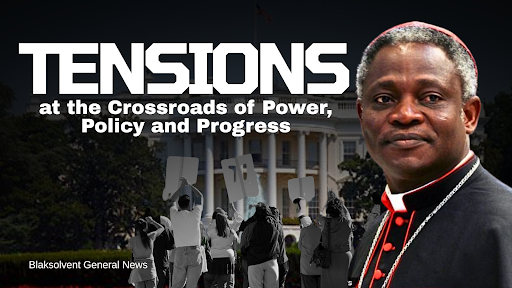
From Harvard’s courtroom clash with federal power, to Africa’s uncertain diplomatic future under a shifting White House strategy, and the quiet emergence of a Ghanaian cardinal on the world’s spiritual stage, these stories reflect a global moment defined by tension between tradition and transformation. Academic institutions are defending their autonomy, nations are grappling with geopolitical realignments, and the Catholic Church faces the possibility of historic change. In this complex interplay of governance, influence, and identity, the future will be shaped not just by policy decisions or political leaders—but by the resilience of institutions, the voices of emerging regions, and the global appetite for justice, representation, and reform.
White House Draft Order Proposes Sweeping Reduction in U.S. Diplomatic Presence Across Africa
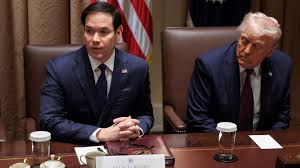
A draft executive order under review by the White House is proposing a substantial downsizing of the United States’ diplomatic presence in Africa, sparking concerns among foreign policy experts, African leaders, and international development organizations. The draft order, which has not yet been signed, outlines a major restructuring of U.S. embassies, consulates, and development missions across the continent, citing cost efficiency, shifting foreign policy priorities, and a strategic pivot toward Asia and Eastern Europe.
Overview of the Draft Order
The draft directive, obtained by several media outlets, calls for the closure or downsizing of up to 13 U.S. embassies and consulates in Sub-Saharan Africa. The proposed changes also involve reducing personnel in countries deemed “non-critical” to core U.S. strategic interests. While the document does not explicitly list all affected nations, internal memos suggest countries such as Mali, Guinea-Bissau, and the Central African Republic may see significant cuts or complete withdrawal of U.S. diplomatic staff.
According to administration officials who spoke on condition of anonymity, the measure is part of a broader foreign policy realignment aimed at redirecting resources to address rising geopolitical tensions in the Indo-Pacific region, Eastern Europe, and the Middle East.
Impact on U.S.-Africa Relations
Critics warn that the proposed cuts could damage long-standing diplomatic and economic ties with African nations, potentially opening the door for China and Russia to expand their influence on the continent.
“This decision, if implemented, will create a vacuum that America’s rivals are more than willing to fill,” said Ambassador Linda Thomas-Greenfield, the U.S. Ambassador to the United Nations and a former Assistant Secretary of State for African Affairs. “We risk undoing decades of soft power diplomacy, economic partnership, and developmental progress.”
African Union Commission Chairperson Moussa Faki Mahamat issued a statement expressing concern over the implications of a reduced American footprint. “Africa is a continent of opportunity and partnership,” he said. “We urge the United States to maintain its engagement and collaboration with our member states.”
Development Aid and Security Concerns
The draft order also proposes reducing U.S. Agency for International Development (USAID) operations in Africa by nearly 35%, including scaling back health initiatives, educational programs, and food security efforts. Analysts say this could undermine regional stability, particularly in fragile states already grappling with insurgency, poverty, and climate-induced displacement.
Security experts further caution that withdrawing U.S. personnel could weaken counterterrorism collaborations in regions like the Sahel and the Horn of Africa, where militant groups such as Boko Haram, al-Shabaab, and ISIS affiliates remain active threats.
“The consequences of pulling out could be catastrophic,” said Lt. Gen. Stephen Townsend (Ret.), former commander of U.S. Africa Command. “Our partnerships with African military and intelligence agencies are vital to global security.”
Political and Congressional Response
The proposed reductions are expected to face pushback from both Democratic and Republican lawmakers, especially members of the Congressional Black Caucus and the Senate Foreign Relations Committee. Senator Chris Coons (D-DE), a longtime advocate of U.S.-Africa relations, called the draft “shortsighted and strategically unsound.”
House Foreign Affairs Committee Chairman Michael McCaul (R-TX) also expressed reservations. “American engagement in Africa is not just about aid; it’s about promoting democracy, countering authoritarian influence, and ensuring global stability.”
Next Steps
While the draft order remains under internal review, sources within the National Security Council suggest that a final decision could be made by mid-May. The State Department has reportedly begun contingency planning to adjust staffing levels and mission priorities should the order be approved.
Meanwhile, diplomatic missions across Africa are on high alert, with many ambassadors engaging in quiet diplomacy to express concern and lobby for reconsideration.
As the global geopolitical landscape shifts, the fate of U.S.-Africa relations hangs in the balance—threatened by a possible retreat that many fear will echo far beyond the continent.
Meet Cardinal Peter Turkson: The Ghanaian Prelate Who Could Become the Next Pope
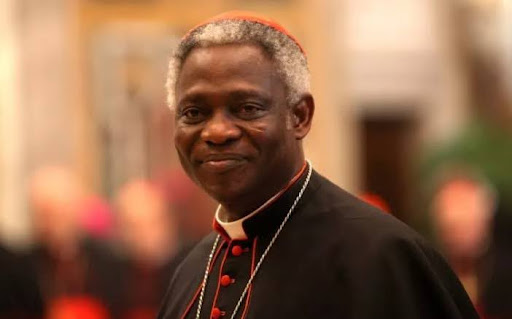
As speculation swirls over the future leadership of the Roman Catholic Church, one name continues to stand out among Vatican insiders and global observers: Cardinal Peter Kodwo Appiah Turkson. The Ghanaian-born cardinal, known for his intellect, humility, and strong stance on social justice, is increasingly being mentioned as a potential successor to Pope Francis, should a conclave be convened.
Cardinal Turkson, 76, has long been a prominent figure within the Catholic Church. He served as the Archbishop of Cape Coast in Ghana before being elevated to the College of Cardinals by Pope John Paul II in 2003. Under Pope Benedict XVI and later Pope Francis, Turkson played key roles in several Vatican departments, most notably as the first prefect of the Dicastery for Promoting Integral Human Development — an office tasked with handling issues related to justice, peace, migration, and environmental stewardship.
Throughout his ecclesiastical career, Cardinal Turkson has earned a reputation as a thoughtful bridge-builder, advocating for moral leadership on global economic issues, interfaith dialogue, and climate action. He was instrumental in drafting Pope Francis’ landmark encyclical Laudato Si’, which addressed the Church’s position on environmental responsibility and the impact of climate change on the poor.
A fluent speaker of multiple languages including English, French, and Italian, Turkson is admired not only for his theological insight but also for his diplomatic skills and ability to connect with diverse cultures. His African heritage, combined with a global perspective shaped by years of service in Rome, makes him a compelling candidate for a church increasingly shaped by the Global South.
Supporters of Turkson argue that his election would send a powerful message of inclusion and recognition to the growing Catholic population in Africa, which is projected to be home to nearly 25% of the world’s Catholics by 2050. Others, however, note that his more traditional views on certain doctrinal matters might place him at odds with progressive factions within the Church.
Despite the mounting speculation, Cardinal Turkson has remained characteristically humble and reserved, deflecting questions about the papacy and reaffirming his commitment to serving wherever the Church needs him. In past interviews, he has expressed deep gratitude for his vocation and emphasized the importance of unity and service within the Catholic community.
As Pope Francis continues to age and face health challenges, discussions about his potential successor are becoming more frequent — though no official announcement or conclave is currently expected. Still, in a Church that spans continents and cultures, the possibility of a Ghanaian pope symbolizes a historical and spiritual turning point for Catholicism.
Whether or not Cardinal Turkson ultimately dons the white cassock of the papacy, his story stands as a testament to the enduring global reach of the Catholic Church and the growing influence of Africa within its future.
Harvard University Sues Trump Administration to Block Freeze on Federal Funding
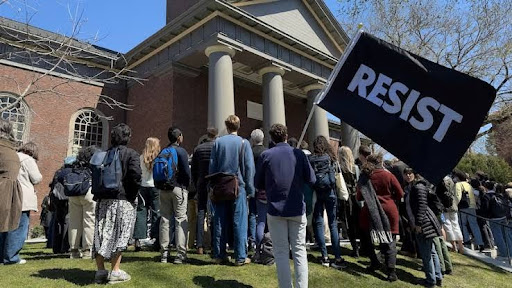
Harvard University has filed a lawsuit against the Trump administration in federal court, seeking to overturn a directive that freezes millions of dollars in federal funding to the institution. The lawsuit, filed late Monday, marks a significant legal challenge to the administration’s recent move to tighten control over federal research and education funds amid ongoing political tensions with higher education institutions.
According to court documents, the U.S. Department of Education and other federal agencies had initiated a suspension of grant disbursements to Harvard, citing concerns over alleged compliance issues related to financial disclosures and foreign collaborations. Harvard, however, contends that the funding freeze is politically motivated and lacks legal merit.
In a statement released by the university’s Office of the President, Harvard called the decision “arbitrary, punitive, and deeply damaging to academic freedom and scientific progress.” University officials argue that the funding in question supports critical research projects in medicine, climate science, and technology — many of which are conducted in partnership with public agencies and benefit the broader American public.
The lawsuit claims that the administration failed to follow proper legal procedures and violated the university’s constitutional rights by imposing sanctions without due process. It also highlights what Harvard describes as a broader campaign by the federal government to intimidate elite academic institutions that have been openly critical of certain policy decisions.
Legal experts say the case could have far-reaching implications for the relationship between the federal government and the academic community. “This is more than just a dispute over funding,” said Professor Angela Cruz, a constitutional law scholar at Yale University. “It’s about whether the government can use financial leverage to control or silence institutions of higher learning.”
The Trump administration has yet to issue a formal response to the lawsuit, but officials from the Department of Education have previously defended the funding freeze as part of a broader effort to enforce transparency and accountability in federally funded research programs. They have pointed to recent cases where U.S. universities were found to have failed in disclosing foreign partnerships and funding sources.
This legal showdown comes at a time when relations between the federal government and elite universities have grown increasingly strained. Former President Trump has frequently criticized institutions like Harvard for what he describes as liberal bias and a lack of patriotism in academia.
Harvard’s legal team has requested an emergency injunction to lift the freeze while the case proceeds through the courts. If successful, the lawsuit could restore immediate access to federal grants and reaffirm the autonomy of academic institutions in the face of political pressure.
As the legal battle unfolds, researchers and faculty at Harvard have expressed concern over the impact on their work, warning that delays in funding could disrupt ongoing studies, halt student projects, and compromise the university’s ability to deliver on key scientific commitments.
The case is expected to be closely watched across the academic world and could set a precedent for how universities push back against federal policies perceived as overreaching or politically driven.