BLACKSOLVENT GÉNÉRAL NEWS -21/10/25
Transitions at the Crossroads

In this moment of global flux, power structures are shifting, ages-old systems are being tested, and new chapters are being written. These three stories reflect different corners of that transition: one where citizens and soldiers converge in a storm of political change, one where science and solidarity fend off a deadly scourge, and one where the levers of defence and finance are being rewired from the inside. Each story carries its own stakes and together they map out how institutions, societies, and economies are recalibrating.
“Madagascar’s Youth-Driven Upheaval: Gen Z, the Army and a New Order”
BY BLACKSOLVENT NEWS
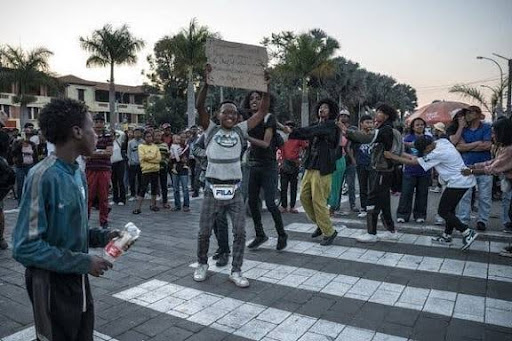
In the Indian-Ocean island nation of Madagascar, a political earthquake recently unfolded. On October 14, 2025, President Andry Rajoelina was ousted following an extraordinary sequence of events: a youth-led protest wave, a military mutiny, and a parliamentary impeachment.
The unrest began in late September, triggered by repeated cuts to electricity and water in the capital Antananarivo and other cities conditions that compounded long-standing frustration over corruption, unemployment and political neglect. Schools closed, businesses shut down, and looting began alongside peaceful rallies.
What amplified the crisis was the involvement of the elite military unit CAPSAT (an arm of the country’s armed forces) which rejected orders to suppress the demonstrations. On October 11 the unit aligned with protesters, giving the youth movement a powerful new dimension.
With the president fleeing the country and facing impeachment by legislators, Colonel Michael Randrianirina (CAPSAT commander) was sworn in as transitional leader. He declared a two-year transition period and dissolved several state institutions except the lower house of parliament.
Yet, although many young protesters celebrated the outcome, skepticism remains. Leaders of the so-called “Gen Z” movement are now warning that they may have been co-opted by the military. They insist their demands go beyond regime change they seek structural reforms and a meaningful voice.
Will the interim military leadership deliver on fundamental service reforms (water, power, jobs)? Will the youth movement retain influence or be sidelined? And will elections be held on schedule, or does this mark a deeper drift toward military-dominated governance?
“DR Congo’s Ebola Milestone: Virus Contained, Countdown Begins”
BY BLACKSOLVENT NEWS

In the central African nation of the Democratic Republic of the Congo (DRC), health officials have celebrated a key victory against a feared disease. The country’s Ministry of Health, supported by the World Health Organization (WHO) and other partners, announced the discharge of the last known patient in the recent Ebola outbreak triggering a 42-day countdown to a formal end of the epidemic, provided no new cases emerge.
The outbreak was officially declared on September 4, 2025, in the Bulape health zone of Kasai Province. By mid-October, there were 64 reported cases (53 confirmed, 11 probable) and 43 deaths making this the country’s 16th recorded Ebola outbreak.
What makes this case stand out is the speed and coordination of response despite the challenges of remote terrain, limited infrastructure and weak roads. Over 30,000 people were vaccinated, and local teams worked in tandem with international responders to establish treatment and monitoring systems on short notice.
Still, vigilance remains paramount: the window to officially declare the outbreak over will only open once two full incubation cycles (42 days) pass without a new case. So while this is a major achievement, sustained surveillance and funding are critical in the coming weeks.
Will this containment become a repeatable model for remote outbreak response? How will affected communities be supported in recovery? And what will the DRC do to strengthen health-system resilience for the next crisis?
“U.S. Army’s Big Bet: Private Capital Enters the Defence Arena”
BY BLACKSOLVENT NEWS
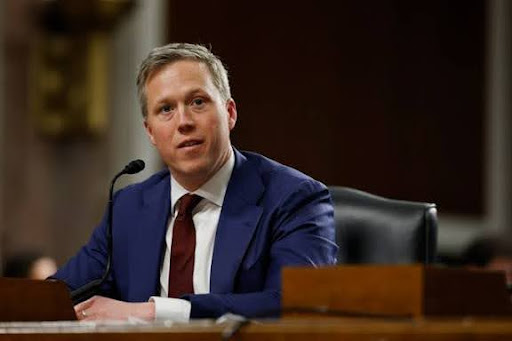
Across the Atlantic in the United States, the U.S. Army is embarking on a bold shift in how it funds and manages its infrastructure and modernization efforts. Facing a $150 billion shortfall and limited publicly-budgeted funds (around $15 billion), Army Secretary Daniel Driscoll and Treasury Secretary Scott Bessent invited major private-equity firms (including Apollo Global Management, Carlyle Group, KKR & Co., Cerberus Capital Management) to join a forum on creative financing for defence infrastructure.
The initiative is being envisioned as a “cradle-to-grave” capital-funding model, linking private investment, land-swaps, equity stakes in supply chains (e.g., rare-earth processing) and traditional defence procurement. Driscoll has openly embraced “Silicon Valley”-style venture models for the Army.
This move signals a broader change: defence is no longer wholly a public-sector domain. Private capital is being asked to take part in national security infrastructure, a sector long considered off-limits to such investors.
Potential benefits include accelerated modernization, access to additional funding, and leveraging commercial innovation. But risks loom: transparency concerns, mission creep, accountability issues, and the question of how profit motives align with national security objectives.
Will this model deliver infrastructure faster and more cost-effectively? How will oversight and public accountability be handled? And does this open the door for private equity in other national-security domains?