A Day of Rising Tensions, Reckonings, and Accountability on the Global Stage
As the world digests today’s cascade of developments, a unifying thread emerges from the corridors of diplomacy, finance, and international security: accountability—whether in the boardrooms of Swiss private banks, the war rooms of the Middle East, or the data centers of U.S. public health.
In Switzerland, the sentencing of a former Pictet banker signals the slow but steady unraveling of a long-standing culture of elite financial impunity. The ruling not only dents the reputation of one of the country’s oldest private banks but also sends a message that discretion cannot be a shield for complicity. As Swiss regulators sharpen their tools and global pressure mounts, institutions once cloaked in secrecy must now confront transparency—or collapse under the weight of silence.
In Washington, the unexpected resignation of the CDC official overseeing COVID and RSV surveillance data days before a crucial vaccine vote underscores the fragile state of public trust in health governance. As new variants loom and respiratory virus seasons stretch unpredictably, leadership voids raise fresh concerns over whether science is being edged out by politics once again. The implications are far-reaching, as America and the world depend on credible data to guide life-and-death decisions about future vaccines, policies, and preparedness.
Meanwhile, in the Middle East, the rhetoric of finality grows dangerously louder. Prime Minister Netanyahu’s explosive suggestion that assassinating Iran’s Supreme Leader could “end the conflict” throws gasoline on an already volatile standoff. As missile exchanges intensify and diplomatic channels strain under the weight of provocation, the risk of irreversible escalation now looms larger than ever. Whether this moment leads to peace or plunges the region into a generation-defining war may rest on how the international community chooses to respond in the coming days.
These three stories—one financial, one medical, and one geopolitical—offer no easy conclusions. But collectively, they illuminate the shape of the world as it stands in mid-2025: fractured yet awakening, cautious yet bold, and deeply aware that decisions made in boardrooms, labs, or bunkers now echo far beyond national borders. In an age defined by transparency, truth, and tension, Blacksolvent remains committed to chronicling the consequences—and confronting the questions others won’t.
CDC’s Top Respiratory Disease Data Leader Resigns Amid Turmoil Ahead of Crucial Vaccine Decisions
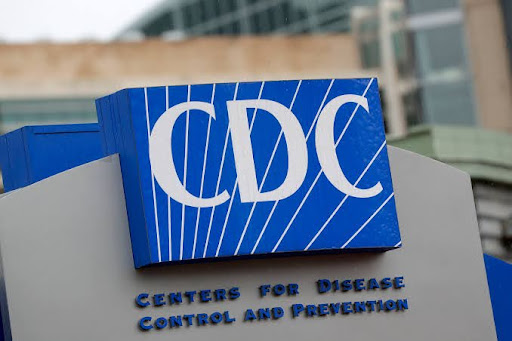
Washington, D.C. – In a stunning departure that underscores growing turmoil within the U.S. public health leadership, Dr. Fiona Havers—one of the Centers for Disease Control and Prevention’s top officials responsible for tracking COVID-19 and RSV hospitalizations—resigned on Monday. Her exit, just days before a pivotal national meeting on vaccine recommendations, signals mounting internal dissent within the CDC as concerns over political interference intensify.
Dr. Havers, who headed the Respiratory Virus Hospitalization Surveillance Network (RESP-NET), submitted her resignation in protest, stating that she could no longer stand by while her department’s work risked being undermined by forces outside the realm of science. Her team’s data, which has driven over 20 peer-reviewed publications and more than a dozen CDC bulletins, has played a critical role in informing public health responses to respiratory viruses. But in her resignation letter, she warned that this evidence was unlikely to be used fairly or objectively in the months ahead.
Her resignation comes amid sweeping changes at the CDC and broader Department of Health and Human Services (HHS), including a controversial purge of the CDC’s independent vaccine advisory body. Earlier this month, newly appointed HHS Secretary Robert F. Kennedy Jr. dismissed all 17 members of the Advisory Committee on Immunization Practices (ACIP), replacing them with eight new appointees—many of whom are known critics of existing vaccine policies.
The reshaped ACIP is now scheduled to meet from June 25–27 to vote on updated recommendations for COVID-19 boosters and RSV immunizations. However, medical professionals and health policy observers have raised alarm bells, warning that the new committee may lack the depth of experience and scientific rigor historically associated with the ACIP.
Dr. Havers is not the only high-profile CDC staffer to step down. Her departure follows that of Dr. Lakshmi Panagiotakopoulos, a pediatric infectious disease specialist who resigned earlier this month in protest of shifting vaccine policy direction, especially concerning maternal and child immunization. These exits follow the earlier removal of long-standing vaccine policy director Dr. Melinda Wharton, suggesting a broader exodus of expertise from the agency.
In an email to colleagues, Havers cited deep concern that the CDC’s scientific integrity is being compromised. “I no longer feel confident that our surveillance data will be interpreted in an objective or evidence-based manner,” she wrote. Her comments reflect widespread unease within the CDC that the agency is veering away from its core public health mission under political pressure.
Former members of the ACIP also voiced concern in a joint editorial published this week, calling Kennedy’s shake-up of the vaccine advisory panel “deeply destabilizing” and warning it could erode public trust in the nation’s immunization program. Critics argue that replacing seasoned public health experts with ideologically motivated appointees risks politicizing vaccine policy at a time when clarity and confidence are needed most.
In defense, an HHS spokesperson said the changes were intended to eliminate “conflicts of interest” and promote greater transparency. “Secretary Kennedy is committed to restoring public faith in vaccine policy through data-driven, conflict-free decision-making,” the agency said in a statement.
Still, public health advocates remain skeptical. With no confirmed CDC director currently in place and multiple high-level resignations piling up, many worry that the United States’ ability to respond to future health emergencies—especially in areas like COVID-19 and RSV—may be gravely compromised.
As the restructured ACIP prepares to hold its first major vaccine policy meeting under new leadership, all eyes will be on whether its decisions reflect scientific evidence or a more politically motivated agenda. For many within the CDC and across the public health community, the loss of Dr. Fiona Havers marks not just the end of an era—but a turning point in the integrity of America’s vaccine strategy.
Switzerland Hands Suspended Sentence to Ex‑Pictet Banker in Petrobas Money Laundering Scandal

A Swiss court has convicted a former employee of the prestigious private banking group Pictet for his involvement in a high-profile money laundering case linked to Brazil’s Petrobras corruption scandal. The former relationship manager received a six-month suspended prison sentence after prosecutors found he facilitated the movement of millions in illicit funds, while Pictet itself has been fined two million Swiss francs for failing to prevent the activity.
The judgment stems from financial transfers that occurred between June 2010 and May 2013, during which over $4.1 million flowed through accounts connected to a Petrobras employee and offshore entities. Prosecutors argued that the banker knowingly allowed these transactions to occur without raising alarms or triggering internal scrutiny, despite clear red flags and the involvement of politically exposed persons.
The funds, suspected to be proceeds of corruption tied to Brazil’s state-run oil company, were moved through a series of shell companies and layered transactions—classic laundering techniques designed to obscure the origin of illicit capital. Swiss authorities emphasized that the bank failed to take the “necessary and reasonable” steps to detect and block the laundering scheme.
The court found that Pictet’s internal compliance and due diligence measures during the relevant period were insufficient to meet legal standards. While the bank was not accused of willful participation in the crime, its negligence was deemed serious enough to warrant a financial penalty. In response, Pictet stated that it had reached a resolution with Swiss prosecutors, but maintained that the settlement does not constitute an admission of guilt or legal liability. The bank also confirmed that the matter does not affect its current operations or services.
This case represents one of the more significant regulatory enforcement actions involving a Swiss private bank in recent memory. It comes as Swiss authorities intensify their scrutiny of financial institutions amid global pressure to clamp down on the country’s historic reputation as a haven for opaque banking practices and financial secrecy.
Legal analysts believe this ruling signals a shift in Switzerland’s willingness to pursue individual and institutional accountability. Although the former banker’s sentence was suspended, meaning he will not serve time unless further infractions occur, the conviction nonetheless sets a precedent. It reflects the growing intolerance for lapses in compliance, particularly when linked to large-scale international corruption cases like the Petrobras scandal, which has already implicated several high-profile individuals and companies across Latin America and Europe.
The verdict also fits into a broader crackdown by Swiss prosecutors, who have launched multiple investigations into money laundering involving politically exposed persons, embezzled state funds, and other financial crimes. As a result, banks operating within the country are now under mounting pressure to bolster their compliance systems, review internal controls, and report suspicious transactions more aggressively.
For Pictet, a centuries-old institution that has built a reputation on discretion and elite wealth management, this ruling delivers a reputational setback. It also serves as a cautionary tale to other private banks that institutional prestige will not shield them from liability when governance lapses enable the movement of tainted funds.
Netanyahu Claims Killing Iran’s Supreme Leader Would End War as Israel-Iran Crisis Deepens

In an alarming escalation of rhetoric amid an already volatile regional conflict, Israeli Prime Minister Benjamin Netanyahu has openly declared that assassinating Iran’s Supreme Leader, Ayatollah Ali Khamenei, could bring an end to the ongoing war between the two nations. Speaking to U.S. media, Netanyahu argued that the root of the crisis lies in Tehran’s leadership, claiming that neutralizing Khamenei would “end the conflict” rather than exacerbate it.
The remarks come as Israel intensifies its military campaign, Operation Rising Lion, striking deep into Iranian territory with the goal of disrupting its nuclear infrastructure and eliminating top military officials. The strikes have killed senior figures in Iran’s Revolutionary Guard Corps and caused significant damage to strategic facilities. Iran has responded with missile attacks and drone strikes on Israeli cities, pushing both sides dangerously close to a full-scale war.
Netanyahu’s comments are likely to further inflame tensions. He likened Iran’s leadership to that of Nazi Germany, accusing Khamenei of steering a nuclear threat with genocidal intent. “This is Hitler with nuclear weapons,” Netanyahu said, framing the Iranian regime as the core engine of instability in the Middle East.
The international community has reacted with alarm. World leaders meeting at the G7 summit in Canada have called for restraint, while U.S. officials distanced themselves from Netanyahu’s suggestion. Reports have surfaced that former President Donald Trump had previously rejected a plan to target Khamenei, fearing it would provoke uncontrollable consequences. Current U.S. authorities have not publicly endorsed Israel’s strategy.
Iran, for its part, has vowed to retaliate with overwhelming force if its top leadership is targeted. Officials in Tehran maintain that the recent Israeli attacks are acts of aggression and claim their missile responses are legitimate acts of self-defense under international law. The Iranian ambassador to the United Nations has warned that further Israeli provocations would trigger a broader regional war and hinted at possible withdrawals from nuclear non-proliferation agreements.
While Netanyahu’s statement may reflect strategic posturing, it also underscores a dramatic shift in Israel’s war doctrine—from deterrence to decapitation. The idea that assassinating a foreign head of state could “resolve” a geopolitical crisis is likely to stir global debate over the ethics and consequences of targeted killings, especially when involving a sovereign nation’s highest authority.
As military exchanges continue, civilian populations in both Iran and Israel remain on edge. Air raid sirens have become a daily occurrence in Tel Aviv, Haifa, and several Iranian cities. Analysts warn that a direct strike on Iran’s supreme leadership would all but guarantee a long and bloody confrontation, possibly drawing in other nations and destabilizing the region for years.
The path ahead remains uncertain. Netanyahu’s remarks may signal confidence or desperation, but what is clear is that the margin for miscalculation has all but disappeared.