Fractures and Frontlines
In a single sweep of global events, we witness the vulnerability of systems meant to protect and prosper. A town in Niger State drowns under the weight of nature and neglect. South Africa’s manufacturing dreams bend under foreign policy decisions beyond its control. And across continents, the fall of a drug empire reminds us of the invisible wars fought in shadows.
Yet amid the wreckage of homes, of economies, of illusions emerges something harder to kill: resolve. The resolve of communities to rebuild. Of industries to adapt. Of law enforcement to pursue justice across borders. These are not isolated stories; they are a mosaic of a world learning, hurting, and rising. And while the cracks in the system may grow wide, the human will to repair remains wider.
Europe’s ‘Cocaine King’ Extradited from UAE in Landmark Drug Trafficking Case
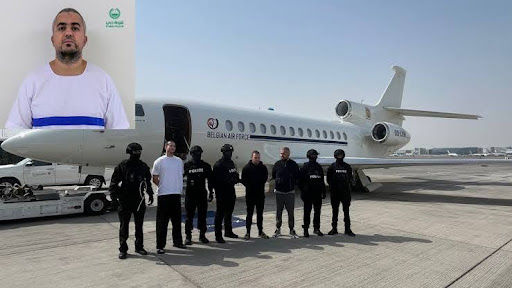
In a significant victory for international law enforcement, Belgian fugitive Othman El Ballouti, widely dubbed Europe’s Cocaine King, has been extradited from the United Arab Emirates to Belgium to face charges linked to one of the continent’s most expansive narcotics networks.
The extradition was completed under a bilateral legal cooperation agreement between Belgium and the UAE, marking a milestone in transnational efforts to dismantle drug trafficking empires that have long evaded borders and jurisdictions.
El Ballouti, 39, is accused of operating a multibillion-euro cocaine smuggling operation that moved large volumes of narcotics from South America into European ports, particularly Antwerp a city that has become a major hub for international cocaine transit.
A Mastermind Captured
El Ballouti had been on Interpol’s Red Notice list since 2021, after investigators linked him to several high-profile drug shipments intercepted in the Port of Antwerp. Authorities say his criminal network utilized encrypted messaging apps, corrupt customs officials, and a fleet of logistics companies to transport and distribute the illicit drugs across Europe.
He fled Belgium before charges could be formally filed and was believed to have been living in luxury between Dubai and Abu Dhabi under various aliases. He was arrested earlier this year in Dubai following a covert surveillance operation led by UAE authorities in coordination with Europol and Belgium’s Federal Judicial Police.
Belgian Justice Minister Koen Geens praised the extradition as a sign of “deepening international trust and shared responsibility.”
“El Ballouti’s return is a message to all high-level criminals: no corner of the world is safe from justice when nations work together,” Geens said at a press briefing in Brussels.
A Shift in International Cooperation
The extradition was made possible by a 2023 judicial cooperation treaty signed between Belgium and the UAE, aimed at targeting money laundering, drug trafficking, and cybercrime. The agreement has been increasingly tested in recent years as Europe and Gulf states confront rising financial and criminal flows between their jurisdictions.
Legal experts say this case may set a precedent for faster, more seamless extraditions of fugitives in the future, particularly those operating in white-collar crime, organized smuggling, and terrorism financing.
“This case demonstrates the growing muscle of cross-border legal partnerships,” said Dr. Lien Verhaeghe, a criminal law professor at the University of Ghent. “The old model of criminals hiding in safe-haven cities is weakening.”
What Happens Next
El Ballouti arrived in Brussels early Tuesday morning under heavy police escort and is expected to be arraigned before the Federal Court by the end of the week. Prosecutors are preparing to charge him with:
- Large-scale cocaine trafficking
- Money laundering through offshore entities
- Corruption of public officials
- Participation in a criminal organization
If convicted, he could face up to 30 years in prison under Belgian law. His defense attorneys have not yet made a public statement but are expected to argue procedural violations during his detention in the UAE.
Belgian authorities say the extradition will bolster ongoing investigations into at least six other suspects believed to be part of El Ballouti’s logistics and finance operations. Several European law enforcement agencies including those in Spain, the Netherlands, and France are also reviewing links between his network and recent drug seizures across their territories.
A Blow to Organized Crime
As one of the most elusive drug traffickers in Europe, El Ballouti’s arrest and return are seen as a major symbolic and strategic blow to organized crime. Europol estimates his network trafficked up to 40 tonnes of cocaine annually, generating revenues exceeding €2 billion
FLOOD IN MOKWA, NIGER STATE KILLS OVER 500
Over 500 Killed in Niger State Flood Disaster, Hundreds Still Missing
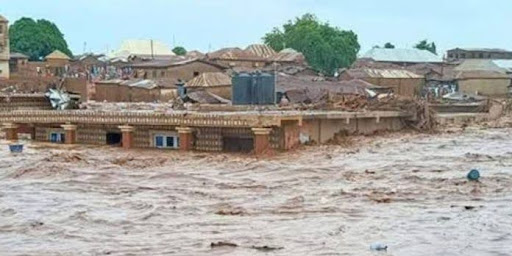
A catastrophic flood that struck Mokwa in Niger State in late May has claimed the lives of over 500 people, with at least 600 individuals still unaccounted for, according to official reports and local rescue teams. The unprecedented disaster, which left the town submerged and thousands displaced, has been described as one of the deadliest environmental tragedies in Nigeria’s recent history.
Triggered by a combination of intense rainfall, the collapse of a local dam, and unchecked deforestation in surrounding areas, the floods swept through residential and commercial zones, destroying an estimated 4,000 homes and rendering entire communities inaccessible.
Eyewitnesses described terrifying scenes of rushing waters tearing through homes in the early hours, giving residents little time to escape. “We lost everything in minutes—my family and I barely made it out alive,” said Alhaji Musa Lawal, a resident of Mokwa’s Gbara district. “We heard the sound of water and within seconds, our house was gone.”
Emergency services have been overwhelmed, with limited access to boats and helicopters slowing down rescue efforts in submerged areas. The Nigerian Emergency Management Agency (NEMA) confirmed that search-and-rescue operations are still ongoing, as efforts continue to locate the hundreds who remain missing.
In response to the disaster, the federal government has deployed humanitarian relief teams to Mokwa and surrounding communities. Food supplies, medical assistance, and temporary shelters are being provided, although many residents have expressed frustration over the slow pace of aid.
Speaking on the situation, Niger State Governor Mohammed Umar Bago described the flood as “a devastating wake-up call on the urgent need for infrastructure resilience and environmental protection.” He called on the federal government and international partners to support long-term reconstruction efforts.
Experts have also warned that similar disasters could become more frequent if sustainable environmental policies are not implemented. Environmental analyst Dr. Jumai Ahmed noted, “Deforestation has left the land vulnerable. Without trees to absorb rainfall or stabilize the soil, runoff turns deadly. We need proactive, not reactive, strategies.”
As of today, mass burials are ongoing for recovered bodies, while grief-stricken families continue to search for missing loved ones. Community leaders have declared a week of mourning, and schools and public institutions in Mokwa remain closed.
South African Car Exports to U.S. Plunge by Over 80% as Tariff Tensions Escalate
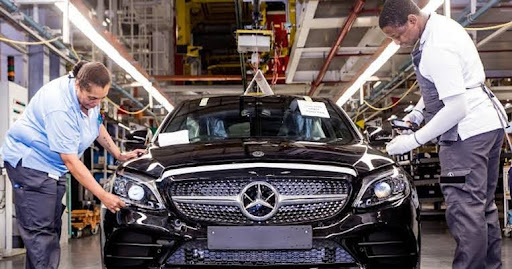
South Africa’s vehicle exports to the United States have plummeted by more than 80% in the first quarter of 2025, marking a dramatic shift in trade dynamics between the two nations. The sharp decline follows renewed tariff pressures introduced by the U.S. government, sparking concern among South African automakers and trade officials about the long-term impact on the country’s automotive industry.
According to the National Association of Automobile Manufacturers of South Africa (NAAMSA), vehicle exports to the U.S. dropped from over 12,000 units in Q1 2024 to just under 2,000 units in Q1 2025. The drastic reduction is largely attributed to a new wave of protectionist trade policies championed by the U.S. administration, which has placed steep tariffs on imported vehicles and components from several nations, including South Africa.
“These figures are not just numbers they represent lost jobs, strained supply chains, and a blow to investor confidence,” said Mikel Mabasa, CEO of NAAMSA. “The automotive sector is a backbone of South Africa’s manufacturing industry. An 80% drop is nothing short of devastating.”
South Africa, which is home to production plants for global automakers such as BMW, Ford, Volkswagen, and Mercedes-Benz, has long relied on vehicle exports as a key economic driver. The U.S. is one of its most lucrative markets, particularly for high-end models and pickup trucks manufactured in local plants.
U.S. Tariffs Spark Broader Trade Concerns
The decline comes amid broader trade tensions between the U.S. and several developing economies. In January 2025, the U.S. administration under President Donald Trump reintroduced a series of tariffs aimed at protecting domestic manufacturing and encouraging companies to “buy American.” South Africa, previously excluded from some of these restrictions under the African Growth and Opportunity Act (AGOA), was recently subjected to a reassessment of its eligibility under the program.
Although AGOA still officially stands, industry analysts suggest that increased scrutiny and tighter rules of origin requirements have effectively made it harder for South African automakers to compete in the U.S. market.
“The tariffs and new trade conditions make it more expensive and less viable for South African manufacturers to export cars to the United States,” said Dr. Thandiwe Mokoena, an economist at the University of Cape Town. “This shift could force companies to reduce production or look for new markets, but that won’t happen overnight.”
Government Response and Industry Outlook
In response to the crisis, South Africa’s Department of Trade, Industry and Competition (DTIC) has initiated high-level talks with U.S. trade officials to negotiate relief and potentially secure exemptions or waivers for specific auto components and models.
Minister Ebrahim Patel called the situation “deeply concerning” and stressed the need for diplomatic engagement and diversification of export markets. “We are working urgently to protect the interests of our workers, manufacturers, and the broader South African economy,” he said in a statement on Monday.
Meanwhile, local automakers are reassessing their strategies. BMW South Africa, which exports a significant portion of its production from Rosslyn to the U.S., has reportedly reduced shifts and warned of potential layoffs if conditions persist.
Trade unions have also begun mobilizing, demanding government intervention and job security guarantees. “Our workers cannot be the ones to suffer for political decisions made in Washington,” said NUMSA spokesperson Sipho Dlamini.
Looking Ahead
Analysts warn that if the tariffs remain in place throughout the year, the country could see a further contraction in vehicle production and a wider economic fallout, including in auxiliary industries such as logistics, mining, and retail.
Efforts are now underway to redirect export flows to Europe, the Middle East, and intra-African markets through the African Continental Free Trade Area (AfCFTA). However, experts caution that these markets cannot fully replace the scale and profitability of U.S. exports in the short term.
As trade negotiations continue and global supply chains remain tense, South Africa’s auto industry faces an uncertain future. What is clear, however, is that the effects of protectionist trade policies are being felt far beyond the borders where they were made.