The Pulse of a Shifting World

In a world where borders blur but consequences do not, three stories emerge as echoes of a deeper, more defining truth which is that humanity is at a crossroads.
Across Europe, the heat didn’t just rise it roared. The loss of over 2,300 lives in a single month was more than a tragedy; it was a reckoning. As the Cerberus heatwave turned homes into ovens and streets into furnaces, the earth demanded attention. Grief swept through Spain, France, and beyond a harrowing reminder that climate change is not theoretical, it is deadly, present, and pressing.
In Asia, pressure brews not in the skies, but across negotiation tables. Prime Minister Ishiba’s urgent meeting with U.S. Treasury Secretary Bessent is set against the backdrop of potential trade war. Tariffs threaten to sever ties that have long held together two global economies. As Tokyo prepares, the stakes reach beyond exports into diplomacy, sovereignty, and strategic balance in an increasingly polarized world.
And from Washington, a familiar force reenters the global arena. Former President Trump’s pledge to send advanced weaponry to Ukraine along with a 50-day ultimatum to Russia rattles the rules of war and peace. With Patriot missiles and tariff threats, he offers power as diplomacy, and pressure as peace.
Three continents. Three crises.
One message: The world is shifting, loudly and irreversibly.
And as the heat rises, the talks begin, and the weapons move we are all being asked a single question:
Will we act in time, or watch history repeat itself in louder, more dangerous tones?
The answer is still unwritten.
Trump Unveils Major Weapons Package for Ukraine, Issues Tariff Threat to Russia Over Ceasefire Delay
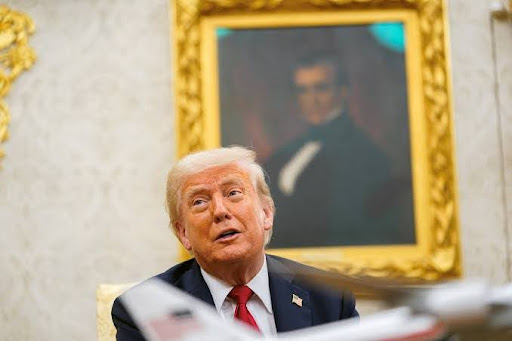
Former U.S. President Donald Trump has once again taken center stage on the international front, announcing a sweeping new military aid package for Ukraine as the war with Russia approaches its fourth year. In a press conference held at the Mar-a-Lago estate on Monday, Trump confirmed plans to deliver multiple Patriot missile systems, long-range artillery, drones, and additional advanced defense weaponry to Kyiv. The announcement marks a sharp escalation in U.S. involvement and sends a resounding message to Moscow.
“Ukraine needs to win not just survive,” Trump declared. “And if Russia doesn’t commit to a full ceasefire in 50 days, I will authorize 100% tariffs on all Russian imports and push for NATO to do the same.”
The move comes amid stalled peace talks between Russia and Ukraine, and at a time when global diplomatic efforts have failed to yield a long-term solution to the ongoing conflict. Trump, whose influence over the Republican Party remains strong despite not holding office, appeared determined to pressure Russia into a ceasefire through both military and economic means.
This announcement represents a notable pivot from Trump’s previous stance on the war. During his presidency, Trump was often criticized for his perceived leniency toward Russia and for his reluctance to commit U.S. resources to foreign conflicts. However, political analysts suggest that Trump may now be positioning himself as a decisive global actor in the face of growing criticism over his foreign policy legacy.
According to sources close to the Trump campaign, the aid package is being framed as both a humanitarian effort and a strategic maneuver to prevent Russian expansionism from destabilizing Europe. It also includes provisions for training Ukrainian forces to handle complex U.S. systems and an increase in intelligence sharing.
“Russia’s aggression has gone unchecked long enough,” Trump said, flanked by key former Pentagon advisors. “We will not allow the sovereignty of any nation to be threatened by brute force and tyranny.”
Contents of the Weapons Package
The package is said to include:
- 3 Patriot surface-to-air missile systems with radar units
- 120 HIMARS rockets
- Long-range Gray Eagle drones
- Javelin anti-tank missiles
- Defensive cyber-support systems
- Night-vision and thermal surveillance equipment
Pentagon officials, though not directly involved in the announcement, have acknowledged that the systems mentioned are in surplus stock and could be deployed within weeks if approved.
Russia Responds
Within hours of Trump’s statement, the Kremlin issued a terse response, warning of “grave consequences” should the U.S. proceed with the delivery of offensive systems. Russian Foreign Minister Sergei Lavrov denounced the move as a “direct act of hostility that undermines every effort toward peace in the region.”
Lavrov added that Moscow would consider retaliatory measures, including increased missile deployments along its western border and suspension of diplomatic talks with NATO allies.
Ukraine Welcomes the Support
Ukrainian President Volodymyr Zelenskyy publicly thanked Trump in a televised statement on Tuesday morning, calling the move “a powerful step forward in our defense and freedom.”
“This support will save lives, protect cities, and put real pressure on the Kremlin to consider peace,” Zelenskyy said. “We are grateful for this gesture of strength and solidarity.”
Zelenskyy also noted that while he remains committed to dialogue, peace “cannot be built on Ukrainian surrender.”
Global Reactions Mixed
The European Union responded cautiously, with France and Germany urging restraint, while Poland and the Baltic states praised the initiative, calling it a long-overdue show of force. In the U.K., Prime Minister Angela Whitmore said her government would “consider aligning with the U.S. if the ceasefire deadline passes.”
China, meanwhile, condemned the announcement as “escalatory and reckless,” urging all parties to return to the negotiating table.
Looking Ahead
Whether Trump’s weapons pledge leads to a meaningful ceasefire or further escalates the conflict remains to be seen. What is clear is that the former president has re-injected himself into the center of global affairs and Ukraine is once again a critical battleground in the geopolitical chess match between democracy and authoritarianism.
As the 50-day deadline looms, the world watches uncertain whether the path ahead leads to peace or peril.
European Heatwave Death Toll Surpasses 2,300 as Temperatures Shatter Records Across the Continent

A deadly heatwave that scorched much of Europe in June has claimed over 2,300 lives, according to updated figures released by the European Centre for Disease Prevention and Control (ECDC). The sweltering conditions, which broke temperature records in at least 11 countries, have drawn urgent concern from climate scientists and health officials, particularly as extreme heat events grow more frequent and intense.
Spain was the hardest hit, with 1,187 confirmed heat-related fatalities, while Italy, France, and Portugal each reported hundreds of deaths. The victims included the elderly, children, and those with pre-existing conditions such as cardiovascular or respiratory illnesses.
The heatwave now dubbed “Cerberus” by meteorologists saw daytime temperatures soar above 46°C (114.8°F) in parts of southern Europe, with night-time temperatures barely falling below 30°C in urban areas. The result: overstretched emergency rooms, wildfires in several regions, blackouts in major cities, and thousands of people fleeing to public cooling centers.
A Continent in Crisis
“This is one of the deadliest climate events in recent European history,” said Dr. Helena Vos, senior health analyst at the ECDC. “We’re witnessing the direct toll of climate inaction. These deaths were not simply caused by weather — they were enabled by poor infrastructure, unpreparedness, and systemic neglect of environmental warnings.”
Hospitals across Spain and Portugal reported spikes in emergency cases related to heatstroke, dehydration, and heat-induced cardiac events. In Rome, ambulance services received triple their usual call volume on June 28 alone. Meanwhile, in Athens, paramedics were seen administering IV drips to tourists collapsed on sidewalks.
France’s Health Ministry confirmed that most of their 316 deaths occurred in rural areas where elderly citizens lived in poorly ventilated homes, often without access to air conditioning.
Heat, Fire, and Power Failures
In addition to the human toll, the heatwave wreaked havoc on infrastructure. In southern Italy, parts of the national grid collapsed under the pressure of massive air conditioner use, causing power outages in Naples and Palermo. Train lines in Germany were suspended after rail tracks buckled in the heat. Crops across central France wilted in the fields, triggering fears of a sharp drop in agricultural yield.
Over 200 wildfires were reported across the continent during the month. Firefighters in Greece and Croatia worked around the clock to contain rapidly spreading blazes. A wildfire in Spain’s Zaragoza region burned through more than 8,000 hectares of farmland, forcing the evacuation of several villages.
Vulnerable Populations Suffer the Most
Experts have long warned that vulnerable groups especially the elderly, low-income families, and migrant workers bear the brunt of extreme heat. In Spain’s Murcia region, several undocumented farm laborers collapsed in open fields where shade and hydration were limited.
“This tragedy speaks to a broader issue of environmental injustice,” said Marta López, a climate and human rights lawyer based in Madrid. “We must treat heatwaves not only as weather events but as humanitarian crises that require targeted, equitable response strategies.”
Government Response and Future Measures
European leaders have faced criticism over what many consider a slow and inadequate response to the heatwave’s severity. In response to public outcry, the European Commission has called for an emergency summit to develop a Continental Heat Action Plan focused on:
- Urban redesign for heat-resilient infrastructure
- Mandatory cooling centers in all major cities
- Improved public health alerts and surveillance systems
- Agricultural protection subsidies for farmers
- Early warning systems tailored for vulnerable populations
In a televised address, European Commission President Ursula von der Leyen said, “We cannot continue treating extreme heat as an anomaly. It is the new reality. Europe must lead in preparing for climate-driven disasters not simply reacting when lives are lost.”
The Role of Climate Change
Meteorological institutes across Europe agree that the June heatwave was amplified by climate change, with global warming estimated to have made it at least 5 times more likely than in the pre-industrial era. A report from the World Weather Attribution group concluded that average global temperatures are currently 1.4°C above pre-industrial levels, a figure that continues to climb.
Dr. Jean-Luc Charvet, a climatologist at the University of Lyon, warned, “This is no longer the future. This is our now. And unless radical decarbonization happens, Europe will face not just one Cerberus but many.”
As Europe recovers and buries its dead, public sentiment is turning toward long-term solutions. Mass protests have been scheduled in several capitals calling for immediate climate action and investment in public cooling infrastructure.
For many grieving families, however, no policy will bring back lost loved ones.
“My grandmother survived a war, a pandemic, and cancer,” said Ana Medina, a student in Seville who lost her 88-year-old grandmother during the heatwave. “But she couldn’t survive four days without power in 45-degree heat. That should not be her story.”
Japanese PM Ishiba to Meet U.S. Treasury Secretary Bessent as Tensions Rise Over Potential Trade Tariffs
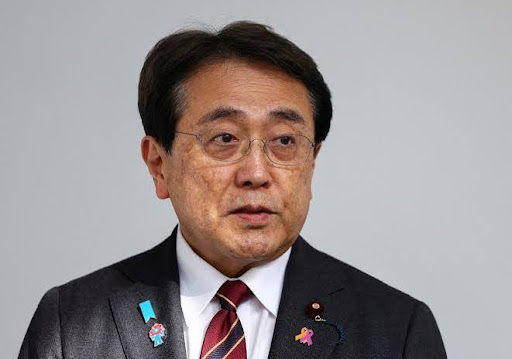
Japanese Prime Minister Shigeru Ishiba will hold high-level talks this Friday with U.S. Treasury Secretary Scott Bessent in Tokyo as both countries move to defuse growing trade tensions. The meeting comes amid mounting concerns in Japan over Washington’s looming threat to impose sweeping tariffs on a wide range of Japanese exports a move that could rattle global markets and strain diplomatic ties between two of the world’s largest economies.
The talks, set to take place behind closed doors at the Prime Minister’s Official Residence, mark the first direct economic negotiation between the Ishiba administration and the Biden successor government since the U.S. floated the idea of increased tariffs on automobiles, semiconductors, and electronic parts manufactured in Japan.
According to Japanese officials, the agenda will focus on renegotiating trade terms, preventing tariff escalation, and strengthening bilateral economic cooperation in an increasingly volatile global economy.
A Delicate Diplomatic Moment
Prime Minister Ishiba, who assumed office in late 2024, is walking a diplomatic tightrope. He must defend Japan’s vital export industries which include automobiles, microchips, and robotics without risking economic retaliation from the United States, Japan’s top trading partner.
“Japan seeks a balanced, mutually beneficial trade relationship with the United States,” Chief Cabinet Secretary Hiroko Tanaka said during a press briefing on Monday. “Tariffs will only harm workers, consumers, and businesses in both nations.”
Washington, however, has signaled frustration with what it sees as persistent trade imbalances, pointing to Japan’s growing export surplus and regulatory barriers affecting American agricultural and tech goods.
Speaking in Washington last week, Treasury Secretary Bessent said:
“We value our alliance with Japan, but fair trade must be a two-way street. The U.S. cannot continue absorbing massive trade deficits without taking action.”
What’s at Stake?
At the heart of the tension is the $68 billion U.S.-Japan trade deficit, a figure that has widened in recent years due to surging Japanese exports in electric vehicles (EVs), camera lenses, industrial robots, and precision electronics. U.S. automakers and tech manufacturers argue that Japanese government subsidies and environmental regulations give its firms an unfair edge.
The proposed U.S. tariffs, currently under review by the Commerce Department, could affect:
- Japanese electric vehicles, with a potential 25% import tariff
- Semiconductors and AI chips, at risk of a 15–20% tax
- Consumer electronics including smart TVs and audio equipment
- Agricultural goods such as seafood and specialty rice
Should the tariffs be enacted, Japan’s economy which relies heavily on exports could face a significant slowdown. Industry experts warn of job losses, stock market volatility, and potential retaliatory tariffs from Tokyo.
Japan’s Countermoves
Ahead of Friday’s meeting, Japan has launched a quiet diplomatic offensive. Foreign Minister Kanae Mori has met with European Union leaders and ASEAN trade envoys to rally support for multilateral pressure against unilateral U.S. action.
Meanwhile, domestic business leaders are urging Ishiba to hold firm. The Japan Business Federation (Keidanren) released a statement calling for “continued free and fair trade under WTO principles.”
In a speech to parliament last Thursday, Ishiba said:
“Japan will not tolerate intimidation disguised as negotiation. But we will always prefer diplomacy over division.”
A Strategic Ally Under Strain?
Beyond trade, Friday’s meeting also touches the core of the U.S.-Japan alliance. The two countries have long-standing military cooperation agreements, jointly operate missile defense systems, and frequently align on Indo-Pacific strategy especially regarding China’s growing assertiveness in the region.
Analysts say prolonged economic tension could spill over into defense and security coordination. “We’re entering a moment where economic nationalism may start to undermine strategic partnerships,” said Dr. Naomi Fujimoto, a trade scholar at Waseda University. “Ishiba’s challenge is to protect Japan’s interests without compromising its role as a regional ally.”
Possible Outcomes
While neither side has confirmed whether a deal is expected this week, insiders believe both Ishiba and Bessent are open to compromise. Options on the table include:
- A revised bilateral trade framework, separate from multilateral platforms
- Temporary tariff waivers in exchange for Japanese investment in U.S. manufacturing
- An agreement to increase U.S. agricultural imports into Japan
- Establishing a U.S.-Japan Tech and Trade Council to regulate emerging industries
Markets will be watching closely. The Tokyo Stock Exchange has already shown signs of nervousness, with shares in export-heavy sectors falling by 1.7% on Monday.
Looking Ahead
Friday’s meeting could define the trajectory of U.S.-Japan economic relations for years to come. For Prime Minister Ishiba a seasoned defense expert but relatively new to trade negotiations the stakes are high.
“Japan is not just an economic partner,” said U.S. Asia-Pacific analyst Dr. Carla Monroe. “It’s a cornerstone of the free world’s Indo-Pacific strategy. Both sides have too much to lose if this meeting ends in deadlock.”