Global Power Shifts: From Political Strongmen to Rising Stars
As the world continues to spin through a season of political transformation, generational talent, and shifting alliances, today’s headlines offer a snapshot of a global order in motion.
In the United States, Donald Trump’s widening influence over the justice system, media narratives, and academic thought underscores an ongoing battle for the soul of American democracy. His rhetoric and actions are not just about power—they’re about redefining the norms of leadership in ways that blur the lines between
populism and authoritarianism.
Across the Atlantic, renewed momentum for a U.S.-U.K. trade deal hints at a revival of strategic cooperation, shaped by mutual interests and shifting global priorities. Senator J.D. Vance’s optimism offers a glimpse into a future where old allies find new purpose in navigating the complex trade routes of a post-Brexit, post-pandemic economy.
And on the football pitch, PSG’s teenage star Warren Zaïre-Emery represents the rise of a new era in sport—where youth, discipline, and vision can disrupt even the most established hierarchies. While world leaders flex muscle and economies re-align, the beautiful game reminds us that sometimes, the most powerful stories come from the quiet emergence of brilliance.
From politics to trade, and sport to society, today’s stories remind us that power—whether institutional, economic, or cultural—is always in flux. And in that flux lies the opportunity to question, to reimagine, and to shape what comes next.
Trump Wields Influence Across Law, Academia, and Media While Elevating Authoritarian Figures
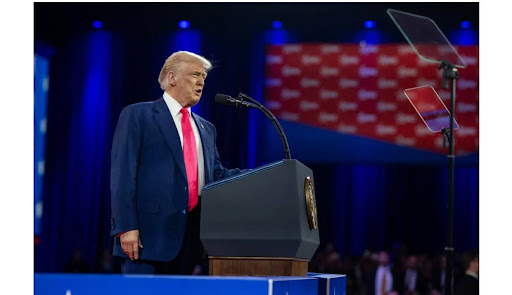
Former President Donald Trump is increasingly asserting his influence across the pillars of American society—particularly the legal system, academic institutions, and media—while openly praising authoritarian figures and embracing strongman-style rhetoric. This consolidation of power has stirred debate about the erosion of democratic guardrails and the growing normalization of authoritarian tendencies in the United States.
In the legal arena, Trump’s presence looms large over an unprecedented number of criminal and civil proceedings. Despite facing indictments related to election interference, the mishandling of classified documents, and financial misconduct, Trump has managed to turn courtroom drama into political spectacle. He routinely attacks judges, prosecutors, and even jurors, framing the judicial process as a “witch hunt” orchestrated by political enemies. These attacks have inspired followers to question the legitimacy of the American legal system, placing legal professionals under increasing threats and intimidation. Meanwhile, Republican lawmakers allied with Trump have moved to defund or disempower federal law enforcement agencies like the Department of Justice, further weakening institutional independence.
Trump’s influence also extends into the academic world, where top universities and educators are grappling with a new wave of political pressure. Conservative-led state governments and pro-Trump education boards have pushed for revised curriculums that downplay systemic racism, question climate science, and champion nationalist ideals. Institutions such as Harvard, Stanford, and Yale have found themselves at the center of this battle, either resisting or cautiously navigating efforts to silence academic discourse that is deemed too “woke” or un-American. The chilling effect on scholarship and free speech has become a flashpoint in the broader cultural war that Trump and his allies continue to leverage.
In the media landscape, Trump has once again cemented his role as a dominant force, bending narratives to suit his political objectives. While he continues to criticize mainstream outlets as “fake news,” he maintains a loyal base of support across right-wing platforms like Fox News, Truth Social, and other conservative channels that amplify his messages. At the same time, independent journalists and dissenting voices face increasing marginalization, online harassment, and algorithmic suppression. Trump’s media strategy—marked by relentless repetition, targeted outrage, and disinformation—has deepened America’s information divide and further polarized public discourse.
What distinguishes this phase of Trump’s political return is his overt celebration of authoritarian leaders across the globe. From Vladimir Putin to Viktor Orbán, Trump has repeatedly praised strongmen for their control over national institutions, disdain for dissent, and ability to quash opposition. By casting these figures as models of leadership, he sends a clear signal: strength lies not in compromise or consensus, but in domination. This message has gained traction among segments of the American public frustrated by dysfunction in Washington and eager for decisive action—even at the expense of democratic norms.
As the 2024 election cycle transitions into a new era of governance and legacy-building, the reach of Trump’s power continues to ripple across America’s foundational institutions. His ability to challenge the independence of the judiciary, influence educational narratives, manipulate media coverage, and champion authoritarian ideals raises urgent questions about the future of democratic values and the fragility of institutional checks in the face of populist resurgence.
Senator J.D. Vance Signals Strong Possibility of U.S.-U.K. Trade Agreement
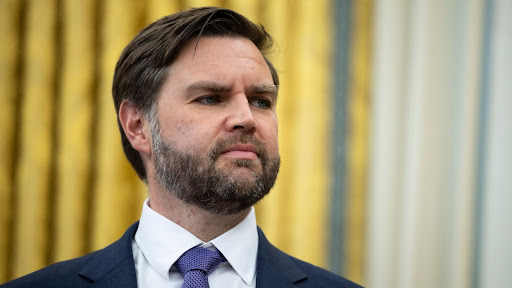
Ohio Senator and rising Republican figure J.D. Vance has stated that there is a “good chance” of a trade deal between the United States and the United Kingdom, signaling a potential breakthrough in negotiations that have lingered unresolved since Brexit. His comments, made during a high-level policy forum in Washington, reflect renewed optimism surrounding the transatlantic economic relationship—particularly as both nations reassess their global positioning in a rapidly shifting geopolitical landscape.
Speaking to journalists after a closed-door meeting with British officials, Vance emphasized the mutual benefits of a comprehensive trade agreement and the political will to push it forward. “There’s a good chance this deal gets done, and sooner than many expect,” he said. “Both countries want to strengthen their economic and strategic ties, and we’ve got the right people in place to make that happen.”
This shift in tone comes at a crucial time. The U.K. has struggled to secure major bilateral trade deals following its departure from the European Union, with a U.S. pact seen as both economically valuable and symbolically significant. Previous attempts to finalize such an agreement had stalled under the Biden administration due to concerns about labor rights, environmental standards, and the Northern Ireland Protocol. However, with increasing bipartisan interest in countering China’s economic influence and deepening alliances with traditional partners, the momentum appears to be returning.
Vance’s growing influence within the Republican Party—and his alignment with the more populist wing that seeks to rebuild domestic industry while managing foreign competition—adds weight to his comments. Sources in both Washington and London suggest that groundwork is already being laid for renewed negotiations, particularly in areas such as digital services, agriculture, manufacturing, and financial regulation.
British trade officials have welcomed the signals from Capitol Hill. “We believe a deal with the United States would unlock enormous opportunities for both sides,” a spokesperson for the U.K. Department for Business and Trade said. “There is real appetite to revisit and revitalize this conversation.”
Despite the optimism, challenges remain. Contentious issues such as food safety standards, market access for pharmaceuticals, and cross-border data flows could complicate talks. Additionally, political transitions in both countries—particularly with the U.S. heading into the 2026 midterms and speculation around the 2028 presidential race—may affect timelines and negotiating leverage.
Still, Vance’s statement is being interpreted as a green light for deeper diplomatic and economic engagement. Analysts say that even a limited agreement—focusing on specific sectors or regulatory cooperation—could pave the way for a broader and more ambitious framework in the future.
As global trade dynamics continue to evolve, a U.S.-U.K. trade deal would mark a significant milestone. Blacksolvent will continue to follow developments as both governments explore a potential partnership that could reshape trCaptivatingansatlantic commerce in the post-Brexit era.
PSG’s Warren Zaïre-Emery: The Teen Sensation Europe’s Football Elite
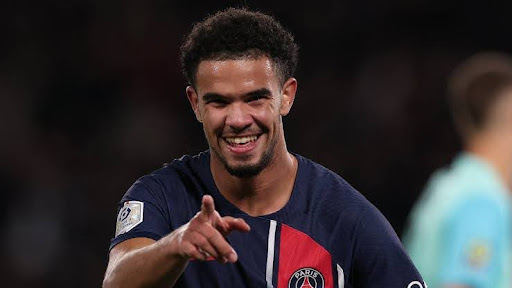
At just 18 years old, Paris Saint-Germain’s midfield prodigy, Warren Zaïre-Emery, is capturing the imagination of football fans, pundits, and scouts across Europe. With a maturity that belies his age and a style of play that fuses technical brilliance with tactical intelligence, the teenager is fast becoming one of the most talked-about young talents in world football.
Zaïre-Emery’s meteoric rise has been nothing short of phenomenal. After breaking into PSG’s star-studded first team during the 2022–23 season, he quickly made a name for himself with confident displays in Ligue 1 and the UEFA Champions League. Under the guidance of PSG’s management and alongside global stars like Kylian Mbappé and Vitinha, he has flourished—transitioning from a promising academy product to a first-team regular. His performances have consistently demonstrated poise under pressure, clean distribution, strong defensive work, and an uncanny ability to read the game at a level far beyond his years.
Europe’s top clubs have taken notice. Though PSG have no intention of letting him go, sources across the football landscape say that scouts from the Premier League, La Liga, and Bundesliga are keeping a close eye on the teenage phenom. Clubs such as Manchester City, Real Madrid, and Bayern Munich reportedly view Zaïre-Emery as a generational talent—someone who could anchor a midfield for the next decade.
What sets Zaïre-Emery apart isn’t just his ability on the ball, but his mentality. Coaches praise his work ethic, humility, and leadership qualities—even as one of the youngest players on the pitch. PSG insiders say he commands respect in the dressing room and takes his development seriously, often staying behind after training sessions to refine his technique. At the international level, he’s already featured for France’s youth sides and is expected to become a mainstay for the senior national team in the coming years.
As PSG looks to transition into a new era defined by young talent and strategic reinvestment, Zaïre-Emery stands at the heart of that vision. His rise symbolizes a shift in the club’s approach—one that places value on homegrown brilliance and long-term development. For supporters, he represents hope. For rivals, a looming challenge.
As Europe watches closely, one thing is certain: Warren Zaïre-Emery is no longer just a name for the future. He’s already shaping the present.
Blacksolvent will continue to spotlight his journey as the young Frenchman carves his legacy into the modern football era.