BLACKSOLVENT GÉNÉRAL NEWS
Continental Currents: Power, Peril, and the Pursuit of Progress”
Across Africa, a familiar rhythm echoes and it is the tension between hope and hardship, power and vulnerability. The continent’s stories are shaped not only by its vast resources or its political ambitions but also by the lives and choices of its people. In the north, billion-dollar deals promise energy and influence. In the south, tragedy on a mountain road exposes the fragility of daily survival. And across the heart of the continent, leaders and citizens alike are demanding a fairer financial future.
Each of these moments, Algeria’s strategic oil partnership, South Africa’s heartbreaking bus disaster, and the collective African push for debt justice represents a different face of the same struggle: the effort to rise, to reform, and to redefine what progress truly means. They remind us that Africa’s story is not one of despair or dependence, but of motion and it is forward, complex, and deeply human.
Algeria Inks $5.4 Billion Oil and Gas Deal with Saudi Firm Midad Energy
BY BLACKSOLVENT NEWS
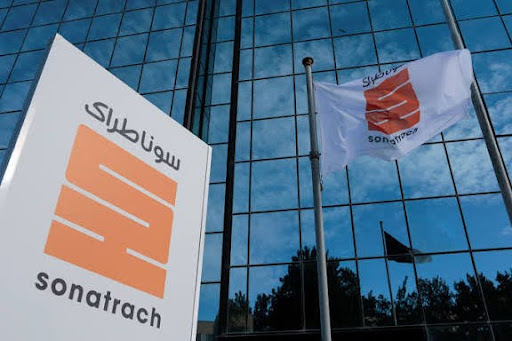
In a move set to redefine its energy landscape, Algeria has signed a $5.4 billion oil and gas deal with Saudi Arabia’s Midad Energy, one of the largest bilateral energy investments in recent years. The agreement, formalized in Algiers, will see Algeria’s state-owned Sonatrach and Midad Energy collaborate to explore and develop reserves in the Illizi Basin, near the Libyan border.
The 30-year contract includes an initial seven-year exploration phase fully funded by Midad Energy, followed by production-sharing arrangements that could yield nearly one billion barrels of oil equivalent, including an estimated 125 billion cubic meters of natural gas. For Algeria, this partnership is more than an economic transaction — it represents a strategic alignment aimed at boosting production, attracting foreign investment, and reaffirming its place among the top energy players in North Africa.
The deal arrives at a time when global energy markets remain volatile, and countries are under increasing pressure to balance energy demands with sustainability goals. Algeria’s heavy dependence on hydrocarbons, which account for over 90% of its export revenue, has long been both a strength and a vulnerability. Officials see this deal as a pathway to modernization and stability in a global market adjusting to shifts toward renewables.
However, the long-term implications raise questions. Environmental groups have pointed out that large-scale fossil fuel projects contradict broader climate targets, while geopolitical analysts warn that the project’s proximity to Libya could pose security and logistical risks. Nevertheless, for Algeria and Midad Energy, the partnership signals confidence in energy cooperation between Africa and the Middle East a potential model for regional integration.
If successful, the project could significantly increase Algeria’s energy output and revenue, reinforcing its role as a reliable energy supplier to Europe and Africa. Beyond economics, it highlights a recurring global theme how developing nations navigate the crossroads between economic necessity and environmental responsibility.
South Africa’s Deadly Bus Crash: A Tragedy on the Mountain Pass
BY BLACKSOLVENT NEWS
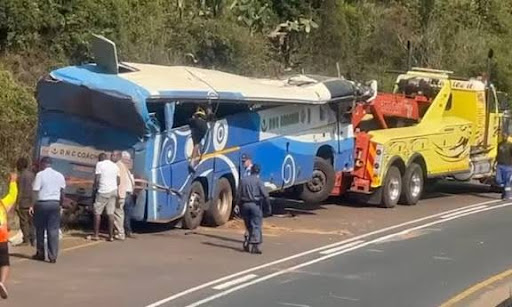
South Africa is reeling from one of its deadliest road disasters in recent years after a bus carrying dozens of passengers plunged off a mountain pass in Limpopo province, killing at least forty-two people, including seven children. The accident occurred near Louis Trichardt, along the treacherous N1 road, as the bus reportedly lost control and overturned multiple times before bursting into flames.
Initial investigations suggest that the vehicle, which was traveling from Johannesburg toward Zimbabwe, may have been speeding on a sharp bend when the driver lost control. Survivors recount scenes of chaos as the bus rolled down the slope, throwing passengers out of the windows. Emergency responders described the rescue operation as “gruelling,” with many victims trapped in the wreckage for hours.
Among the casualties were families returning home across borders ,a grim reminder of the risks many face while traveling for work or family reasons. South African police confirmed that over forty passengers died instantly, while nearly fifty others sustained injuries ranging from minor fractures to severe burns.
This tragedy has reignited debate over road safety and transport regulation in South Africa, where fatal accidents are alarmingly frequent. According to government data, more than 12,000 people die on South African roads every year, often due to reckless driving, poor vehicle maintenance, and inadequate infrastructure. In mountainous regions like Limpopo, steep gradients and sharp bends make roads particularly dangerous, especially for overloaded long-distance buses.
The Limpopo provincial government has called for a full investigation into the bus company’s safety record and compliance with regulations. Families of victims have also demanded accountability and stronger enforcement of safety standards. While condolences have poured in from across the region, critics argue that sympathy alone is not enough — systemic change is needed to prevent such tragedies from recurring.
For now, South Africa mourns not just the lives lost, but the failure of safety systems meant to protect them. The crash is a sobering reminder that development must go hand in hand with infrastructure responsibility. Every journey on the country’s roads should be a promise of safe arrival not a gamble with fate.
African Groups Criticize South Africa’s G20 Leadership Over Debt Relief Stalemate
BY BLACKSOLVENT NEWS
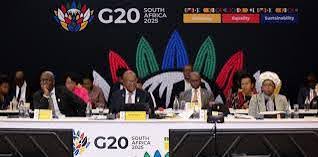
As South Africa’s tenure as president of the G20 approaches its midpoint, several African advocacy groups have accused the bloc of failing to deliver meaningful progress on global debt relief for developing countries. Organizations including ActionAid, Amnesty International, and the Malala Fund have released a joint statement criticizing what they call “token gestures” from world leaders amid deepening debt crises across Africa.
The activists argue that despite lofty pledges made at previous G20 summits, very little has changed for the world’s poorest nations, many of which are spending more on debt repayment than on health, education, or climate adaptation. According to ActionAid’s report, at least 25 African countries now spend over 30% of their annual budgets on servicing external debt — a figure that continues to rise due to global interest rate hikes and currency depreciation.
Campaigners had hoped South Africa’s leadership would accelerate reforms to the G20’s Common Framework for Debt Treatment, which aims to coordinate relief efforts. However, they say the process remains slow, opaque, and biased toward creditor nations. Groups are calling for a new model of debt justice, including the cancellation of illegitimate debts and the establishment of an African Credit Rating Agency to counter perceived bias in global financial assessments.
Supporters of the South African presidency argue that progress takes time and that negotiations within the G20 are complex, involving competing national interests. Still, the criticism has placed pressure on Pretoria to prove its influence on the global stage. Many see this as a defining moment for African leadership in international financial policy — a chance to move beyond dependence and toward collective empowerment.
The debt crisis remains one of the most pressing yet underreported challenges of modern development. Without restructuring, many African economies risk stagnation, as high interest payments limit investment in infrastructure, innovation, and public welfare. The criticism facing South Africa underscores the urgency for real action not just discussion as nations call for fairness in a financial system that too often leaves the Global South paying the highest price.