A World at the Crossroads
As dusk falls across continents, the headlines of the day tell a story both fractured and intertwined a world simultaneously ablaze with conflict, culture, and change.
In Los Angeles, the deployment of National Guard troops and Marines amid ICE protest unrest casts a stark light on America’s ongoing struggle with identity, immigration, and the legacy of power. The tension echoes louder than the chants raising timeless questions about freedom, force, and the future of democracy in a divided nation.
Thousands of miles away, hope dances to a different beat. Tems, Nigeria’s soulful star, prepares to share the FIFA Club World Cup stage with global icons Doja Cat and J Balvin. In that moment—one of rhythm, pride, and presence—Nigerian music steps firmly into its era, not as a guest, but as a host of global sound. It’s a cultural triumph, a reminder that in the midst of political storms, joy still finds its way into history.
Yet the storm continues. At the UN headquarters in New York, delegates debate, plead, and strategize as the Middle East teeters on the edge of another devastating chapter. Ceasefire talks feel fragile, and humanitarian hopes hang by a thread. It’s diplomacy under pressure an ancient region crying for peace while the world struggles to listen without bias.
These stories may seem disparate one of unrest, one of celebration, one of war. But together, they reflect the contradictions of the human condition: rage and rhythm, chaos and culture, conflict and connection. And in this mosaic of moments, one truth endures we are living through history, shaping it not only with our politics or protests, but with our voices, our art and our choices.
Tensions Mount as Trump Administration Deploys National Guard and Marines to Los Angeles Amid ICE Protest Unrest
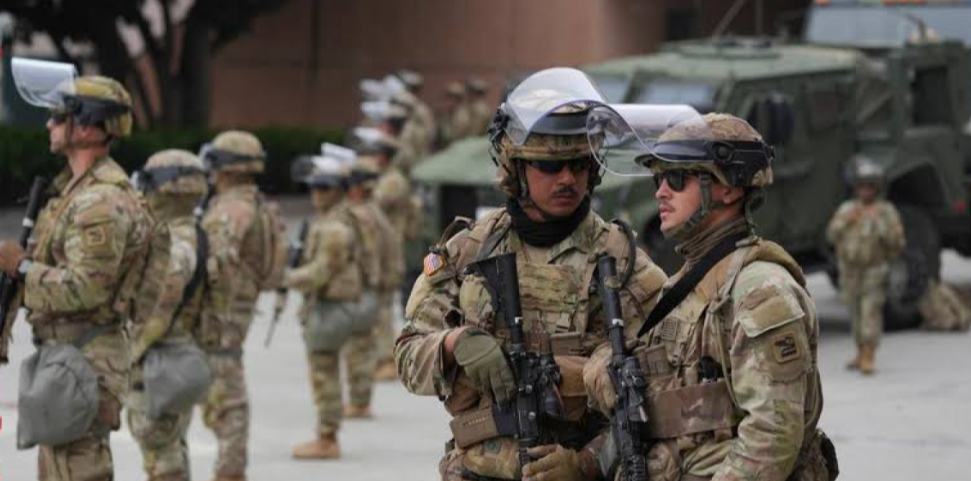
The Trump administration has escalated its immigration crackdown by deploying 2,000 National Guard troops and 700 U.S. Marines to the streets of Los Angeles in response to widespread protests sparked by a wave of recent ICE raids targeting undocumented immigrants.
The move has been met with fierce backlash from state officials, civil rights advocates, and community leaders, many of whom say the action represents an unprecedented use of military power to silence public dissent and override state authority.
“This is a dangerous, undemocratic overreach,” said California Governor Gavin Newsom at a press briefing Tuesday morning. “The federal government is not just targeting immigrants anymore they are targeting the heart of state sovereignty and the right of our citizens to protest unjust laws.”
Over the past week, immigration enforcement agents have conducted high-intensity raids across multiple California cities, detaining hundreds of undocumented individuals including students, long-time residents, and asylum seekers. The operations have sparked spontaneous protests across Los Angeles, San Diego, and Oakland, with demonstrators demanding a halt to what they describe as “inhumane detentions” and “military-style abductions.”
The protests reached a peak in Los Angeles over the weekend, where tens of thousands marched through downtown, chanting “No more raids!” and “California will resist!” While the protests were largely peaceful, clashes between demonstrators and federal agents were reported in several locations, prompting the White House to greenlight the military deployment late Sunday.
In a statement from the Oval Office, President Trump defended the decision as “necessary to restore order and uphold the rule of law in cities that have failed to protect Americans from illegal criminal elementsbut legal scholars and political analysts warn that the move could have far-reaching constitutional consequences. “Deploying federal military force within a state against the will of its government is a serious constitutional red flag,” said Professor Linda Osei, a constitutional law expert at UC Berkeley. “It raises critical questions about federalism, states’ rights, and the militarization of immigration policy.”
Governor Newsom has announced California will file an emergency lawsuit against the federal government, citing violations of the 10th Amendment and the Posse Comitatus Act, which limits the use of federal military personnel for domestic law enforcement.
Meanwhile, the streets of Los Angeles remain tense. Armed troops have taken up positions outside government buildings, ICE detention centers, and major intersections in an attempt to “prevent escalation and maintain order,” according to Pentagon spokesperson Lt. Mark Donovan. But the visible presence of military vehicles and personnel has only fueled public outrage and fear within immigrant communities.
Local leaders and clergy have called for calm and urged residents not to engage in violence. “We must not meet force with force,” said Pastor Ana Rodriguez of the Eastside Community Church. “Our resistance must be peaceful, principled, and powerful.”
The Biden campaign and other 2026 presidential hopefuls have condemned the deployment as authoritarian and called for an immediate review of the Trump administration’s use of military force in domestic affairs.
With California preparing for a legal showdown and protests showing no sign of slowing, the country appears poised for another deep battle over the soul of its immigration policy and the limits of executive power.
Tems to Headline FIFA Club World Cup Halftime Show Alongside Doja Cat and J Balvin in Landmark Moment for Nigerian Music
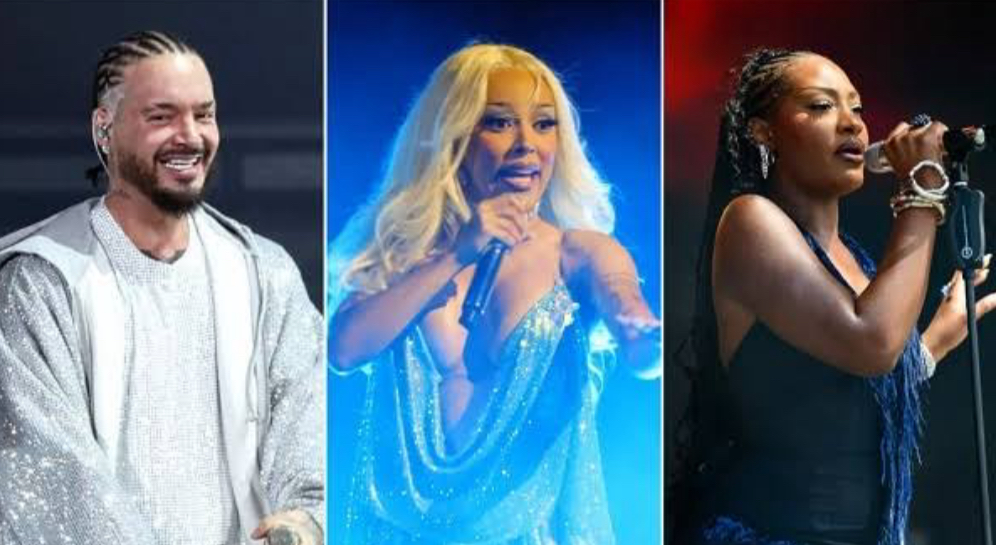
The Fédération Internationale de Football Association (FIFA) has officially announced the headline performers for the 2025 FIFA Club World Cup Halftime Show, and among them is Nigeria’s own global music powerhouse, Tems. She will be joined by American chart-topper Doja Cat and Colombian reggaeton icon J Balvin, making for one of the most diverse and globally representative halftime shows in FIFA history.
The final match and halftime performance is set to take place this December in Atlanta, United States, and will be broadcast to over 200 countries. For Tems, it marks a major milestone as she becomes the first Nigerian female artist to headline a FIFA global sporting event, further cementing her position as one of Africa’s most influential contemporary voices.
Tems, born Temilade Openiyi, has seen a meteoric rise to global stardom over the last four years, with collaborations spanning artists like Wizkid (Essence), Drake, Future, and Beyoncé. Her sound often described as a fusion of soul, R&B, and Afrobeathas garnered Grammy recognition, chart-topping hits, and critical acclaim for its honesty, raw emotion, and authenticity.
Speaking through her management shortly after the announcement, Tems described the upcoming performance as “a dream come true” and “a moment of deep pride for Africa.” She added, “It’s bigger than me it’s for every young girl with a dream, every Nigerian artist pushing through, and every African voice demanding to be heard.”
FIFA’s Director of Global Entertainment, Luciana Ruiz, explained that this year’s lineup was curated to reflect the dynamism of global youth culture. “Tems represents the new era bold, unapologetically African, and globally respected. Her presence, alongside Doja Cat and J Balvin, speaks volumes about how music now transcends borders.”
Social media erupted within minutes of the announcement, with #TemsFIFA2025 trending across platforms like X (formerly Twitter), Instagram, and TikTok. Fans, artists, and cultural commentators from around the world flooded timelines with praise, joy, and admiration, calling it a watershed moment for Nigerian and African music.
Nigerian celebrities, producers, and fans posted congratulatory messages, many describing the event as a “global coronation” for Tems. Though she has performed at events like the Oscars and Coachella, the FIFA Club World Cup often watched by more than 1.5 billion people takes her visibility to unprecedented heights.
Commenters highlighted how remarkable it is for a soft-spoken, introspective artist from Lagos to now take center stage with global icons in a performance that fuses Afrobeat, reggaeton, and pop. Fan pages posted clips of her past performances with captions like “History in the making,” while TikTok was flooded with dance edits and mashups of her hit tracks like Free Mind, Higher, and Found.
“This isn’t just about music,” one viral post read. “It’s about reclaiming narratives, uplifting black women, and showing the world what Africa sounds like.”
Tems’ inclusion comes at a time when Afrobeat is reshaping the global music landscape. With artists like Burna Boy, Rema, Ayra Starr, and Asake already dominating international charts and festival stages, this moment feels like a culmination and a fresh beginning.
Cultural critics have described Tems as “a quiet revolutionary,” whose music transcends genre and speaks to the emotional experiences of a global generation. Her upcoming performance is expected to include a medley of her most iconic songs and, according to insiders, may feature a visually rich display with Afro-futurist themes and high-fashion elements.
With less than six months to go, the anticipation is building not just for the final match, but for what promises to be one of the most talked-about halftime shows in FIFA history.
UN Security Council Holds Emergency Meeting Over Escalating Conflict in Middle East
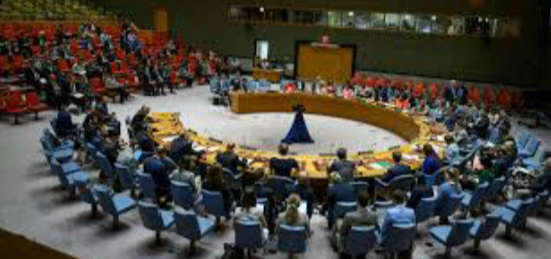
UN Security Council convened an emergency meeting today in response to the rapidly deteriorating situation in the Middle East, where a surge in cross-border attacks has led to growing fears of a wider regional war.
The meeting, called at the request of several member states, comes after a week marked by missile strikes, civilian casualties, and a dangerous escalation in rhetoric between key regional actors. The violence has prompted international leaders to issue urgent calls for restraint and to advocate for an immediate ceasefire.
UN Secretary-General António Guterres, in a strongly worded statement, urged all parties involved to “step back from the brink” and prioritize diplomatic channels. “We are witnessing a human tragedy unfolding before our eyes,” he said. “Civilians many of them children are paying the price for political failure and armed aggression.”
Sources within the UN confirmed that behind closed doors, the Security Council discussed a range of potential interventions, including humanitarian corridors, monitoring missions, and the possibility of sanctions if warring parties refuse to return to the negotiating table.
The United States, United Kingdom, and France pushed for a unified resolution condemning the recent wave of violence and urging both sides to uphold international humanitarian law. However, Russia and China signaled hesitation over what they described as a “rushed” approach, emphasizing the need for balanced diplomacy rather than one-sided condemnations.
Meanwhile, the humanitarian situation on the ground is worsening. Aid organizations report that thousands of families have been displaced, and hospitals in affected regions are overwhelmed. Access to clean water, food, and electricity remains a growing concern.
“This is not just a political or military crisis it’s a humanitarian emergency,” said Lina Al-Bashir, a field coordinator for Doctors Without Borders. “The international community must act decisively, not just through statements, but with meaningful support for the people suffering.”
The UN Security Council is expected to reconvene later this week to assess the implementation of any emergency measures and to follow up on behind-the-scenes diplomatic efforts currently being pursued by regional peace envoys.
For now, the world watches anxiously, hoping that diplomacy can prevail before the violence spirals even further out of control.