A Season of Shifts
In finance, the quietest shifts often carry the loudest implications.
In the U.S., inflation’s gentle retreat signals more than economic relief, it marks a rare moment of pause in a cycle that’s kept households and markets on edge for two years. Yet beneath the calm, uncertainty lingers. The Federal Reserve may ease its grip, but it does so knowing that global disruptions, elections, and fragile recoveries remain just beneath the surface.
Across the Atlantic, Nigeria faces a different reckoning. In its pursuit of currency stability, the Central Bank has opened its vaults, drawing down reserves to shield the naira. It’s a strategy steeped in necessity but one that begs the question of sustainability. How long can resilience be borrowed before it must be rebuilt?
Meanwhile, Europe is writing its own chapter—one shaded green. A record surge in green bonds isn’t just a financial feat; it’s a bet on a future shaped by climate action, transparency, and long-term vision. Germany and France may lead the charge, but their momentum echoes globally: sustainability is no longer a sidebar, it’s the storyline.
In different currencies, under different pressures, and through different priorities, the same truth emerges: the global economy is turning a page. Slowly, decisively, and with consequences that will be counted not just in interest points or billions, but in the kind of future each decision dares to imagine.
U.S. Inflation Cools to 3.2%, Easing Rate Hike Pressure
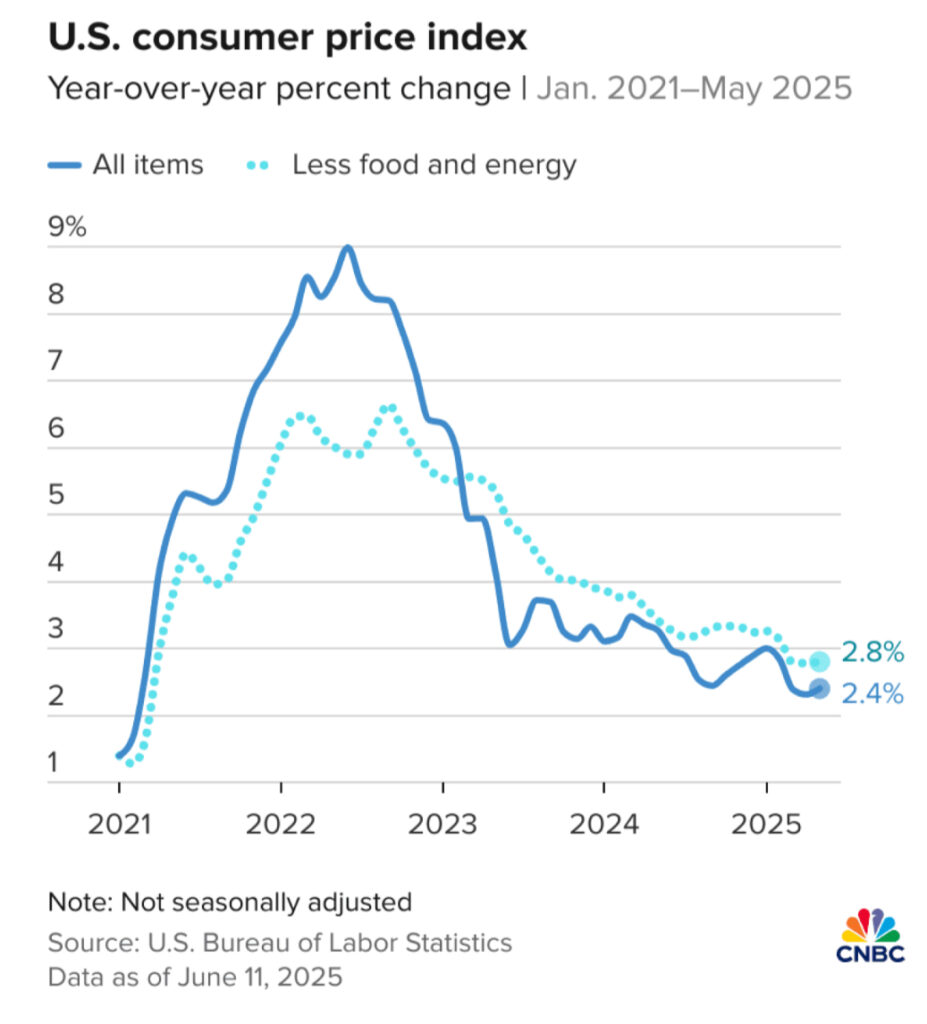
The U.S. economy offered a fresh sign of cooling inflation in May, with consumer prices rising at an annual rate of 3.2%, a slight decrease from April’s 3.4% and below economists’ expectations. The latest Consumer Price Index (CPI) report, released by the Bureau of Labor Statistics, has renewed optimism that the Federal Reserve may pause any further interest rate hikes in the coming months.
Core inflation, which strips out volatile food and energy prices, also moderated, rising just 0.2% month-over-month which is the slowest pace since August 2021. Year-over-year, core prices rose 3.4%, continuing a downward trend that suggests inflationary pressures may be loosening their grip on the economy.
Financial markets responded swiftly, with the S&P 500 and Nasdaq both climbing as investor sentiment turned bullish. Bond yields also dipped, reflecting growing confidence that the Fed may be nearing the end of its aggressive tightening cycle. Since March 2022, the central bank has raised interest rates 11 times in an effort to bring inflation back to its 2% target.
Fed officials, including Chair Jerome Powell, have remained cautious in recent months, emphasizing that sustained progress toward lower inflation is necessary before any shift in policy can occur. However, May’s report may strengthen the case for a hold at the upcoming Federal Open Market Committee (FOMC) meetings.
Sectors such as housing, medical care, and used vehicles showed modest increases, while energy and grocery prices held relatively steady offering a measure of relief to American households still adjusting to a post-pandemic cost-of-living landscape.
While the road to full price stability remains uncertain, May’s data marks a step in the right direction. For now, both consumers and investors are watching the Fed’s next move closely, hoping that the worst of the inflationary surge is behind them.
Nigeria’s Foreign Reserves Fall Below $33B Amid CBN’s FX Stabilization Push
Nigeria’s foreign reserves have dipped below the $33 billion mark for the first time in over a year, according to data from the Central Bank of Nigeria (CBN). The decline is being linked to sustained foreign exchange (FX) interventions aimed at propping up the naira, which continues to face volatility in the official and parallel markets.
Analysts say the reserves now hovering around $32.97 billion reflect the cost of the CBN’s intensified efforts to meet foreign currency demand, particularly among importers, manufacturers, and investors seeking repatriation. While the central bank maintains that these interventions are crucial for restoring confidence and liquidity in the FX market, critics warn that the rapid drawdown of reserves may undermine the country’s long-term financial stability.
The naira, which briefly strengthened following policy reforms earlier in the year, has recently shown signs of renewed pressure, trading at over ₦1,500 to the dollar on the parallel market. The CBN has continued to intervene with direct FX sales, including to commercial banks and Bureau de Change operators, in an effort to narrow the gap between the official and street rates.
Governor Olayemi Cardoso has repeatedly emphasized the bank’s commitment to exchange rate unification and a market-driven system. However, the pace at which the reserves are being depleted has sparked concern among investors and economists who argue that deeper structural reforms not just liquidity support are necessary to ensure lasting currency stability.
In addition to FX interventions, external debt servicing obligations and a slowdown in oil revenues have added pressure on Nigeria’s reserve position. The country’s reliance on oil exports for over 80% of its foreign earnings leaves its reserves vulnerable to global price shocks and production issues.
While the CBN insists that current reserve levels remain “adequate” for meeting short-term obligations, the margin for fiscal comfort is narrowing. Stakeholders are now calling for clearer policy direction, improved investor confidence, and accelerated diversification of Nigeria’s foreign exchange sources to avoid a deeper reserve crisis.
As the currency and reserves continue their delicate balancing act, eyes remain on the CBN’s next moves and the broader economic reforms needed to restore long-term equilibrium.
Europe’s Green Bond Market Hits Record €600B Issuance in 2024
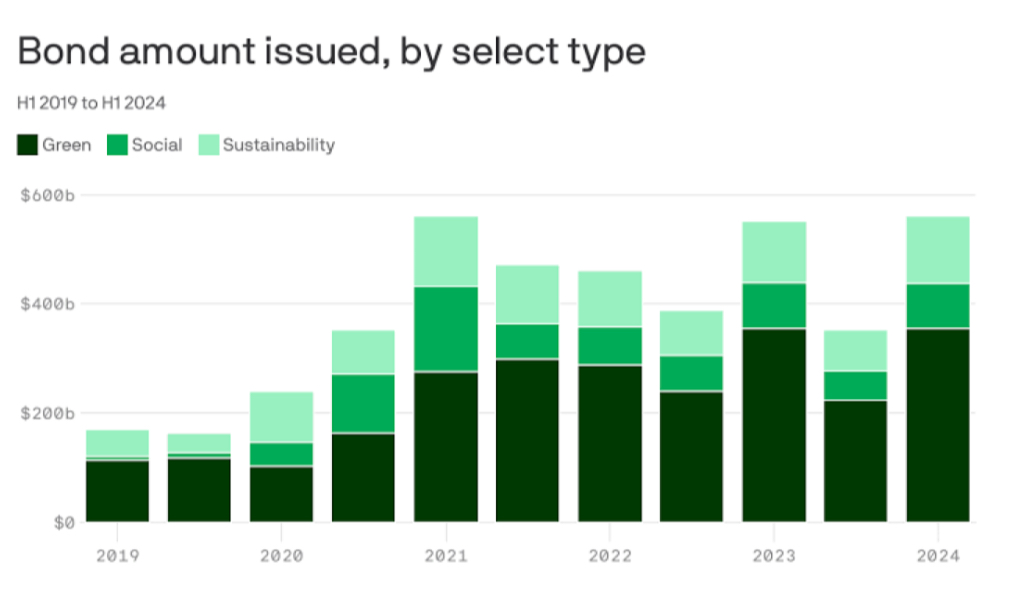
Germany and France lead climate-driven financial surge amid global sustainability push
Europe’s green bond market is experiencing unprecedented growth, with total issuance reaching a record €600 billion in the first half of 2024. According to data released by the European Securities and Markets Authority (ESMA), this marks a 35% year-over-year increase and reinforces the region’s position as the global leader in sustainable finance.
The surge is largely attributed to stronger climate policy enforcement across the European Union, coupled with investor appetite for environmentally conscious instruments. Germany and France are leading the pack, collectively accounting for more than €300 billion in new issuances. The proceeds are being directed toward a range of climate-focused initiatives including renewable energy projects, sustainable transport, green housing, and carbon reduction programs.
“Europe has turned climate ambition into capital allocation,” said Helena Krauss, a climate finance analyst at BNP Paribas. “These numbers are not just symbolic—they reflect a fundamental redirection of public and private financing toward long-term environmental resilience.”
The European Central Bank (ECB) has also played a key role, maintaining its supportive stance by including green bonds in its asset purchase programs and pushing for transparency through the EU Taxonomy for Sustainable Activities. These regulatory moves have helped standardize the green bond market, making it more accessible and attractive to institutional investors.
In addition to sovereign issuers, the private sector has shown increased participation. Major European banks, energy companies, and tech firms have launched sizable green debt offerings, aligning their capital-raising strategies with Europe’s goal of reaching net-zero carbon emissions by 2050.
However, concerns over “greenwashing” remain. While the European Commission has introduced tighter disclosure requirements, critics warn that rapid growth must be matched with rigorous oversight to ensure funds are truly directed toward sustainable outcomes.
Still, the momentum appears strong. Analysts project total green bond issuance across Europe could surpass €1 trillion by the end of 2025 if current trends hold further cementing the continent’s leadership in climate-aligned finance.
As global economic priorities continue shifting toward sustainability, Europe’s green bond record signals more than just financial achievement. It represents a recalibration of capital markets in service of environmental urgency and a model other regions may soon be compelled to follow.