Stability Over Spectacle: A Global Reset in Financial Governance
As global financial leaders brace for the next economic chapter, the themes are unmistakable focus, reform, and restraint. From the IMF’s call to abandon protectionist tariffs, to the Bank of England’s defense of post-crisis safeguards, and the U.S. push to strip G20 meetings of non-financial distractions, one message rings clear: sound governance must anchor ambition.
In an era marked by geopolitical tension and fiscal uncertainty, the world’s largest economies are redrawing the boundaries between policy innovation and foundational discipline. They are not merely adapting to change, they are laying the groundwork to endure it.
United States to Refocus G20 Agenda on Core Financial Stability During 2026 Presidency
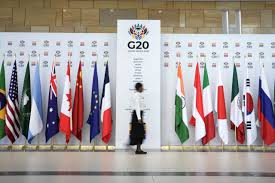
As the United States prepares to assume the presidency of the Group of Twenty (G20) in 2026, the U.S. Treasury has announced plans to narrow the group’s agenda, prioritizing core economic and financial matters over broader social and political issues that have increasingly dominated recent G20 summits.
According to senior U.S. officials, the shift will involve removing non-financial topics — such as health, climate change, gender equality, and global energy transition — from the central G20 finance track. Instead, the focus will return to traditional macroeconomic coordination, debt sustainability, global financial stability, trade frameworks, and currency cooperation.
This move comes after years of expansion in G20 agendas, which have stretched beyond their original post-1999 mandate as a forum for economic cooperation among the world’s major advanced and emerging economies. In recent years, meetings have included themes ranging from pandemic response to digital inclusion and renewable energy areas some officials argue are outside the expertise and jurisdiction of finance ministries and central banks.
“The G20 finance track was designed to coordinate international economic policy and safeguard global financial stability — not to serve as a platform for all global issues,” said a senior U.S. Treasury spokesperson. “Our presidency will respect that original purpose.”
The Background
The G20, which includes major economies such as the U.S., China, India, Brazil, Germany, and Saudi Arabia, has evolved into a forum that addresses a wide range of global challenges. However, that breadth has occasionally led to political gridlock, especially on issues like climate financing and health equity, where geopolitical interests clash.
With its 2026 presidency, the U.S. aims to bring clarity, speed, and focus to the G20 finance track. Officials have clarified that the broader G20 agenda (led by national sherpas and heads of state) may still touch on climate and development, but technical finance discussions will center squarely on monetary and fiscal policies, financial regulation, cross-border capital flows, debt restructuring, and global economic risks.
Mixed Reactions from Global Partners
While the decision has been welcomed by some market-focused G20 members including Canada, Germany, and Japan who have expressed frustration with the “overloaded” agenda, others see it as a step backward in addressing complex global challenges that require financial coordination.
Officials from countries like France, India, and South Africa have pushed back, arguing that issues like climate finance and pandemic preparedness are intrinsically linked to global economic health and cannot be ignored.
Critics also warn that removing these topics from the G20 finance dialogue could undermine funding mechanisms for global health, delay discussions around climate-related financial risk, and signal a retreat from multilateral cooperation on sustainable development.
Strategic Implications
Analysts suggest the U.S. strategy may be designed to increase effectiveness and unity within the G20 by minimizing ideological conflict and redirecting discussions toward technical, actionable outcomes in a time of global economic uncertainty. With rising debt levels in low-income countries, persistent inflation in developed markets, and concerns over financial fragmentation between China and the West, some say the need for coordinated economic governance has never been higher.
“The U.S. is trying to steer the G20 back to its roots: fiscal and monetary policy cooperation. That’s where the group can have the most immediate and measurable impact,” said a global finance analyst at Brookings Institution.
Looking Ahead
The U.S. will take over the G20 presidency from Brazil in December 2025, and plans are already underway to shape the agenda for the 2026 G20 Finance Ministers and Central Bank Governors Meetings, which will be hosted across major U.S. cities.
While the reorientation may invite debate, it signals a renewed emphasis on financial discipline and macroeconomic coordination in the face of fragile global conditions. Whether this more focused approach will yield greater unity or further expose deep divisions remains to be seen.
IMF Warns Against Tariffs in 2025 External Sector Report, Urges Focus on Domestic Reforms
In its newly released 2025 External Sector Report, the International Monetary Fund (IMF) has issued a strong warning to policymakers worldwide: tariffs and protectionist trade policies are not viable solutions to global economic imbalances. Instead, the Fund recommends that countries address internal structural distortions and engage in more coordinated, sustainable economic policies.
The annual report, which assesses exchange rates, current account balances, and external positions of the world’s largest economies, highlights the growing trend of countries turning to tariffs, trade barriers, and import restrictions in an attempt to correct trade deficits, protect domestic industries, or reduce inflationary pressures. According to the IMF, these measures may offer short-term political appeal, but they risk distorting trade flows, inflating prices, and undermining global demand.
“While rising protectionism may seem like an immediate fix for domestic concerns, it carries long-term costs for both national economies and the broader global system,” the IMF report states. “Trade restrictions tend to raise prices, reduce efficiency, and provoke retaliatory measures, ultimately dampening investment and growth.”
Key Findings from the 2025 Report
The IMF’s analysis focuses on 30 of the world’s largest economies, representing over 90% of global GDP. Key insights include:
- Global current account imbalances have remained broadly stable since 2024 but are increasingly being shaped by policy interventions rather than market fundamentals.
- Several advanced economies, including the United States, the United Kingdom, and Italy, have widened trade deficits, while some surplus countries like Germany and China have seen narrowing gaps due to weakening demand.
- Exchange rate movements in 2025 were less aligned with fundamentals, partly due to interventionist monetary policies and tariff-induced distortions in trade prices.
IMF’s Policy Recommendations
Rather than resorting to tariffs or unilateral trade measures, the IMF urges countries to take the following actions:
- Address Domestic Policy Misalignments: Many of the underlying causes of trade deficits such as low productivity, weak competitiveness, or unsustainable fiscal policies stem from domestic structural issues. Reforms in labor markets, tax policy, and innovation funding can help restore balance.
- Promote Currency Flexibility: The report reaffirms that market-driven exchange rates allow economies to adjust more naturally to shocks, whereas managed or artificially suppressed currencies risk mispricing trade flows.
- Enhance Global Coordination: With major economies pursuing conflicting trade and monetary policies, the IMF calls for renewed multilateral dialogue, especially within the G20 and WTO, to avoid a slide into protectionist fragmentation.
- Strengthen Social Safety Nets: One driver of protectionism is domestic political pressure from populations hurt by globalization. IMF analysts suggest countries bolster support systems for displaced workers rather than blocking imports outright.
Rising Trade Tensions in 2025
The IMF’s warning comes against the backdrop of renewed trade tensions between the U.S., China, and the European Union. The U.S. has introduced higher tariffs on electric vehicles and solar panels imported from China, citing unfair subsidies, while the EU has launched investigations into Chinese dumping practices. Japan, meanwhile, began a new anti-dumping probe into steel imports from China and Taiwan this month.
These measures, the IMF cautions, risk triggering a wave of retaliatory tariffs, threatening global supply chains and amplifying cost-of-living pressures especially for developing economies that depend on imports of energy, technology, or agricultural goods.
A Call for Balanced Global Leadership
In a post-release briefing, IMF Chief Economist Pierre-Olivier Gourinchas emphasized the importance of strategic restraint:
“The temptation to shield economies through tariffs is understandable. But real stability comes from competitiveness, transparency, and long-term planning. Tariffs may protect one sector today, but at the expense of households and broader economic resilience tomorrow.”
He added that with inflation gradually easing in most regions and central banks nearing the end of their rate-hiking cycles, there is a critical window for countries to shift from reactive to proactive policymaking.
Looking Ahead
The IMF plans to release a mid-year update to its global economic outlook in late July, which will further explore how trade conflicts and domestic policy shifts are impacting overall growth prospects. For now, the message is clear: tariffs alone won’t solve imbalances but smart, inclusive reform might.
UK Banks and Bank of England Defend Banking Rules Amid Finance Minister’s Deregulation Push
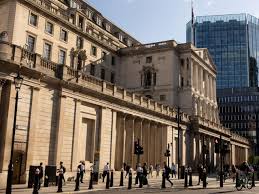
Tensions are rising within the UK financial sector as Andrew Bailey, Governor of the Bank of England, publicly defended key banking regulations — notably the ring-fencing regime — in response to recent criticisms from Chancellor of the Exchequer Jeremy Hunt. The clash highlights a growing debate between ensuring financial stability and boosting post-Brexit economic competitiveness through regulatory reform.
In a speech delivered at a financial policy committee roundtable on Monday, Bailey warned that weakening banking safeguards could endanger the UK’s hard-won financial stability, drawing a sharp line between the central bank and government ambitions for more “flexible” rules aimed at revitalizing the City of London.
“We should not be too quick to forget the lessons of 2008,” Bailey said. “The reforms introduced after the global financial crisis including ring-fencing — were designed to protect the real economy. They remain relevant and necessary today.”
The Ring-Fencing Rule at the Center of the Debate
Implemented in 2019, the ring-fencing regime requires major UK banks to separate their consumer banking operations from riskier investment banking activities. The rule is intended to protect depositors and shield the wider economy from shocks that could originate in high-risk sectors of the financial system.
Chancellor Hunt, however, has described the regulation as “outdated”, arguing that it creates unnecessary complexity and limits UK banks’ ability to compete globally. In recent weeks, Hunt has floated proposals to review and potentially relax ring-fencing thresholds, as part of broader reforms under the Edinburgh Reforms a sweeping package aimed at updating the UK’s financial rules post-Brexit.
“We must ensure our regulatory environment is fit for purpose in today’s global economy,” Hunt told Parliament last week. “Innovation, agility, and global competitiveness must be front and center.”
Industry Reactions
The proposal has triggered a sharp divide across the industry. While some large financial institutions and lobbying groups support easing ring-fencing requirements especially for banks with diversified global portfolios consumer watchdogs and several mid-sized banks have voiced concerns.
Executives at Barclays and HSBC have urged caution, noting that ring-fencing provides a clear structural defense during economic stress. Meanwhile, Nationwide and Metro Bank warned that deregulation might favor bigger players and raise risks for smaller lenders and consumers alike.
A recent analysis by the Institute for Fiscal Studies (IFS) concluded that although deregulating could free up capital and reduce internal compliance burdens, the systemic risk trade-offs must not be ignored.
A Policy Tug-of-War
The Bank of England and the Treasury have traditionally worked in tandem, but this latest policy dispute has introduced visible strain. Bailey emphasized that central bank independence must be preserved, especially when it comes to prudential regulation and financial stability.
“There is a risk that regulatory loosening driven by short-term political pressure could erode public trust and investor confidence,” he said.
The Financial Conduct Authority (FCA) has so far stayed neutral, but insiders say it is closely monitoring the debate and its potential implications for consumer protection and market integrity.
Political and Economic Context
The debate comes at a time when the UK is working to reinforce its status as a global financial hub amid rising competition from cities like Frankfurt, Paris, and Singapore. The government is keen to signal that post-Brexit Britain is open for financial innovation, but critics argue that deregulation for its own sake could be a dangerous path.
Adding to the pressure, UK economic growth has remained sluggish in 2025, and the Treasury is under increasing pressure to stimulate business investment and increase tax revenues without imposing further burdens on households.
What’s Next?
Parliament is expected to review the ring-fencing framework later this year, with a full white paper on potential financial regulatory reforms due by Q4 2025. Meanwhile, the Bank of England has committed to publishing a comprehensive impact assessment on ring-fencing and related safeguards in the coming weeks.
As the government and central bank continue to navigate the balance between risk and reform, the outcome could shape the future of the UK’s financial identity not only in Europe, but globally.