BLACKSOLVENT FINANCE NEWS | 24TH SEPTEMBER 2025
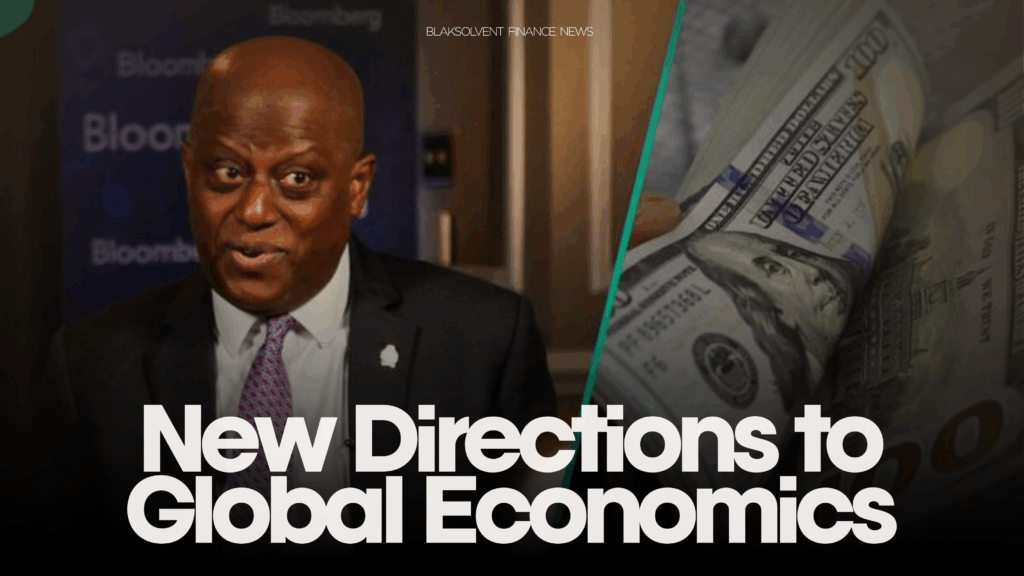
New Directions to Global Economics
The international financial landscape is undergoing critical shifts as nations adapt to evolving economic pressures. In Nigeria, the central bank has cut its benchmark rate for the first time since 2020, signaling a cautious pivot from strict inflation control toward growth support. Meanwhile, the euro zone has recorded its highest level of business activity in 16 months, though uneven performances among member states highlight ongoing regional disparities. Across the Atlantic, the United States is preparing a “large and forceful” financial support package to stabilize Argentina, where inflation and currency collapse have deepened the country’s crisis.
Together, these developments underscore how monetary policy, regional growth dynamics, and international aid are redefining the trajectory of global economics in 2025.
Nigeria Cuts Key Rate for First Time Since 2020
BY BLACKSOLVENT NEWS
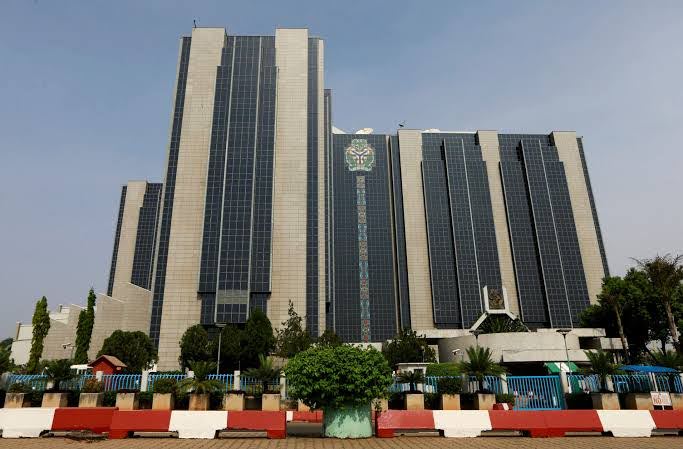
Nigeria’s Central Bank has reduced its benchmark interest rate by 50 basis points to 26.25%, marking the first rate cut since 2020. The move comes after years of tightening policy aimed at curbing inflation, which had soared to record highs in 2023 and 2024.
The decision reflects growing confidence that inflationary pressures are easing, though analysts caution that the cut is modest relative to the still-elevated cost of borrowing in Africa’s largest economy. Inflation currently hovers above 24%, driven by food and energy prices, but has shown signs of slowing in recent months.
For businesses and consumers, the cut may bring slight relief from high borrowing costs, while also signaling a gradual shift toward policies that support growth. However, some economists warn that premature easing could reignite inflationary pressures, especially if global oil prices remain volatile.
The central bank emphasized that its policy stance remains cautious and data-driven, but investors see the move as a signal of intent to balance inflation control with economic growth.
Euro Zone Business Activity Reaches 16-Month High
BY BLACKSOLVENT NEWS

Business activity in the euro zone has climbed to its strongest level in 16 months, according to the latest Purchasing Managers’ Index (PMI) survey. The upturn, led by robust service sector growth, suggests the bloc’s economy is recovering momentum after a sluggish 2024.
However, the recovery is uneven across member states. Germany and Spain reported solid expansions, while France’s activity continued to lag behind. New orders have not accelerated at the same pace, raising concerns that the rebound may not yet be firmly established.
Economists highlight that falling inflation and recent rate cuts by the European Central Bank have helped stimulate demand, particularly in southern Europe. Still, structural challenges from sluggish investment in France to ongoing industrial weakness in Germany underscore the fragility of the recovery.
The PMI data is seen as a welcome sign for policymakers, suggesting the euro zone may avoid recession this year. Yet, the divergence in national trends could complicate efforts to maintain a balanced economic policy across the bloc.
U.S. Plans Major Financial Support Package for Argentina
BY BLACKSOLVENT NEWS

The United States is preparing what officials describe as a “large and forceful” financial support plan for Argentina, as the South American country struggles with a severe economic crisis marked by soaring inflation, depleted foreign reserves, and mounting debt.
Though details remain under discussion, the package is expected to involve both direct aid and coordination with international financial institutions such as the International Monetary Fund. Washington’s intervention underscores growing geopolitical interest in stabilizing Argentina, a key regional economy facing its worst economic downturn in decades.
Argentina’s inflation has surpassed 250% annually, and the peso has lost significant value, forcing the government to seek external support. Previous IMF loan programs have struggled to restore stability, raising questions about the effectiveness of additional aid without deeper structural reforms.
U.S. officials argue that the scale of the crisis justifies extraordinary measures, both to support Argentina’s population and to safeguard regional stability. Critics, however, warn that repeated bailouts risk creating dependency while failing to address underlying fiscal and monetary challenges.