BLAKSOLVENT FINANCE NEWS- 24/12/25
Financial Forces in 2025: Policy Shifts, Credit Booms, and Market Dynamics
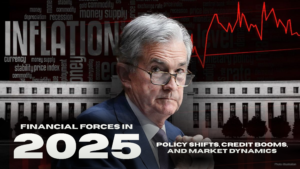
In 2025, global finance is at an inflection point shaped by powerful monetary policy shifts, evolving credit markets, and regulatory interventions designed to balance growth with public accountability. Central banks across major economies have executed one of the largest rounds of monetary easing in over a decade, reversing tightening cycles that dominated recent years in an effort to bolster economic activity and markets.
Simultaneously, private credit markets have surged, with non‑bank lenders dramatically expanding into consumer debt and higher‑risk financing. This trend reflects how traditional banks, constrained by cautious lending, are being supplemented by firms willing to take on consumer credit exposures prompting both opportunity and concern among analysts.
Finance ministries and regulators are also stepping in with targeted policy changes, from new taxes on bank profits to consumer relief measures that aim to address public discontent with profit distributions and cost‑of‑living pressures. These interventions demonstrate how governments are increasingly asserting influence over financial sectors to manage both public perception and economic outcomes.
Against this backdrop, financial markets remain dynamic and responsive to policy, credit flows, and investor sentiment creating a 2025 landscape defined by adaptation, oversight, and strategic recalibration.
Central Banks Unleash Largest Easing Wave Since 2008
BY BLAKSOLVENT NEWS
In 2025, global central banks implemented a sweeping relaxation of monetary policy that amounts to the most extensive series of interest rate cuts since the 2008 financial crisis. Across major economies including the United States, Europe, and the United Kingdom central banks collectively cut rates a total of 32 times, amounting to 850 basis points in reductions in a strategic effort to counter the economic drag from previous tightening cycles.
This aggressive easing marked a sharp turnaround from inflation‑fighting measures adopted in previous years, signifying renewed focus on stimulating growth and improving credit conditions. The cuts extended beyond advanced economies, with developing nations implementing over 3,000 basis points of reductions, outpacing policy actions seen in 2024.
Analysts point out that while lowering rates can help encourage borrowing, investment, and consumer spending, the timing of these cuts also reflects persistent concerns about slowing global growth and uneven inflation dynamics. Some economists forecast possible tightening in 2026 as economic conditions evolve, particularly in countries where inflation pressures have not fully abated.
The 2025 monetary policy shift underscores the delicate balance policymakers are trying to achieve stimulating fragile growth while remaining vigilant against resurgence in inflation with implications for investment flows, currency markets, and sovereign bond yields worldwide.
Private Credit Firms Flood Consumer Debt Market in 2025
BY BLAKSOLVENT NEWS
One of the most striking trends in 2025 financial markets has been the rapid expansion of private credit firms into consumer debt portfolios, marking a significant shift in the landscape of non‑bank lending. In this environment, major players such as KKR, Blue Owl, and Sixth Street have collectively committed to absorbing roughly $136 billion in consumer loans, a figure nearly 14 times larger than similar activity in 2024.
This wave of private lending has seen firms actively pursue higher‑yield, unsecured assets such as credit card balances and “buy now, pay later” (BNPL) receivables areas where traditional banks have pulled back due to regulatory caution and tighter underwriting standards. Such aggressive credit deployment reflects both a search for yield in low‑rate markets and shifting risk appetites among institutional investors.
Industry observers have raised concerns about underwriting standards and the potential for deteriorating credit quality, especially if economic conditions weaken. Auto and student loan delinquency indicators are already showing signs of stress, prompting analysts to warn that elevated exposure to unsecured debt could pose future risks if defaults rise.
At the same time, the emergence of specialized lenders such as Fidem Financial focusing solely on consumer credit and partnerships offering co‑branded credit card products signal that private credit’s role in everyday financial products is likely to continue expanding. Investors and regulators alike are watching these developments closely as the consumer credit landscape evolves rapidly.
Israel Imposes 15% Tax on Banks’ “Excessive” Profits
By Blaksolvent News
In a bold fiscal move, the Israeli government introduced a new law in late 2025 that imposes a 15 % tax on “excessive” profits earned by commercial banks, targeting earnings that exceed 50 % above long‑term average profitability. The policy aims to address public frustration over banks benefiting disproportionately from rising interest rates while deposit returns lagged behind, a situation that had fueled perceptions of inequity.
The tax, set to remain in place for five years, applies to profits above the defined benchmark and reflects broader efforts by financial authorities to ensure that financial sector gains are balanced against societal costs. Israel’s top banks reported nearly 9 billion shekels (about $2.82 billion) in profits in Q3 alone, underscoring the magnitude of earnings that prompted the regulatory response.
In addition to the bank tax, government directives also included doubling the value threshold for tax‑free personal imports a move intended to reduce living costs for consumers engaging in online shopping. While consumer advocates welcomed the measure, some local businesses expressed concern that it could disadvantage domestic retailers facing increased competition from international goods.
Policymakers argue that the twin measures will support broader economic fairness by curbing perceived windfall gains for financial institutions and easing cost‑of‑living pressures a balancing act many governments are attempting as they navigate post‑pandemic economic dynamics and public sentiment toward financial sector profits.