The Shifting Currents of Global Finance
The world of finance is never static, it ebbs and flows like a restless tide, reflecting the mood of markets, the choices of policymakers, and the resilience of industries. In the United States, the Philadelphia Fed Manufacturing Index serves as a lens into the pulse of regional economic activity, offering clues to the health of one of the world’s most closely watched economies. Across the Atlantic, European Central Bank board member Martin’s speech carries weight far beyond the walls of Frankfurt, signaling how Europe intends to navigate inflationary pressure, growth anxieties, and geopolitical tremors. Meanwhile, Germany’s Bundesbank, often dubbed the backbone of Europe’s economy presents its monthly report, weaving together data that not only influences investors but also guides policymakers and businesses on what lies ahead.
Together, these three narratives form a larger story of uncertainty and cautious optimism. They remind us that financial stability is never permanent, but the willingness of central banks and economies to adapt is what shapes resilience. As we dig deeper into each headline, a clearer picture emerges: one of interdependency, where the fate of factories in Philadelphia, speeches in Frankfurt, and reports in Berlin are all threads in the same global economic fabric.
Philadelphia Fed Manufacturing Index Reflects Lingering Economic Strain in US Factories BY BLAKSOLVENT
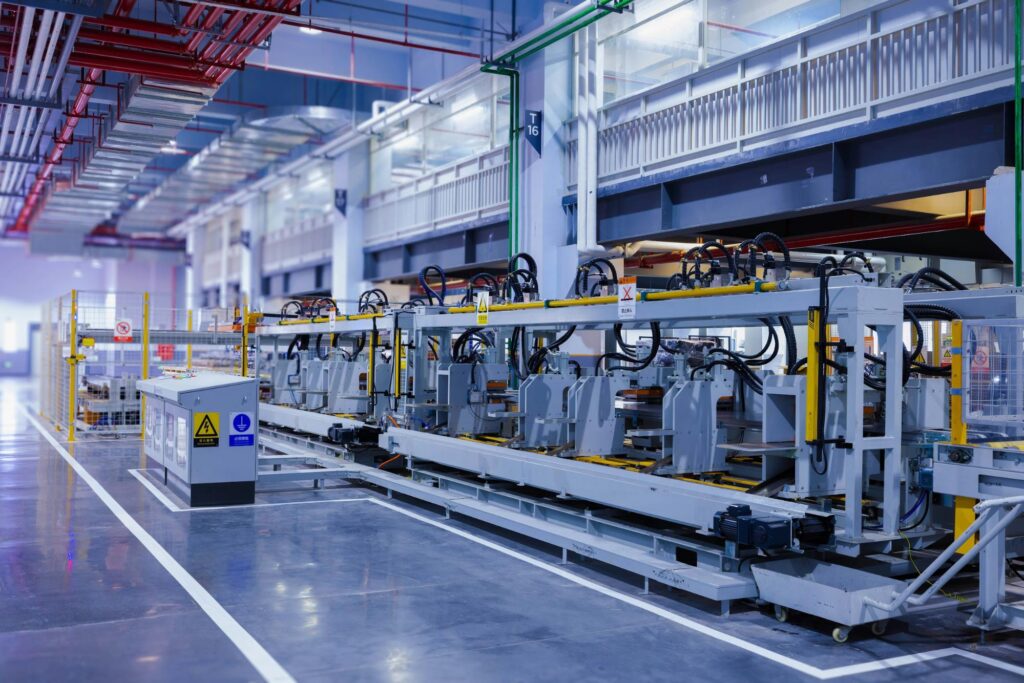
The Philadelphia Fed Manufacturing Index is more than just numbers, it’s a narrative of resilience, struggle, and adaptation. When the index was released this week, it revealed that factories in the region continue to feel the weight of higher borrowing costs, softening demand, and supply chain frictions that never quite disappeared after the pandemic. For economists and investors, the index is a leading signal: it captures business sentiment, new orders, shipments, employment trends, and price pressures in one snapshot.
This month’s report indicated contraction, a red flag that suggests activity in the manufacturing sector is shrinking rather than expanding. Factories reported fewer new orders, slower shipments, and in some cases, scaled-back production. Hiring also showed signs of cooling, as companies remained cautious about taking on additional labor when margins are thin and uncertainty remains high. Yet, the report was not entirely bleak. Expectations for the next six months showed tentative optimism, with firms betting that lower inflation, a steadier consumer, and a possible interest rate cut later in the year might breathe life back into demand.
Manufacturing has always been cyclical, but in today’s global economy, it faces structural challenges too. American factories are competing against cheaper labor abroad, rising automation, and the constant need to modernize supply chains. The index shows that while resilience is present, so too is fragility. For Wall Street, these numbers shape expectations around Federal Reserve policy, with weaker manufacturing data often fueling speculation that rate cuts might come sooner. For Main Street, however, the numbers translate into job security, paychecks, and the survival of local businesses.
The Philadelphia Fed’s report underscores a familiar truth: when factories slow down, ripple effects travel across the entire economy from raw materials suppliers to truck drivers, retail shelves, and ultimately consumer spending. It’s a reminder that the heartbeat of manufacturing may be regional, but its echo is undeniably national.
ECB Board Member Martin Warns of Policy Tightrope in Frankfurt Speech BY BLAKSOLVENT

When ECB Board Member Martin took the stage this week, the financial world listened closely. His remarks came at a critical juncture: Europe’s economy is grappling with inflation that has cooled but not vanished, growth that remains fragile, and political uncertainty that adds volatility to markets. The European Central Bank, much like the Fed, faces a dilemma: tighten too much and risk stifling growth, ease too soon and risk reigniting inflation.
Martin struck a balanced yet cautionary tone. He acknowledged the progress made in taming price growth across the eurozone, but he warned that underlying pressures particularly from energy markets and wage growth remain sticky. This complexity, he argued, means that the ECB must remain vigilant and patient before making drastic policy shifts. Markets, which had been pricing in aggressive rate cuts, recalibrated after his remarks, recognizing that the path forward may be more gradual than previously hoped.
The significance of Martin’s speech goes beyond the ECB’s rate trajectory. It speaks to Europe’s broader struggle with competitiveness and resilience. Countries like Germany and France are battling slowdowns in industrial production, while southern economies face structural weaknesses that monetary policy alone cannot fix. His warning was not just to investors but to governments: fiscal policies, structural reforms, and investment in innovation are as critical as central bank action.
For ordinary Europeans, Martin’s words may seem distant, but their impact is real. They influence mortgage rates, borrowing costs for small businesses, and even job creation. For global investors, they serve as a reminder that Europe remains a major player in the financial system, and its decisions ripple across currencies, bonds, and equity markets.
Martin’s address captured the tightrope central bankers must walk: ensuring stability without choking growth, promising vigilance without sparking panic. It is a performance that requires precision, patience, and credibility qualities that will define the ECB’s legacy in this volatile chapter of Europe’s economic story.
Germany’s Bundesbank Monthly Report Highlights Fragile Recovery Amid Global Headwinds BY BLAKSOLVENT

The Bundesbank’s monthly report landed with the weight of authority this week, painting a picture of Germany’s economy that is both sobering and cautiously hopeful. As Europe’s largest economy, Germany is often described as the engine of the eurozone. When the Bundesbank speaks, policymakers, businesses, and investors listen not just within Europe but globally.
The report highlighted sluggish industrial output, particularly in energy-intensive industries like chemicals and metals, which continue to feel the brunt of higher energy prices even as inflation has moderated. Export demand, once a steady driver of German growth, has also softened due to weaker global trade flows and rising geopolitical tensions. The combination of these pressures means Germany’s economy is growing, but at a pace that feels more like a crawl than a sprint.
Yet, the Bundesbank noted areas of resilience. Consumer spending has held up better than expected, buoyed by steady wage growth and government support programs. The services sector, particularly tourism and digital industries, is providing some offset to manufacturing weakness. Importantly, inflation, though still above target, continues to ease a development that could give households and businesses breathing room in the months ahead.
For investors, the Bundesbank’s report serves as both a caution and a compass. It underscores the risks that remain: high energy costs, fragile exports, and global uncertainty. At the same time, it suggests that Germany is adapting, leaning on domestic demand and services to weather external shocks. The message is clear: recovery is possible, but it will be uneven and dependent on both domestic resilience and international stability.
Germany’s challenges are not isolated, they are Europe’s challenges. As the backbone of the eurozone, its ability to adapt will shape the region’s trajectory. The Bundesbank’s analysis reinforces the idea that growth will not be linear, but with patience and reform, the German economy can remain a stabilizing force in uncertain times.