BLAKSOLVENT FINANCE NEWS-18/12/25
Policy, Markets, and Investment Dynamics
As the final weeks of 2025 unfold, the global financial landscape is defined by significant policy decisions, monetary stability efforts, and large-scale investment initiatives. Governments and central banks are adjusting monetary policy in response to inflation trends and currency pressures. Major economies are launching funds and reforms aimed at attracting private capital and boosting long-term growth. Meanwhile, emerging market central banks are balancing currency stability with growth objectives against a backdrop of uncertain global conditions. These developments are shaping investment strategies and financial expectations as markets adjust to shifting macroeconomic signals.
Germany Launches €130 Billion Private Equity Initiative to Boost Growth

Germany’s federal government has launched a major investment initiative, dubbed the “Germany Fund” (Deutschlandfonds), aimed at attracting up to €130 billion in private equity capital to spur economic growth and competitiveness. The fund, managed by the state-owned development bank KfW, will be initially seeded with €30 billion in public resources and government loan guarantees. The initiative targets high-impact sectors including technology, defense, energy, and critical minerals, with the aim of revitalising stagnating areas of the economy and supporting long-term strategic projects.
Officials plan for the fund to operate as a vehicle for both public and private investment, encouraging institutional and private equity firms to participate in high-growth opportunities that were previously constrained by risk aversion or capital scarcity. Early interest has reportedly emerged from major global investment firms, reflecting confidence in Germany’s plan to modernise key industrial sectors. In parallel with this investment push, the government is also introducing pension reforms and streamlining infrastructure planning processes to enhance long-term growth prospects and economic stability.
The initiative forms part of a broader fiscal strategy designed to counter structural challenges, including high energy costs and external competitive pressures from economies such as China. By mobilising domestic and international capital, Berlin aims to bolster innovation, support emerging industries, and fortify economic resilience through targeted investment. This move is expected to have implications for broader European investment trends as policymakers look to balance growth promotion with fiscal sustainability.
Market observers note that while substantial state involvement can mitigate certain risks and attract private capital, success will depend on effective governance, risk allocation, and execution across sectors that require deep technical expertise and long-term commitment.
Bank Indonesia Holds Rates Steady to Support Rupiah Stability

Bank Indonesia has decided to maintain its benchmark 7‑day reverse repurchase rate at 4.75%, marking the third consecutive policy meeting at which the rate was held unchanged. Officials emphasised that the move aims to support stability in the Indonesian rupiah as global financial volatility persists, rather than pursuing further monetary tightening. According to central bank commentary, inflation remains within target ranges, and there is scope to consider additional easing in 2026 to stimulate economic activity if conditions allow.
Governor Perry Warjiyo highlighted the importance of balancing currency stability with growth, noting that the rupiah has remained relatively weak against the U.S. dollar amid broader external pressures. Bank Indonesia also signalled intentions to continue enhancing market liquidity and encouraging lower bank lending rates through adjusted reserve requirements. The central bank’s approach reflects a patient stance, prioritising orderly market dynamics and sustained economic expansion rather than abrupt rate changes.
In its official statements, the bank reaffirmed its commitment to intervening in foreign exchange markets when necessary to mitigate excessive volatility. Concurrently, authorities are exploring policy frameworks that could expand domestic dollar supply via adjustments to export earnings retention rules. Analysts observing Asian financial conditions suggest that while the decision provides short‑term calm, underlying pressures on emerging market currencies may persist if global interest rate differentials widen further.
The policy pause and forward guidance indicate Bank Indonesia’s strategy to navigate complex macroeconomic crosscurrents where inflation, growth, and currency health must be balanced carefully to maintain investor confidence and support sustainable economic momentum.
Bank of England Expected to Reduce Interest Rates as Inflation Cools
BY BLAKSOLVENT NEWS
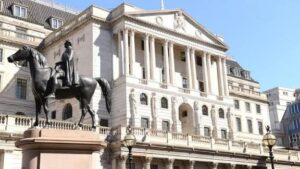
Financial markets are pricing in a likely interest rate cut by the Bank of England as inflation in the United Kingdom unexpectedly eased significantly in the most recent data release. UK inflation fell to 3.2% in November 2025, down from higher levels in previous months, driven in part by slower price increases in food and retail sectors. This sharper‑than‑expected decline has strengthened expectations that the Bank of England will implement its sixth rate reduction of the year in an effort to support economic activity.
Analysts have noted that although inflation remains above the Bank’s long‑term 2% target, the combination of slowing price pressures and weak economic indicators such as labour market softness provides policymakers with room to lower borrowing costs. The anticipated move would mark continued monetary easing as authorities seek to balance inflation containment with broader economic support. Consumer price data showing reduced costs in several categories has reinforced the case for a shift toward stimulative policy.
Market participants have responded to the inflation report with increased bullishness around UK government bonds and expectations of lower yields, reflecting confidence in the central bank’s willingness to act. However, some investors caution that persistent core inflation stripping out volatile categories could temper the pace and magnitude of future cuts. The evolving monetary policy outlook highlights a broader global trend of central banks navigating complex trade‑offs between inflation dynamics and growth prospects as year‑end approaches.