BLACKSOLVENT FINANCE NEWS -16:10:25
Financial Crossroads: Debt, Growth & Bold Moves in Global Finance
Around the world markets are shifting not only because of trade conflicts or inflation, but because governments, banks, and private players are making strategic moves that could shape the next decade. From alarming levels of public debt to fresh partnerships reshaping payment flows, and even celebrities entering the financial stage, the financial landscape is evolving fast. The next three stories highlight risks, innovation, and transformation as the global economy navigates uncertainty.
IMF Rings Alarm Bells Over Soaring Global Public Debt
BY BLACKSOLVENT NEWS
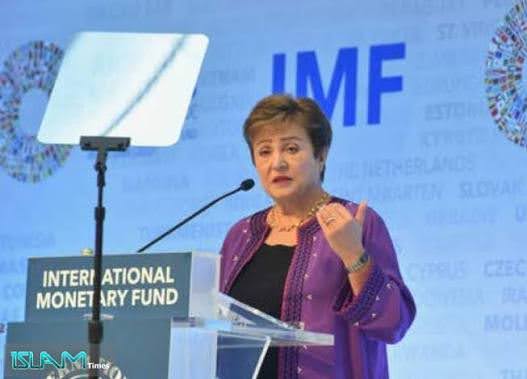
The International Monetary Fund (IMF) has raised serious concerns about the rising levels of public debt around the world, warning that without careful planning many nations could be walking into financial turbulence. According to its latest forecast, global public debt could exceed 100% of global GDP by 2029, a figure unmatched in decades and only comparable to the aftermath of World War II.
The worry is especially sharp for emerging-market and low-income countries. While wealthy nations like the U.S. and Japan already carry debt burdens above 100% of GDP and can often borrow at more favorable rates, smaller economies face steep borrowing costs and less flexibility. The IMF’s appeal is clear: build fiscal buffers now — cut deficits, invest wisely, and avoid policies that deepen debt without delivering growth.
In the U.S., projections suggest debt-to-GDP could rise from around 125% to 143% by the end of the decade, further stretching fiscal room. China is similarly under pressure, with its debt level forecast to jump from ~88% to over 110%. The IMF is also pushing countries to channel resources into human capital education, health, and other foundational sectors as a hedging mechanism against future economic shocks.
AI Investment Keeps U.S. Economy From Slowing Down
BY BLACKSOLVENT NEWS

Despite widespread fears of a global economic slowdown, the United States is seeing a surprising resilience, which the IMF attributes in part to a boom in investment in artificial intelligence. The new estimate pegs U.S. economic growth at about 2% in 2025 (slightly down from 2024) but still the strongest among G7 nations. AI investment is playing a central role in that strength.
The IMF’s revised outlook reflects not just hardware spending and R&D, but also the spillover effects into sectors such as tech, infrastructure, and corporate productivity. Even so, it warns that while AI is helping cushion the blow of other headwinds like inflation and trade tensions, it also brings risks overvaluation of related assets, potential labor-market mismatches, and growing inequality between firms and countries that can afford strong AI infrastructure and those that cannot.
Globally, this optimism lifts the projected growth rate for 2025 to 3.2%, with 2026 expected to follow close behind. But the IMF is quick to emphasize that this rosy picture relies on maintaining stable financial conditions, avoiding policy mistakes, and ensuring that gains from technology are broadly shared.
Singapore’s DBS and Saudi Banque Fransi Link Up to Boost Cross-Border Finance
BY BLACKSOLVENT NEWS

In a move that underscores how finance isn’t just about borders anymore, Singapore’s DBS bank has struck a partnership with Saudi Arabia’s Banque Saudi Fransi to boost trade finance and payment flows between Asia and the Gulf Cooperation Council (GCC). The announcement came at the Sibos financial conference in Frankfurt.
The collaboration will focus on speeding up cross-border payments, enabling trade settlement, and exploring regional currency-clearing solutions that could reduce dependency on traditional foreign-exchange channels. One aim is to allow same-day global payments via platforms like DBS’s GlobeSend across more than 100 markets.
Current trade between Southeast Asia and the GCC stood at about US$130.7 billion in 2023, and forecasts suggest that will grow by $50 billion by 2027. Meanwhile, trade between China and the GCC is expected to double, reaching $1.9 trillion by 2035 if current trends hold. This deal could be an important piece in building financial infrastructure to support those flows.