BLACKSOLVENT FINANCE NEWS -13/10/25
The Reawakening of Capital
Money, they say, never sleeps but lately, it has been moving differently. After years of cautious investing and economic turbulence, the world’s financial landscape is stirring back to life, guided not by hype but by a desire for resilience, inclusion, and smarter systems. Across continents, funding patterns reveal a deeper transformation: capital is flowing to ideas that automate, to regions that are maturing, and to companies that have proven their strength through uncertainty. In this new era, finance isn’t just about who raises money , it’s about what that money says about the world’s priorities.
The following stories trace that reawakening: an AI-powered accounting startup changing how businesses run; fintech ecosystems in Africa and the Middle East growing with discipline and depth; and global fintech funding rebounding as investors learn to choose quality over noise. Together, they reveal where finance is heading and how the future of money is being built, one smart bet at a time.
Light’s $30 Million Bet on Smarter Finance
BY BLACKSOLVENT NEWS
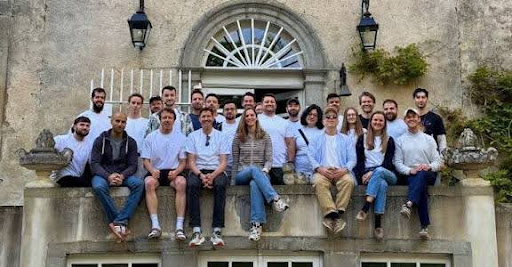
In late September 2025, the Danish startup Light captured the attention of the global venture capital scene by securing $30 million in Series A funding. Led by Balderton Capital and joined by investors like Atomico and Cherry Ventures, the round signaled a bold vote of confidence in a new way of managing business finance one that depends less on spreadsheets and more on artificial intelligence.
Founded in 2022, Light has a simple but powerful promise: to automate bookkeeping, accounting, and financial reporting using AI that learns from context and adapts to company needs. The vision is not just efficiency but liberation freeing finance teams from the endless cycle of manual entries, reconciliations, and reporting. With new offices in London and plans to expand to New York, the startup is positioning itself as a global player in the next wave of financial technology.
What makes Light’s story compelling is not only its technology but its timing. Businesses worldwide are grappling with data overload and rising compliance costs. Errors can mean lost investors or legal exposure, yet the human workload in accounting keeps growing. By teaching AI to handle the mundane and the meticulous, Light taps into a market desperate for reliability and speed.
Still, challenges remain. Financial operations are heavily regulated, and even a small misstep in automated reporting could have serious consequences. Convincing conservative CFOs to trust machine learning with their ledgers won’t be easy. But if Light succeeds, it won’t just change how companies run their finances it could redefine the standard for financial integrity in the AI era.
Afri hi ca and MENA’s Fintech Boom Discipline After the Hype
BY BLACKSOLVENT NEWS
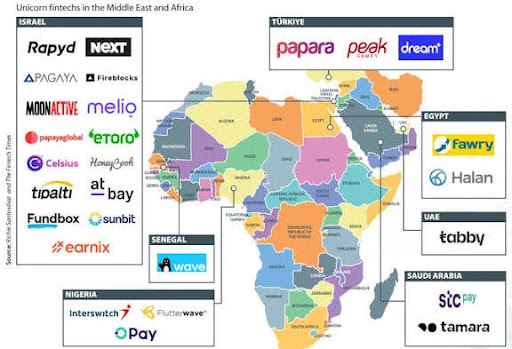
Across Africa and the Middle East, a new chapter of financial innovation is unfolding, one defined not by exuberant startups burning through cash, but by steady growth and maturing structures. In the first half of 2025 alone, African fintechs raised over $640 million, while their MENA counterparts attracted $2.1 billion, largely powered by debt financing from Saudi Arabia and other Gulf investors.
The names behind these numbers tell an important story. In Africa, Wave Money raised $137 million in debt, Stitch from South Africa closed a $55 million Series B, while Nigeria’s LemFi secured $53 million to expand remittance services. Egypt’s Bokra, meanwhile, turned heads by raising $59 million through sukuk Islamic-compliant bonds marking a new era of structured, culturally aligned financing.
This shift toward larger, more sophisticated funding rounds signals that fintech in these regions is no longer experimental. Investors are backing proven models: digital payments, remittance platforms, and embedded financial infrastructure. Beyond the money, this trend represents a movement toward financial inclusion , a push to serve the millions who still live outside formal banking systems.
Yet, as the ecosystem matures, so do its challenges. Regulatory frameworks vary widely across borders, compliance costs are rising, and competition from global players is intensifying. For startups, sustainability now depends on building trust, ensuring cultural relevance, and maintaining operational excellence even as they scale.
What stands out most is the sense of balance returning to the narrative. The fintech boom in Africa and MENA is no longer about quick wins it’s about endurance. The mix of debt and equity funding shows an appetite for long-term returns, not just flashy exits. It’s a mark of confidence in the regions’ ability to move from promise to permanence.
The Fintech Winter Thaws — Quality Over Quantity
BY BLACKSOLVENT NEWS
Globally, 2025 has become the year fintech reclaims its momentum. After a two-year funding slowdown, the second quarter of this year saw over $10 billion raised across nearly 400 deals the highest level since 2022. According to S&P Global Market Intelligence, this rebound wasn’t a flood of reckless optimism but a calculated recalibration: investors are back, but they’re choosing carefully.
The biggest change lies in selectivity. Venture capitalists are pouring large sums into fewer, more defensible businesses those with proven revenue models, strong compliance systems, and technology that solves long-term pain points. Twenty-three of those Q2 deals were mega rounds of over $100 million each, reflecting a renewed confidence in mature fintechs that have already weathered market corrections.
While sectors like payments infrastructure and data management are thriving, others such as digital lending remain under pressure from high interest rates and default risks. The emphasis now is on capital efficiency profitability, sustainable margins, and regulatory resilience. It’s a clear departure from the pre-2022 philosophy of “growth at all costs.”
For startups, this new order means discipline is the new differentiator. Those that can show stable revenue and prudent expansion will find capital waiting; those that can’t may fade quietly into consolidation. The fintech winter, it seems, hasn’t just ended, it has filtered the market, rewarding those who built for substance, not spectacle.
The broader picture is hopeful. After years of volatility, fintech is no longer a fad but a permanent fixture in global finance, one learning to thrive with structure, strategy, and sustainability.