The Global Acceleration of AI Integration Signals a Turning Point in Human-Tech Symbiosis
These three distinct developments—from Telegram’s partnership with xAI to Japan’s legislative leap and the arrival of virtual court reporters—signal not isolated events, but chapters in a larger global shift: the full-scale integration of artificial intelligence into the core structures of society.
What connects these stories is not just the use of AI, but the speed and breadth of its adoption. AI is no longer confined to high-tech labs or speculative conferences. It is being embedded into the tools of everyday communication, the mechanisms of governance, and even the rituals of justice.
This isn’t simply automation or digital transformation—it’s a deeper evolution of the human-technology relationship. Messaging platforms are becoming cognitive ecosystems. Governments are writing the blueprints for AI-powered nations. And in courtrooms, avatars are replacing human roles once thought irreplaceable.
What we’re witnessing is not the rise of a single technology, but the emergence of a new paradigm: AI as infrastructure—a layer beneath everything, from personal expression to public policy.
Yet this shift is not without friction. Legal, ethical, and cultural frameworks are struggling to catch up. The pace of development outstrips public understanding. And as these systems grow more lifelike and autonomous, the questions grow louder: Who controls the narrative? Whose values shape the code?
This moment is not just about innovation—it’s about alignment. Alignment between progress and principle, between speed and scrutiny, between what is possible and what is right.
As the world moves deeper into this AI-powered future, Blacksolvent News will continue to illuminate the paths, the pitfalls, and the people shaping this unprecedented transition. Because what happens next won’t just define the future of technology—it will define the future of us all.
Telegram Unveils Strategic Partnership with Elon Musk’s xAI, Paving the Way for AI-Enhanced Messaging

Telegram has officially entered a groundbreaking partnership with Elon Musk’s artificial intelligence venture, xAI, marking a significant step toward embedding advanced AI functionalities into the popular messaging platform. The collaboration, announced today, will bring xAI’s flagship chatbot “Grok” into Telegram’s interface, offering users intelligent conversational tools directly within their chats.
The integration is part of Telegram’s ongoing mission to expand its platform beyond secure messaging into an all-in-one utility ecosystem. With over 900 million monthly active users globally, Telegram stands to benefit from xAI’s rapidly developing artificial intelligence capabilities, which are designed to compete directly with OpenAI’s ChatGPT and Google’s Gemini.
What the Partnership Entails
According to the official joint announcement, Telegram will incorporate Grok—a witty, real-time conversational assistant developed by xAI—into its chatbot platform, allowing users to interact with Grok inside any chat window without the need to exit the app or open external tools.
Initially, Grok will be made available to a limited group of Telegram Premium subscribers. Over time, access will expand, offering both individuals and businesses enhanced features like real-time information retrieval, creative text generation, summarization, and context-aware assistance.
Telegram founder Pavel Durov confirmed that the collaboration “aligns with our commitment to provide users with a secure, fast, and richly featured communication platform.” He emphasized that “AI will be one of the key building blocks of Telegram’s next evolution.”
Why This Partnership Matters
For xAI, the Telegram integration represents a massive scale-up opportunity. After previously launching Grok exclusively through Musk’s X (formerly Twitter), Telegram becomes the second major platform to adopt the chatbot—substantially broadening its user base and application use cases.
Elon Musk stated, “xAI was created to bring AI tools that are useful, honest, and humorous. Telegram’s open platform and massive global audience are ideal for accelerating this mission.”
xAI, which was founded in 2023 and operates closely with Musk’s other ventures, including Tesla and X, has developed Grok to be an AI that challenges conventional boundaries—with fewer restrictions on content generation and a personality more aligned with Musk’s own unfiltered online persona.
Implications for Users and Developers
The integration also opens up new opportunities for Telegram bot developers. Telegram plans to provide APIs and resources for integrating Grok into custom bots and channels, expanding monetization options for creators.
Additionally, the move may trigger a new wave of AI-enhanced messaging across competitors like WhatsApp, Signal, and Messenger. Analysts believe Telegram’s early adoption of such tools will set a precedent for messaging platforms looking to incorporate more intelligent, assistant-like features.
Looking Ahead
The partnership between Telegram and xAI signifies more than just a technological upgrade; it’s a signal of a shifting digital landscape where messaging apps are becoming ecosystems—complete with AI, financial services, and automation. For Telegram, this may solidify its position as the leading alternative to legacy messaging platforms and big-tech-controlled ecosystems.
Telegram has not disclosed any financial terms of the partnership. However, industry observers predict it could spark further strategic collaborations between AI developers and independent platforms seeking to add value without sacrificing privacy or performance.
As the rollout of Grok within Telegram begins in phases, users worldwide are expected to gain access in the coming weeks. Both companies have hinted at further AI-powered features on the horizon, including voice assistants and image generation tools—all embedded within the Telegram app.
Artificial Intelligence Now Creating Hyper-Realistic Court ‘Reporters’ as Legal Tech Enters New Era

In a major development at the intersection of law and technology, artificial intelligence is now being used to create lifelike virtual court reporters capable of transcribing, analyzing, and even simulating human presence in courtrooms. These AI-generated avatars are being introduced across multiple jurisdictions to improve the efficiency and accessibility of legal proceedings—but the innovation has sparked fierce debate among legal experts, ethicists, and privacy advocates.
The AI court reporters, which look and sound like human professionals, are powered by advanced natural language processing models and real-time speech recognition technologies. Some versions even feature realistic facial expressions and subtle gestures, making them virtually indistinguishable from live stenographers or clerks—at least on screen.
How They Work
These virtual reporters are built using a combination of generative AI (for realistic avatars), transcription AI (for real-time legal transcription), and contextual understanding engines (for tagging, summarizing, and indexing court proceedings). Once deployed, the AI listens to court audio feeds and produces accurate, timestamped transcripts almost instantly, while also offering playback and annotation tools for judges and lawyers.
In hybrid or virtual hearings, these avatars appear as digital presences—standing at attention, nodding at intervals, and “speaking” in synthesized voices to deliver clarifications or alerts when prompted.
Legal tech companies behind the innovation claim the technology will help solve longstanding problems in the court system: understaffed clerical departments, backlogged documentation, and human error in note-taking. Some jurisdictions in the United States, United Kingdom, and parts of Asia are already piloting the technology in non-criminal and administrative courts.
Controversy and Ethical Concerns
Despite the convenience, critics are raising red flags. Legal scholars worry that the use of AI avatars in such sensitive environments could undermine the perceived seriousness of judicial proceedings. Others question the accuracy of transcripts in high-stakes cases where a single misinterpretation could sway the outcome.
“There’s a psychological and symbolic value to having a real human bearing witness to court events,” said Maya Fernandez, a legal ethicist and former judge. “Replacing that with a digital replica—even a lifelike one—may erode trust in the process.”
Privacy advocates also caution against recording and storing sensitive courtroom data through proprietary AI systems, raising concerns about data security, surveillance, and misuse of transcripts.
The Bigger Picture: Automation in Law
The rise of AI-generated court reporters is part of a larger trend in the legal industry, where machine learning tools are being used for everything from legal research to predictive case outcomes and contract review. What was once a slow-moving and document-heavy profession is being rapidly transformed into a digital-first ecosystem.
Analysts believe this is just the beginning. “In five years, we might see AI jurors for mock trials, AI judges for arbitration, and AI assistants helping pro se litigants navigate the court system,” said Ray Tunde, a legal tech advisor at JusticeFuture Labs.
What Comes Next
Courts using these AI avatars are currently required to maintain human oversight, with a live professional verifying transcripts and intervening when necessary. But as the technology becomes more advanced, the role of the human may shift from primary recorder to supervisor or editor.
The companies behind these AI tools are urging regulators to work closely with them to develop frameworks for ethical AI deployment in justice systems. Meanwhile, many legal professionals remain divided—torn between the promise of innovation and the risks of digitizing one of society’s oldest institutions.
Japan Passes Groundbreaking AI Legislation as Nation Races to Strengthen Role in Global Tech Arena
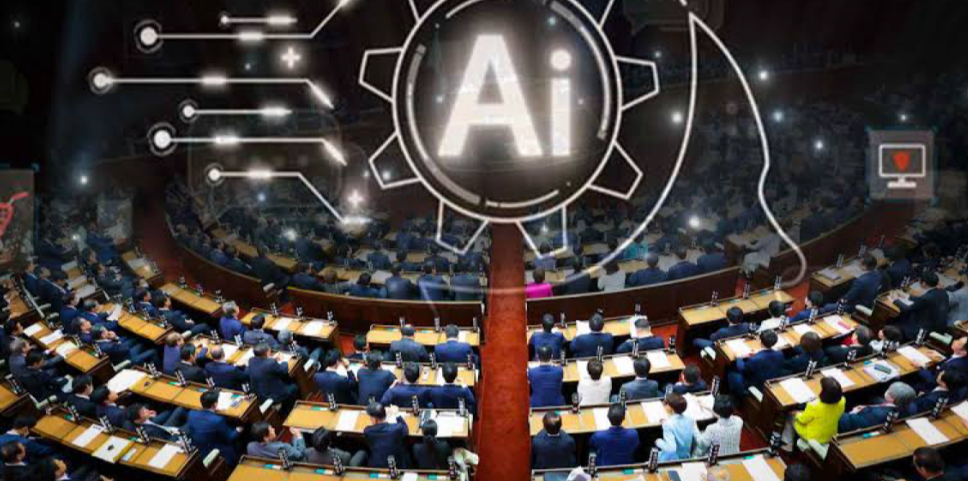
Japan’s House of Councillors—the upper chamber of its National Diet—has officially passed a wide-reaching Artificial Intelligence Promotion Bill, signaling a new era of strategic investment and regulatory clarity for one of the world’s most advanced economies. The legislation, approved earlier today, aims to accelerate Japan’s role in the global AI landscape while ensuring ethical development, innovation support, and international cooperation.
The bill, which passed with broad bipartisan support, establishes a national framework to promote AI technology across sectors including healthcare, manufacturing, education, infrastructure, and defense. It also underscores the government’s intent to strike a balance between technological leadership and responsible oversight.
Key Provisions of the Bill
The AI Promotion Bill outlines several key pillars:
- Government-Led R&D Funding: The legislation earmarks increased funding for AI research, with a focus on both public institutions and private-sector partnerships.
- Industry Standards and Guidelines: It mandates the development of safety, fairness, and transparency guidelines for AI systems used in public and private services.
- Talent Development Initiatives: The bill supports the creation of AI-focused academic programs, vocational training, and scholarships to cultivate a skilled workforce.
- Support for Startups and SMEs: It includes tax incentives, grants, and sandbox environments to help small and mid-sized enterprises adopt AI tools and scale innovations.
- International Collaboration: The law encourages bilateral and multilateral cooperation with countries sharing Japan’s values on ethics and data governance in AI deployment.
Political and Strategic Context
The legislation comes at a critical moment as nations compete to harness the economic and strategic power of artificial intelligence. Japan, known for its robotics expertise and precision manufacturing, has historically lagged behind the U.S. and China in AI development. This bill represents Tokyo’s decisive push to catch up—and possibly lead—in ethical and human-centered AI innovation.
Prime Minister Fumio Kishida praised the bill’s passage, stating, “Artificial intelligence will shape the foundation of future societies. With this legislation, Japan takes a bold step toward leading innovation while ensuring safety, transparency, and trust.”
Public and Industry Response
Tech firms, universities, and research institutes have largely welcomed the bill, noting that it brings clarity and long-term commitment to Japan’s AI roadmap. “We now have the legal confidence to expand our R&D efforts and push boundaries,” said Keiko Yamada, CTO of a Tokyo-based AI healthcare startup. “The state’s involvement ensures that we aren’t operating in a regulatory vacuum.”
However, some civil society organizations have raised concerns that the bill lacks sufficient detail on protecting personal data and preventing algorithmic bias. Critics are urging lawmakers to follow up with stronger enforcement mechanisms and independent oversight bodies.
Looking Ahead
The bill is expected to become law within weeks, after formal publication and procedural reviews. Implementation will be overseen by a newly established government agency dedicated to AI strategy coordination across ministries and sectors.
Japan’s move mirrors global efforts to set clearer rules and ambitions around AI. The European Union recently enacted its AI Act, while the United States is advancing a series of federal initiatives. Japan’s approach is seen as more industry-friendly but still rooted in democratic values.
As AI continues to transform industries and societies worldwide, Blacksolvent News will provide ongoing coverage of Japan’s progress, challenges, and global partnerships in shaping the future of artificial intelligence.
For breaking updates on AI policy, tech diplomacy, and innovation leadership, stay tuned to Blacksolvent News.