A Future Balanced on the Edge of Innovation and Ownership
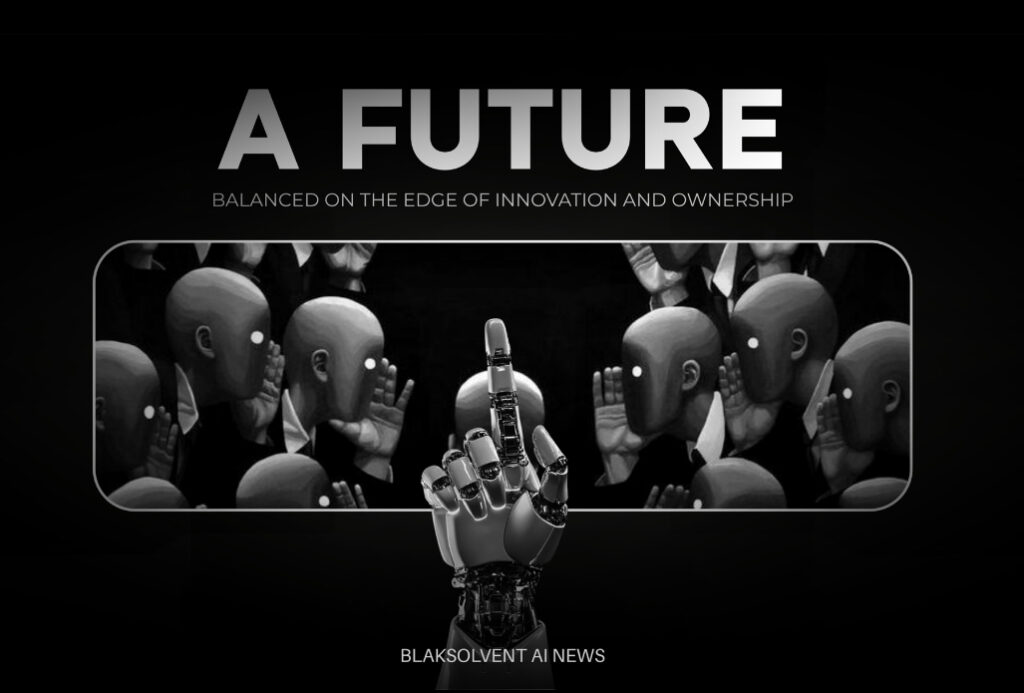
As the world watches courtroom battles unfold in London and Los Angeles, and groundbreaking technologies emerge from Silicon Valley, one truth becomes increasingly clear: the AI revolution is no longer a distant future it’s a contested present.
The lawsuits from Disney, Universal, and Getty Images signal a collective pushback from the creative world, a demand for boundaries in an industry that has long been celebrated for blurring them. These cases are not simply about intellectual property they are about authorship, agency, and the cost of progress. At stake is the future of art, photography, storytelling and the value of human expression in a machine-made world.
On the other side of the spectrum, Meta’s unveiling of V-JEPA 2 shows a glimpse of what AI could become when focused not on imitation, but understanding. It’s a model that learns not to mimic, but to predict, anticipate, and adapt moving AI from passive generation to active reasoning.
Between the courtroom and the lab, society is being forced to confront an urgent question: Can we build machines that elevate us without erasing us?
The answers won’t come easily. Regulation will clash with innovation. Ethics will challenge ambition. And the lines between human creation and machine cognition will continue to blur. But within this tension lies an opportunity to forge a future where AI doesn’t steal the soul of creativity but serves as its most powerful companion.
The world stands at a crossroads not just of law and code, but of vision and values. What we choose now will echo through generations of machines and minds alike.
Disney and Universal Sue Midjourney for Copyright Infringement, Calling AI Image Generator a “Bottomless Pit of Plagiarism”
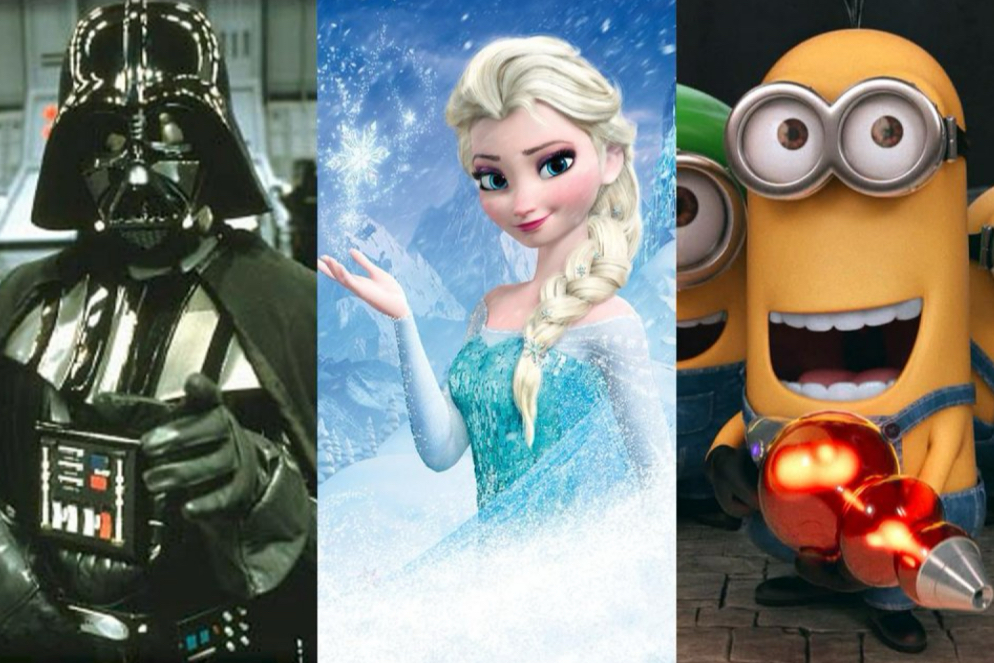
In a groundbreaking legal move that could reshape the future of generative artificial intelligence, entertainment giants Disney and Universal Studios have filed a joint lawsuit against Midjourney, one of the world’s leading AI image-generation companies, accusing it of widespread copyright infringement.
The studios claim that Midjourney has been training its artificial intelligence models using copyrighted material including iconic characters, scenes, and visual art styles without permission or compensation. The lawsuit, filed in a federal court in California, describes the company’s practices as operating a “bottomless pit of plagiarism,” exploiting decades of creative labor for commercial gain.
“This case is not about innovation, it’s about appropriation,” a Disney spokesperson stated. “Our artists, animators, and designers have spent years bringing beloved characters and worlds to life. Their work is now being used to generate derivative content at the push of a button, without credit or consent.”
Universal echoed the sentiment, calling it “a clear violation of intellectual property rights that threatens the very foundation of creative industries.”
Midjourney has not yet responded to the lawsuit, but the case is expected to ignite fresh debates about AI, copyright law, and the ethical boundaries of machine learning. Legal experts say this could become a precedent-setting moment for the entertainment and tech industries alike.
“This is one of the most significant challenges to AI’s use of copyrighted content to date,” said Linda Morales, a copyright law professor at Stanford University. “If the court sides with the studios, it could force a major shift in how AI companies train their models and the transparency required in those processes.”
As the legal battle unfolds, other major content creators from gaming studios to publishing houses are watching closely. Some analysts believe more lawsuits may follow, signaling a broader industry reckoning with the unchecked expansion of generative AI.
Getty Images Takes Stability AI to London’s High Court in Landmark Copyright Case: Trial Sparks Global Debate Over AI, Creativity, and Ownership
A high-stakes legal battle is unfolding in the United Kingdom as Getty Images, one of the world’s largest visual media companies, has brought Stability AI before the London High Court, accusing the AI firm of unlawfully using millions of copyrighted images to train its popular generative model, Stable Diffusion.
Filed in 2023, the case officially entered trial this week, with Getty arguing that the unauthorized scraping and use of its vast archive of professional photos constitutes a breach of copyright law and threatens the rights and livelihoods of creators globally.
“This is about defending creative ownership in the digital age,” said Craig Peters, CEO of Getty Images, speaking outside the courtroom. “We’re not against artificial intelligence, but it must be developed responsibly respecting intellectual property, transparency, and the creative professionals who make visual storytelling possible.”
According to Getty’s legal team, Stability AI copied and incorporated more than 12 million Getty images along with associated metadata and watermarks into its training datasets without license, credit, or compensation. The resulting model, Stable Diffusion, has since been used to generate a wide range of synthetic images that, Getty claims, are derivative of copyrighted originals and threaten the integrity of professional visual content.
Stability AI, which maintains that its model was trained using publicly available data, argues that its use of online imagery falls under the fair use doctrine. The company contends that copyright law was never designed to address machine learning, and that AI training is a transformative process not one that reproduces or competes with the original works.
“This lawsuit is not just about us, it’s about whether innovation in AI will be crushed by outdated legal frameworks,” said a Stability AI representative in a press statement. “We believe the future of creativity should include, not exclude, the power of generative tools.”
As the trial progresses, it has drawn global attention, with tech companies, artists, photographers, lawmakers, and AI ethicists watching closely. The case is widely seen as a litmus test for how courts in democratic nations might interpret the collision between AI development and traditional copyright enforcement.
Legal analysts suggest the outcome could have profound implications. If the court rules in favor of Getty, it may set a precedent that forces AI developers to license copyrighted content, dramatically increasing operational costs and altering the pace of innovation. On the other hand, a win for Stability AI could embolden tech companies to continue mass data scraping without clear consent, raising fresh concerns over artistic ownership, misinformation, and exploitation.
“This is the copyright trial of the decade,” said Amira Dunne, an intellectual property scholar at Oxford University. “It will either reset the legal boundaries for AI or expose major gaps in our regulatory understanding.”
The trial is expected to last several weeks, with the court’s decision potentially reshaping how generative AI is built, governed, and held accountable in the years to come.
Meta Unveils V-JEPA 2: A Next-Gen World-Model AI Engineered to Revolutionize Robotics and Autonomous Systems

In a bold step toward the future of machine intelligence, Meta has officially announced the launch of V-JEPA 2, the second generation of its groundbreaking world-model AI system, designed specifically to power the next era of robotics and autonomous technologies.
V-JEPA which is short for Video Joint Embedding Predictive Architecture is an AI model built to understand, predict, and interact with physical environments by learning from video data, rather than relying solely on static images or text. With V-JEPA 2, Meta claims to have made significant leaps in spatial reasoning, object permanence, and action prediction, critical capabilities for real-world robotic decision-making.
“This is a major milestone in AI development,” said Dr. Yann LeCun, Meta’s Chief AI Scientist and one of the pioneers of deep learning. “V-JEPA 2 isn’t just observing the world it’s learning how it works. It sees a cup about to fall off the table and understands what happens next. That’s the kind of intelligence that bridges the gap between perception and action.”
According to Meta, V-JEPA 2 has been trained using millions of hours of high-resolution video, allowing it to anticipate sequences of physical interactions across a wide variety of contexts. It can model cause-and-effect relationships, track moving objects through occlusion, and plan responses capabilities that set it apart from typical computer vision systems.
Unlike traditional AI models that operate in limited domains or rely on labeled data, V-JEPA 2 is designed to self-supervise, meaning it learns by observing and predicting what will happen next in video frames much like how a human infant learns to make sense of the world.
The implications of V-JEPA 2 span across multiple industries. In robotics, it could enable machines to navigate complex environments, assist with household tasks, and interact safely and intuitively with humans. In manufacturing and logistics, autonomous systems powered by V-JEPA 2 could optimize operations by making real-time decisions based on environmental context. In healthcare, robotic assistants could become more adaptive in patient care settings, moving beyond scripted responses to real-world understanding.
Meta also sees V-JEPA 2 as a stepping stone toward its long-term vision of embodied AI machines that learn through experience and interaction rather than pre-programmed logic.
“True intelligence requires a model of the world,” said LeCun. “With V-JEPA 2, we’re building the foundation of machines that don’t just see but understand, anticipate, and adapt.”
In line with Meta’s tradition of open AI research, the company plans to release key elements of V-JEPA 2’s architecture and training methodologies to the academic and developer communities, though commercial deployment will remain closely guarded. This move aligns with Meta’s broader push to maintain influence over the open-source AI ecosystem, even as competition from OpenAI, Google DeepMind, and Anthropic intensifies.
Still, some critics warn that releasing powerful world models even partially could raise ethical and safety concerns, especially as these systems grow increasingly autonomous.
“This kind of AI, if misapplied, can be used in surveillance, military drones, or manipulative advertising,” said Dr. Priya Gopal, an AI ethics expert at the University of Cambridge. “We need not just technical innovation but a robust global framework for safe deployment.”
With V-JEPA 2, Meta has reinforced its position at the forefront of advanced AI development. As the world enters a new era of human-machine collaboration, the release of this model could be a turning point not just for Meta’s ambitions in robotics, but for the very nature of how machines learn, move, and think.
“V-JEPA 2 is not an end,” LeCun noted, “but a new beginning in the journey toward intelligent, grounded, and helpful AI.”