Africa’s AI Momentum—From Vision to Realization
As the global race toward artificial intelligence accelerates, today’s developments highlight Africa’s increasing role—not just as a consumer of innovation but as a contributor and active player in shaping how AI is used, scaled, and governed.
From Schneider Electric’s call to align Nigeria’s AI development with its 2060 net-zero goals, to the UK’s strategic push to embed AI in education, and the TeKnowledge–Kore.ai partnership designed to solve Nigeria’s enterprise AI execution gap—one message is clear: the future of AI is no longer theoretical. It is being built in real time, with real impact, and Africa is laying its foundation with intentionality.
These stories converge on a common theme: responsible AI implementation. Schneider Electric is urging sustainability to remain central in Nigeria’s digital transformation. The UK is prioritizing teacher empowerment over replacement in its AI rollouts. And TeKnowledge, in collaboration with Kore.ai, is championing execution over hype—placing local talent and real-world application at the center of enterprise automation.
Africa stands at a pivotal crossroads. It can either import and react to global technological trends or shape them from within—grounded in its unique realities, needs, and ambitions. Today’s announcements reflect a growing shift toward the latter. With partnerships that bridge global expertise and local insight, with education systems beginning to embrace digital augmentation, and with corporations aligning AI with environmental and societal goals, a new AI-powered Africa is emerging—one designed with purpose, precision, and people in mind.
Schneider Electric Urges Nigeria to Align AI Boom with Net-Zero 2060 Commitments

Lagos, Nigeria — As Nigeria experiences a rapid rise in artificial intelligence (AI) development and adoption across key sectors, Schneider Electric has called on stakeholders to ensure that the country’s AI growth does not come at the expense of its climate goals.
In a statement delivered during a roundtable on sustainable digital infrastructure, Schneider Electric Nigeria’s Country President, Ajibola Akindele, emphasized the urgent need for Nigeria to align its booming AI ambitions with its national pledge to achieve net-zero carbon emissions by 2060.
“AI is the future, but without sustainable infrastructure powering it, we risk trading innovation for climate instability,” Akindele said. “Nigeria must act now to embed green technologies at the heart of its digital transformation.”
The company noted that the growing use of AI across industries—from health diagnostics to precision agriculture, financial services, and manufacturing—is being powered by energy-intensive data centers and high-performance computing systems. Left unchecked, this could significantly escalate Nigeria’s carbon emissions and strain an already fragile energy grid.
Nnadozie Ogbuehi, Schneider Electric’s Vice President of Services, added that if the country’s digital infrastructure continues to rely heavily on fossil fuel-based energy, the carbon impact could derail long-term sustainability targets.
“We are not against AI growth—far from it,” Ogbuehi said. “But we must power this transformation with clean energy, smart systems, and low-carbon solutions if we want a future that is both intelligent and sustainable.”
Currently, Nigeria’s energy mix remains heavily reliant on gas and diesel, with renewable sources accounting for only a small fraction of generation. As AI deployments increase power demand, Schneider Electric is warning that now is the time to pivot toward green energy strategies.
The company is urging both government and private sector actors to:
- Invest in renewable energy systems to power data infrastructure
- Adopt smart power and energy management systems
- Build low-emission, energy-efficient data centers
- Enforce policies that prioritize sustainable technology adoption
Schneider Electric also unveiled its range of digital and energy solutions designed to help Nigerian businesses deploy AI while minimizing their environmental footprint. These include microgrid systems, edge computing with low-power usage, and precision cooling technologies for server facilities.
“There’s no better time than now,” Akindele concluded. “Nigeria is on the cusp of a digital revolution. Let’s make sure it’s a green one.”
With the country’s digital economy projected to reach $88 billion by 2030, Schneider Electric’s message is clear: Nigeria can lead Africa’s AI evolution—but it must also lead in responsible, climate-conscious innovation.
UK Government Taps AI to Ease Teacher Workload and Transform Education
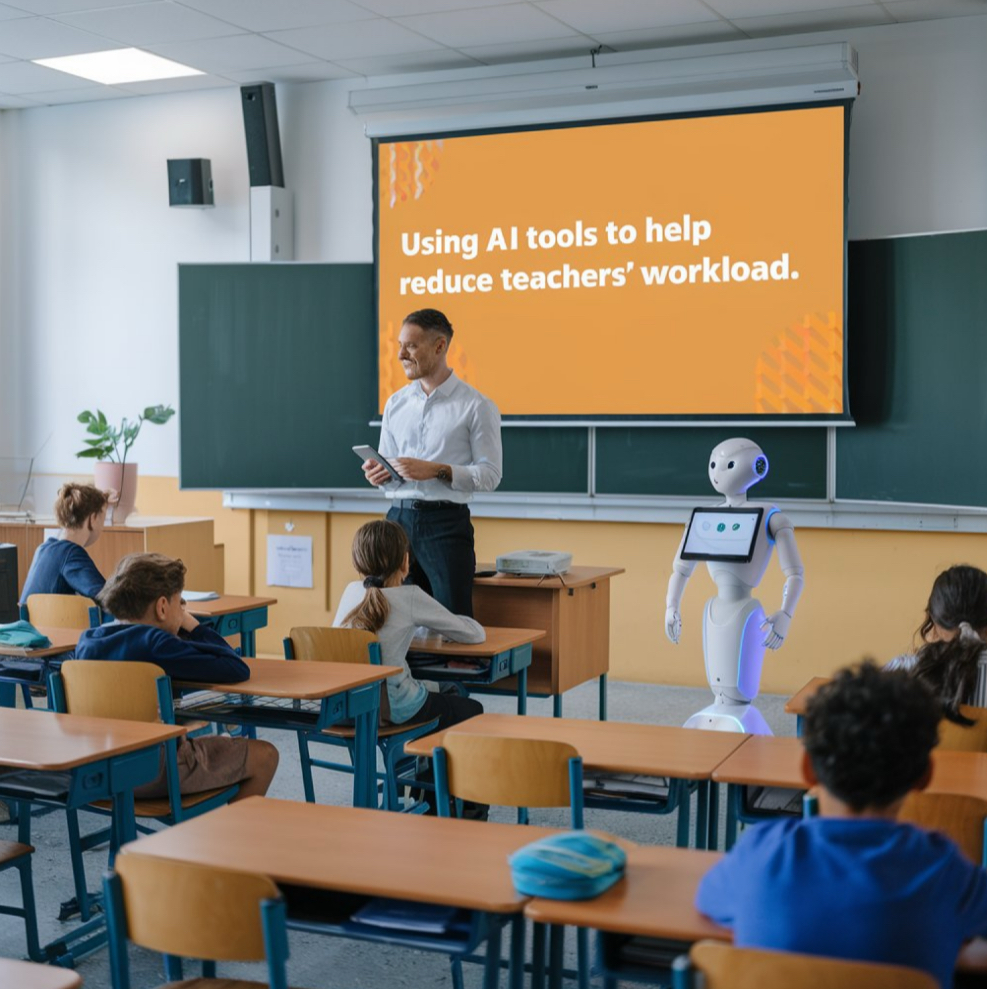
London, United Kingdom — In a bold step toward reshaping the future of education, the UK government has announced new investments and pilot programs to integrate artificial intelligence (AI) into classrooms—aimed at helping teachers reduce administrative workload and focus more on student engagement and personalized learning.
The initiative, backed by the Department for Education (DfE) and the Department for Science, Innovation and Technology (DSIT), includes over £1 million in funding for 16 education technology projects designed to develop AI tools that automate tasks like marking and feedback generation.
According to Education Secretary Bridget Phillipson, the effort is part of a wider commitment to empowering educators, not replacing them.
“AI has the potential to give teachers more time to do what they do best—teach and inspire their pupils. We’re making sure this technology supports, not replaces, human expertise,” Phillipson said.
Among the beneficiaries is Oak National Academy, a government-backed online learning platform that’s expanding its AI capabilities to help teachers generate quizzes, lesson plans, and tailored instructional materials in minutes.
The government is also developing a new £3 million “content store”—a secure, anonymized database of high-quality lesson plans, classroom materials, and pupil responses. This resource will be used to train AI models, ensuring tools are both accurate and aligned with national curriculum standards. Early results show that AI trained on this data can provide feedback with over 92% accuracy, up from 67%.
AI in Action: Helping Teachers, Not Replacing Them
The UK’s AI-in-education strategy is modeled after recent AI pilot programs in other parts of government. In Whitehall, civil servants using Microsoft Copilot software saved up to 26 minutes a day—equivalent to more than two weeks of work per year. Officials are optimistic similar gains can be achieved in schools, potentially reducing burnout and improving teacher retention rates.
These AI tools will be tailored to assist in:
- Automated grading of assignments
- Personalized learning support for students
- Simplified lesson planning
- Real-time feedback generation
The Bigger Picture: Responsible Innovation in Education
While pushing for innovation, the UK government has stressed the importance of ethical AI deployment. All tools must comply with data privacy regulations, remain transparent in functionality, and be built in consultation with educators and academic experts.
The move is also in line with broader efforts to train public servants and educators on AI usage. Earlier this week, the government confirmed that all civil servants across England and Wales will receive AI literacy training to ensure safe and effective integration of the technology across sectors.
Key Highlights:
- £1M invested in 16 AI education projects
- Oak National Academy expands AI tools for lesson prep
- £3M content store to power curriculum-aligned AI
- AI feedback tools reach over 92% accuracy
- Education Secretary: “AI will help, not replace teachers”
- Government pilots show 26 mins/day saved with AI tools
As the UK positions itself as a global leader in responsible AI use, this latest move signals a future where education becomes more efficient, less burdensome, and more personalized—without compromising the human touch that defines great teaching.
TeKnowledge and Kore.ai Unite to Tackle Nigeria’s Enterprise AI Deployment Gap

Lagos, Nigeria — TeKnowledge, a leading African digital transformation consultancy, has today announced a strategic partnership with global conversational AI powerhouse Kore.ai. This collaboration aims to close the critical gap between AI strategy and actual implementation in Nigerian enterprises, a challenge that has hindered meaningful adoption across key sectors such as banking, telecommunications, healthcare, and government services.
The execution gap has become a pressing issue for organizations seeking to benefit from AI but lacking the infrastructure and expertise to scale beyond basic pilot programs. TeKnowledge’s CEO, Olugbolahan Olusanya, emphasized the urgency of the moment, stating that Africa’s AI challenge is not about access but execution. “This partnership with Kore.ai is designed to change that. We want to empower Nigerian businesses with the tools and knowledge to operationalize AI, not just talk about it,” he said.
Kore.ai, globally recognized for its low-code Experience Optimization (XO) platform, brings a suite of generative AI-powered solutions capable of automating customer service, internal workflows, and employee engagement. The platform has been deployed successfully by Fortune 500 companies, resulting in over $1 billion in cumulative cost savings worldwide. By integrating Kore.ai’s capabilities into local systems, TeKnowledge will help Nigerian organizations quickly deploy AI assistants for customer support, human resources, finance, and IT—without the need for extensive development cycles.
The partnership also includes a strong focus on capacity building. TeKnowledge will offer structured training, certifications, and implementation support to ensure that businesses not only adopt AI solutions but also build long-term, in-house competencies. According to Motunrayo Ayo-Awe, Head of Marketing for Africa at TeKnowledge, the collaboration is about more than technology—it’s about creating an ecosystem where local talent thrives. “We’re creating pathways for sustainable AI innovation in Nigeria. Our goal is to develop both the technology stack and the human capital that will drive its success,” she said.
As Nigeria accelerates its journey toward digital transformation, the timing of this alliance is crucial. With increasing pressure on enterprises to improve efficiency, reduce costs, and remain competitive, scalable AI solutions are no longer optional—they are essential. The Kore.ai platform’s ability to reduce deployment timelines and deliver real-time business value will offer Nigerian enterprises a much-needed edge in a fast-moving global economy.
Today’s announcement marks a significant milestone in bridging the AI execution gap in Africa’s largest economy. It represents a step forward in transforming abstract strategies into impactful, real-world applications, and lays the foundation for an AI-powered future rooted in local innovation and global collaboration.
For continued coverage on how AI is shaping Africa’s enterprise landscape, stay tuned to Blacksolvent News.