The Role of Artificial Intelligence in Shaping the Future of Technology, Society, and Human Interaction
The rapid evolution of artificial intelligence is undeniably reshaping our world in profound and multifaceted ways. From revolutionizing app development in India to sparking important conversations about loneliness and online deception, AI’s influence is becoming ever more pervasive. As developers in India increasingly turn to AI agents to enhance productivity and streamline processes, we see a growing reliance on AI to automate and simplify tasks, allowing humans to focus on higher-level problem-solving and creativity. Meanwhile, the use of AI to fabricate online profiles, as demonstrated by a Bengaluru man, underscores the complexities and ethical concerns that come with AI’s involvement in personal and social spheres. The emotional impact on those interacting with AI-generated personas brings to light important considerations regarding trust, authenticity, and human connection in the digital age. Furthermore, OpenAI’s rollout of advanced models like o3 and o4-mini pushes the boundaries of AI’s capabilities in tasks like reasoning, coding, and image analysis, illustrating the potential for AI to address a wider range of challenges and unlock new possibilities.
As AI continues to advance, it’s critical that we approach its integration with a sense of responsibility, ensuring that technology serves humanity in a way that is ethical, transparent, and conducive to positive societal impact. Whether it’s fostering deeper connections, enhancing productivity, or solving complex problems, the future of AI holds endless possibilities. However, navigating its ethical implications and societal impact will remain a significant challenge as we look to the future of this transformative technology.
Indian Developers Leverage AI Agents to Revolutionize App Development
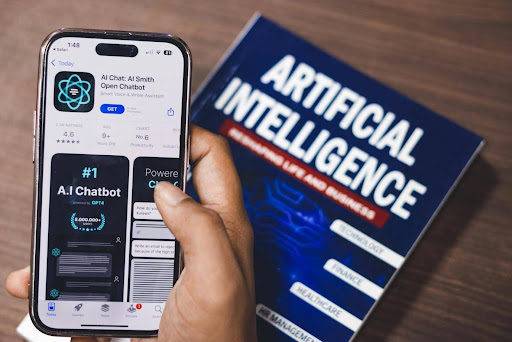
Indian developers are increasingly integrating AI agents into the app development process, recognizing their potential to automate tasks, enhance efficiency, and improve user experiences. These AI agents assist in code generation, debugging, and optimizing performance, allowing developers to focus on more complex aspects of application design.
A recent survey indicates a significant shift in the Indian tech industry, with a majority of developers acknowledging the transformative impact of AI on app development. The adoption of AI agents is not only streamlining workflows but also enabling the creation of more sophisticated and user-centric applications.
Companies like AppyPie are at the forefront of this movement, offering platforms that utilize AI to simplify app creation. These platforms democratize app development by allowing individuals without extensive coding knowledge to build functional applications, fostering innovation and entrepreneurship.
The integration of AI agents addresses the growing demand for personalized and adaptive applications. By analyzing user behavior and preferences, AI can tailor app functionalities to individual needs, enhancing user engagement and satisfaction.
However, the adoption of AI in app development also presents challenges, including concerns about data privacy, algorithmic bias, and the need for continuous learning and adaptation of AI systems. Developers must navigate these issues carefully to ensure ethical and responsible AI deployment.
Educational institutions in India are responding by incorporating AI and machine learning into their curricula, equipping future developers with the necessary skills to harness AI technologies effectively and ethically.
Government policies and industry collaborations are also playing a pivotal role. Initiatives to support AI research and development, provide funding for startups, and establish regulatory frameworks are fostering an environment conducive to innovation.
Looking ahead, the synergy between Indian developers and AI agents is expected to drive transformative changes in app development, unlocking new possibilities for creating intelligent, user-centric applications that cater to diverse needs and preferences.
Bengaluru Individual Utilizes AI to Fabricate Bumble Profile, Sheds Light on Male Loneliness

In a thought-provoking incident, a man from Bengaluru employed AI technology to create a fictitious female profile on the dating app Bumble. The profile, complete with AI-generated images and conversations, was designed to interact with male users, shedding light on the dynamics of online dating.
The creator of the fake profile stated that his intention was to explore the extent of loneliness among men in the digital age. By engaging in conversations through the AI-generated persona, he aimed to understand the emotional needs and behaviors of male users seeking companionship online.
The experiment revealed that many men were quick to form emotional connections with the AI-generated profile, often sharing personal thoughts and feelings. This response underscores the deep sense of isolation and the yearning for connection prevalent among individuals in today’s society.
The incident has sparked discussions about the ethical implications of using AI to create deceptive online identities. While the experiment aimed to highlight social issues, it also raises concerns about consent, privacy, and the potential for emotional harm to unsuspecting users.
Experts argue that such use of AI blurs the line between reality and fabrication, potentially undermining trust in online interactions. The ease with which AI can generate realistic personas calls for stricter regulations and ethical guidelines to prevent misuse.
The incident also points to a broader societal issue: the increasing reliance on digital platforms for social interaction and the challenges it poses to genuine human connections. As people turn to technology for companionship, addressing the root causes of social isolation becomes imperative.
Mental health professionals emphasize the importance of fostering real-world relationships and community engagement to combat loneliness. While technology can facilitate connections, it should not replace authentic human interactions that are vital for emotional well-being.
Moving forward, there is a need for a balanced approach that leverages technology to enhance social connections without compromising ethical standards. Public awareness, education, and robust policies are essential to navigate the complexities of AI in social contexts responsibly.
OpenAI Introduces o3 and o4-mini AI Models to Enhance Reasoning and Computational Tasks

OpenAI has recently unveiled two advanced AI models, o3 and o4-mini, marking significant progress in artificial intelligence capabilities. These models are designed to enhance reasoning, coding, mathematics, and visual comprehension tasks, offering improved performance and efficiency.
The o3 model stands out as OpenAI’s most sophisticated reasoning system to date. It incorporates visual understanding, allowing it to interpret and analyze images, diagrams, and other visual data, thereby broadening its applicability across various domains.
Complementing o3, the o4-mini model offers a more compact and cost-effective solution without compromising on performance. It is particularly adept at handling tasks related to mathematics, coding, and visual analysis, making it accessible to a broader range of users.
Both models underwent evaluation through a revised preparedness framework, reflecting OpenAI’s commitment to responsible and secure AI deployment. This framework ensures that the models meet high standards for safety and reliability before being released to the public.
The introduction of these models signifies OpenAI’s dedication to expanding the capabilities