BLAKSOLVENT STARTUP NEWS | 24.08.26
Blaksolvent Startup Funding News — 25th August, 2026
The funding market has stopped pretending it is having a broad recovery. It is having a very specific one: money is flooding toward companies that can bend atoms, move electrons, secure critical systems or make AI materially more capable. Global startup investment hit a record $510 billion in H1 2026, while North American early-stage funding reached $31 billion in Q2—almost twice last year’s pace. This week’s tape is the tell: defense, nuclear, compute, robotics and AI are pulling nine-figure cheques; everything else needs a very good reason to be in the room.
Prometheus — Physical AI’s $12 Billion Opening Act

Round: $12 billion financing
Key investors: Jeff Bezos, a co-founder; wider syndicate not disclosed
Prometheus is building physical AI: systems designed to reason about and operate in the messy, high-consequence physical world rather than merely produce another fluent paragraph. Its founding roster alone gives the project headline gravity; a $12 billion opening round gives it industrial-scale intent.
Why it matters: This is not venture funding as we used to know it. It is a declaration that the race to put intelligence into factories, machines and infrastructure may require balance-sheet-sized capital from day one. The AI boom just acquired a hard-hat division.
Castelion — A $1 Billion Vote for Deterrence
Round: $1 billion Series C
Key investors: Investor syndicate not disclosed
Castelion is building hypersonic missile systems and the manufacturing base needed to produce them at speed. In a defense market long accustomed to slow programmes and familiar primes, the company is pitching a faster, software-led route to strategic capability.
Why it matters: Defense tech is no longer a quirky venture category with camouflage. A billion-dollar Series C says investors see it as core infrastructure—and see hypersonics as an arena where speed of iteration may matter as much as speed of flight.
Valar Atomics — Nuclear Gets Its Own Mega-Round
Round: $1 billion Series B
Key investors: Sequoia; additional investors not disclosed
Valar Atomics is developing nuclear-energy technology aimed at adding firm, clean power to grids that are discovering intermittency has a price tag. The company is going after one of energy’s least forgiving problems: reliable electrons, at vast scale, under extraordinary regulatory scrutiny.
Why it matters: AI data centres have made power availability a boardroom issue. Sequoia leading a billion-dollar nuclear round is a crisp signal that venture capital now views generation—not just software efficiency—as part of the compute stack.
Hark — $700 Million for an AI That Knows You
Round: $700 million financing
Key investors: Investor syndicate not disclosed
Hark is pursuing personalised AI intelligence: software meant to build context around an individual’s work, information and decisions rather than answer every prompt like a stranger. The prize is an assistant that compounds in usefulness because it remembers the assignment.
Why it matters: Generic chat is cheapening fast. The more valuable layer is persistent context, and that is where privacy, trust and distribution collide. Hark’s raise suggests investors believe that layer can be a company, not a feature.
Whatnot — Live Commerce’s $20 Billion Checkout
Round: $545 million Series G at a $20 billion valuation
Key investors: Investor syndicate not disclosed
Whatnot operates a live-shopping marketplace where collectors, creators and sellers turn commerce into an event. Think auctions, community and impulse purchase fused into a mobile-native retail format that has proven it can travel well beyond trading cards.
Why it matters: A $20 billion valuation is a reminder that consumer companies can still command spectacular outcomes when they make buying feel social rather than transactional. Retail’s old conversion funnel has been replaced by a countdown clock and a chat stream.
Flourish — Betting $500 Million on Brain-Inspired AI
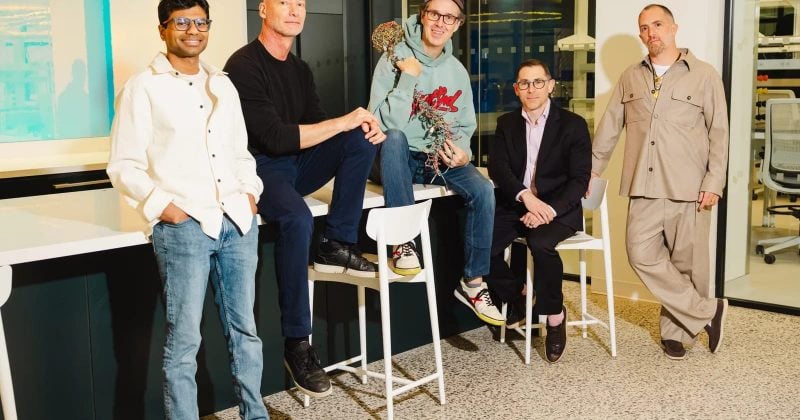
Round: $500 million financing
Key investors: Investor syndicate not disclosed
Flourish is working on brain-inspired AI, applying ideas from neuroscience to systems that could learn, reason or operate more efficiently than today’s prevailing architectures. It is a long way from a product demo—and deliberately so.
Why it matters: The market is beginning to fund post-transformer ambition, not just larger clusters. That is healthy. The next leap in intelligence may not come from feeding the same recipe more GPUs forever.
Higgsfield — Video AI Gets a $5.4 Billion Frame
Round: $400 million Series B at a $5.4 billion valuation
Key investors: Investor syndicate not disclosed
Higgsfield builds AI video-generation tools designed to turn ideas into polished moving images with far less of the traditional production machinery. It sits squarely in the collision zone between creator software, advertising budgets and generative media.
Why it matters: Text-to-video is graduating from novelty to workflow. The companies that win will not merely make impressive clips; they will make repeatable, controllable production pipelines that agencies and brands can trust on Monday morning.
Generalist AI — Robotics Learns Not to Be a One-Trick Machine
Round: $400 million financing
Key investors: Investor syndicate not disclosed
Generalist AI is building AI robotics systems with the goal of handling a wider range of tasks instead of being engineered around one tightly bounded routine. That is the difference between a clever demo and a machine that earns its keep across a shift.
Why it matters: Robotics has spent decades being brilliant in controlled corners. AI offers a chance to widen the corners—if the models can survive real floors, real objects and real human unpredictability. $400 million buys a lot of attempts at that graduation.
Mariana Minerals — Critical Minerals, Seriously Capitalised
Round: $310 million Series B
Key investors: Investor syndicate not disclosed
Mariana Minerals is focused on critical-minerals extraction, targeting materials central to electrification, defense supply chains and advanced manufacturing. It is tackling the unglamorous but decisive layer beneath batteries, turbines and sophisticated weapons systems.
Why it matters: The energy transition is also a materials transition. Investors are increasingly willing to finance difficult extraction technology because geopolitical dependence is no longer an abstract slide in a strategy deck.
LifeMine Therapeutics — Drug Discovery Goes Deep
Round: $263 million financing
Key investors: Investor syndicate not disclosed
LifeMine Therapeutics is advancing a drug-discovery platform that searches biology for new therapeutic possibilities. Its work is aimed at turning previously hard-to-access natural and biological insight into medicines with clear clinical potential.
Why it matters: Biotech capital is still selective, but it has not vanished—it has become impatient with shallow platforms. A $263 million cheque says differentiated science and a credible route to the clinic can still cut through the noise.
Horizon3 — Offensive Security, Defensively Funded
Round: $250 million Series E
Key investors: Investor syndicate not disclosed
Horizon3 builds autonomous penetration-testing technology, helping organisations find exploitable weaknesses by thinking more like an attacker. Its platform is designed to move security testing from periodic theatre to continuous proof.
Why it matters: The rise of AI expands both the attack surface and the attacker toolkit. Cybersecurity buyers are not looking for another dashboard; they want evidence of what can actually be breached. Horizon3 is selling precisely that uncomfortable truth.
Starcloud — $250 Million for the Cloud Beneath the Cloud
Round: $250 million Series A extension at a $2.3 billion valuation
Key investors: Investor syndicate not disclosed
Starcloud is building cloud infrastructure for an era in which compute demand is no longer linear, predictable or forgiving. The company is positioning itself around the infrastructure bottlenecks that emerge when every ambitious business suddenly wants AI capacity.
Why it matters: The AI gold rush is being taxed by power, networking, chips and deployment complexity. Infrastructure companies that remove even one of those bottlenecks can become toll roads very quickly.
ALSO — Enterprise AI Refuses to Be a Side Project
Round: $150 million Series D
Key investors: Investor syndicate not disclosed
ALSO is building AI products for enterprise use, where useful intelligence has to coexist with old systems, data permissions and executives who would rather not explain a breach to the board. Its pitch is AI with operational consequences, not a chatbot parked beside the real work.
Why it matters: Enterprise adoption is moving from experiments to procurement. The winners will be those that attach themselves to measurable workflows—and survive security review without dissolving into a six-month pilot.
Happy Health — Wellness Gets a Serious Series A
Round: $75 million Series A
Key investors: Investor syndicate not disclosed
Happy Health is building health and wellness technology designed to make preventive, everyday care more accessible and actionable. The company is operating in the broad territory between clinical care, habits and the data people generate outside the doctor’s office.
Why it matters: Consumer health is crowded, but the cost of doing nothing about prevention is becoming harder for employers, payers and individuals to absorb. The test is whether Happy Health can turn engagement into outcomes, not merely streaks.
Fasset — A $1 Billion Stablecoin Bank Bet
Round: $68 million Series C at a $1 billion valuation
Key investors: Investor syndicate not disclosed
Fasset is building a stablecoin-focused neobank, pairing familiar financial services with digital-asset rails intended to move value faster and more globally. It is pursuing the practical end of crypto: payments, savings and access—not another speculative token carnival.
Why it matters: Stablecoins are becoming financial plumbing before many banks have agreed on the décor. Fasset’s unicorn valuation puts a marker down: the eventual winners may look less like exchanges and more like the everyday financial institutions people already understand.
Network Bio — Biology’s Network Effect
Round: $50 million financing
Key investors: Investor syndicate not disclosed
Network Bio is applying biotech tools to biological discovery, using connected data and scientific insight to find better paths through complex disease and development questions. It is a platform bet in a sector where the underlying biology still gets the final vote.
Why it matters: AI can accelerate biology, but it cannot repeal biology. Funding companies that build defensible datasets and experimental feedback loops is a more durable bet than slapping “AI” on a slide deck full of molecules.
Yuno — Payments Infrastructure Gets Another Layer
Round: $45 million Series B
Key investors: Investor syndicate not disclosed
Yuno provides payments infrastructure that helps businesses orchestrate transactions across providers, markets and payment methods. In effect, it is trying to make the invisible complexity behind a successful checkout somebody else’s problem.
Why it matters: Payments remains a game of reliability, conversion and local nuance. The merchant that can route around failure, offer the right method and reconcile the mess wins; the infrastructure provider enabling that earns its place in the stack.
Quintessent — Making AI Datacentres See the Light

Round: $40 million Series A
Key investors: Investor syndicate not disclosed
Quintessent develops advanced optics for AI datacentres, where getting data between chips is rapidly becoming as important as doing the computation itself. Its technology targets the bandwidth and energy constraints emerging inside ever-denser compute systems.
Why it matters: AI’s bottleneck is not only silicon supply. It is the plumbing between the silicon. Optics is suddenly one of the least flashy and most consequential places to build a venture-scale business.
MaxQ Medical — Devices Built for a Harder Clinical Problem
Round: $31.5 million Series A
Key investors: Investor syndicate not disclosed
MaxQ Medical is developing medical-device technology intended to improve patient care in settings where precision and workflow both matter. It is a reminder that health innovation still includes physical products, clinical validation and a long walk through regulation.
Why it matters: Medical devices do not get to “move fast and break things.” That is exactly why credible ones can build formidable moats once they earn clinician trust and regulatory clearance.
Rundoo — The Hardware Store Gets a Modern Operating System
Round: $30 million Series B
Key investors: Investor syndicate not disclosed
Rundoo provides technology for hardware stores, bringing modern software to inventory, operations and customer relationships in a category that has often been underserved by sleek SaaS. It is attacking the practical commerce behind contractors, repairs and weekend projects.
Why it matters: Vertical software works when it respects the texture of the trade. Hardware retail has awkward inventory, loyal local customers and no patience for software built by someone who has never priced a box of screws.
Queen One — Commerce CRM Meets AI
Round: $25 million financing
Key investors: Investor syndicate not disclosed
Queen One is building an AI-powered commerce CRM, helping brands turn customer information into more relevant conversations and commercial action. The goal is less blast-email marketing, more responsive relationship management.
Why it matters: Every commerce brand says it wants personalisation; most still send the same discount to everyone. AI will make customer data more usable—provided companies can use it without becoming creepy, chaotic or both.
ClearJet — Logistics AI Takes the Dispatch Desk
Round: $25 million financing
Key investors: Investor syndicate not disclosed
ClearJet applies AI to logistics, where routing, capacity, exceptions and timing produce a daily pile of operational decisions. The company is bringing software intelligence to an industry that rewards every mile saved and punishes every late shipment.
Why it matters: Logistics is where AI has the chance to be boring in the best possible way: fewer empty miles, fewer manual interventions and fewer calls beginning with “where is it?” That is a very sellable kind of intelligence.
Twin1 AI — Seed Capital for the Next AI Layer
Round: $20 million seed
Key investors: Investor syndicate not disclosed
Twin1 AI is building artificial-intelligence technology at seed stage, entering a market where the category label is abundant but durable differentiation is not. The company now has the capital to prove that its approach deserves a place in an increasingly crowded stack.
Why it matters: A $20 million seed round is a reminder of how high the starting bar has become for AI founders. The money is available; the next test is turning ambition into proprietary data, distribution or results before the next model release reshuffles the deck.
Sonic Fire Tech — NASA-Inspired Fire Suppression
Round: $15 million seed
Key investors: Investor syndicate not disclosed
Sonic Fire Tech is developing NASA-inspired fire-suppression technology, taking an aerospace-inflected approach to a problem whose stakes are immediate and physical. The company is working in the growing overlap between climate resilience, industrial safety and advanced hardware.
Why it matters: Wildfire and fire risk are no longer niche concerns for insurers or property owners. A new suppression technology that is effective, deployable and affordable could find a market measured in infrastructure protection, not app downloads.
Ours Privacy — HIPAA-Ready Customer Data
Round: $15 million Series A
Key investors: Investor syndicate not disclosed
Ours Privacy is building a HIPAA-compliant customer-data platform for healthcare organisations that need to make patient and customer information useful without treating privacy as an afterthought. It is designed for an industry where data activation and data protection must happen together.
Why it matters: Healthcare has plenty of data and very little room for cavalier handling of it. The companies that solve that tension can unlock better engagement and operations while avoiding the compliance landmines that keep many teams stuck in spreadsheets.
RockRose Risk — Wildfire Insurance Meets Reality
Round: $12.5 million Series A
Key investors: Investor syndicate not disclosed
RockRose Risk is building wildfire-insurance technology for a market being reshaped by climate exposure, changing risk models and retreating capacity. It is operating where underwriting theory meets a terrifyingly real map.
Why it matters: Climate risk is forcing insurance to reinvent both pricing and participation. Startups that provide sharper risk intelligence can help keep markets functioning where blunt models would simply stop writing policies.
Hugging Face — $13 Billion Acquisition Talks Put Open AI on the Clock

Status: Reported acquisition talks at a $13 billion figure
Key parties: Not disclosed
Hugging Face, the open-source AI platform and community hub, is reportedly in acquisition discussions around a $13 billion figure. Its importance extends beyond models: it is an ecosystem, a distribution channel and a default meeting place for developers building with modern machine learning.
Why it matters: If a deal materialises, it will be a major referendum on the strategic value of the open AI ecosystem. Owning a leading developer platform is one way to own the on-ramp to a vast amount of AI innovation—and that is worth far more than a logo collection.
The through-line is unmistakable. Capital is concentrating around sovereignty, power, compute, security and the machinery that makes AI useful outside a demo window. The $510 billion H1 record is not evidence that every startup is back in fashion; it is evidence that investors are willing to pay heavily for the few categories they believe will define the next industrial cycle. For founders, the message is bracing but useful: build something essential, not merely adjacent.
Written by Blaksolvent News