Money Is Moving Without Washington
Global finance is adjusting to a shifting center of gravity.
Currencies are reacting more to politics than policy signals.
New institutions are stepping in to track where capital is flowing.
At the same time, trade momentum is building outside traditional power centers.
Together, these stories suggest a quiet but meaningful realignment in global finance.
Dollar Slides as Trump Says He Is Not Concerned About Its Recent Decline

The US dollar has continued to slide after former President Donald Trump publicly downplayed concerns about its recent decline. His comments come at a time when currency markets are increasingly sensitive to political signals, particularly those that suggest a tolerance for a weaker dollar as a tool of economic strategy.
Traders interpreted Trump’s remarks as reinforcing the idea that dollar strength is no longer a policy priority in certain political circles. A weaker dollar can boost US exports by making them cheaper abroad, but it also raises import costs and can fuel inflationary pressure. Markets tend to react quickly when political rhetoric appears to challenge long-standing currency norms.
The dollar’s movement also reflects broader structural forces. Persistent fiscal deficits, rising debt servicing costs, and shifting global interest rate expectations have all weighed on the currency. While the Federal Reserve remains formally independent, political narratives can still influence investor confidence and capital flows.
For global markets, a softer dollar has mixed implications. Emerging markets often benefit from reduced dollar pressure, while commodity prices typically priced in dollars tend to rise. However, prolonged weakness can undermine the dollar’s role as the world’s primary reserve currency, a status built on trust as much as economics.
Trump’s indifference signals a departure from decades of bipartisan emphasis on dollar stability. Whether the decline proves temporary or structural will depend on policy decisions, investor sentiment, and how global alternatives continue to develop.
One Data and Rockefeller Foundation Launch Development Finance Observatory
One Data and the Rockefeller Foundation have announced plans to launch a new development finance observatory aimed at tracking capital flows into emerging and low-income economies. The initiative is designed to improve transparency, coordination, and accountability in development finance at a time when global funding needs are rising.
The observatory will aggregate data from public institutions, private investors, and multilateral organizations to provide a clearer picture of where development capital is deployed and where gaps persist. Supporters argue that fragmented data has long hampered effective decision-making in development finance.
By standardizing reporting and improving visibility, the project aims to help governments, donors, and investors align resources with real-world impact. This is particularly important as climate finance, infrastructure funding, and social investment increasingly overlap with traditional development goals.
The Rockefeller Foundation’s involvement signals an emphasis on long-term systemic change rather than short-term funding cycles. The initiative also reflects growing interest from private capital in development-aligned investments, blurring the line between philanthropy and finance.
As global aid budgets come under pressure, tools that improve efficiency and accountability are gaining importance. The observatory positions data itself as a form of infrastructure one that could reshape how development finance is evaluated and allocated.
Major Trade Deals in 2026 Are Moving Ahead Without the United States
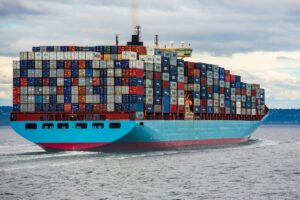
So far in 2026, many of the world’s largest trade agreements have been negotiated and advanced without direct US involvement. This marks a notable shift from previous decades, when Washington played a central role in shaping global trade architecture.
Regional blocs in Asia, the Middle East, and parts of Africa have pushed forward agreements focused on supply chain resilience, energy cooperation, and digital trade. These deals reflect a pragmatic approach to commerce, driven less by ideology and more by shared economic necessity.
The absence of the US has created space for other powers to influence standards, rules, and trade norms. Countries are increasingly prioritizing speed, regional alignment, and diversification over waiting for consensus from traditional leaders.
For American businesses, the shift raises concerns about lost market access and reduced influence over regulatory frameworks. Trade agreements often determine long-term competitive advantages, not just short-term tariff reductions.
The trend suggests that global trade is becoming more multipolar. Rather than a single dominant architect, multiple centers of influence are shaping how goods, services, and data move across borders. For policymakers, the message is clear: disengagement carries long-term strategic costs.