As Travel Rules Ease, Rates Pause, and Capital Is Courted, Markets Signal a Search for Stability
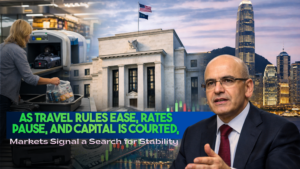
Economic signals this week are less about acceleration and more about calibration.
Governments and institutions are adjusting rules to reflect post-crisis realities.
Central banks are choosing patience over provocation.
Meanwhile, emerging-market policymakers are actively reassuring global investors.
Together, these moves suggest a coordinated effort to steady confidence without overcommitting.
Heathrow Scraps 100ml Liquid Rule, Signaling a Shift in Post-Security Travel Economics

Heathrow Airport’s decision to scrap the long-standing 100ml liquid restriction marks a significant shift in global travel norms and airport economics. Introduced in the mid-2000s as an emergency security response, the rule reshaped passenger behavior for nearly two decades, influencing retail sales, security procedures, and airport infrastructure design.
The change is being driven by the rollout of advanced security scanning technology capable of detecting liquid explosives without manual volume limits. For Heathrow, one of the world’s busiest international hubs, the move represents a bet on technology to streamline passenger flow while maintaining security integrity.
From a commercial standpoint, the implications are substantial. Duty-free and airport retail operators have long argued that the liquid rule suppressed consumer spending, particularly on premium goods. Removing the restriction is expected to lift per-passenger retail revenue and improve overall airport profitability.
Passengers stand to benefit from a smoother experience. Reduced preparation time at security checkpoints and fewer confiscations are expected to improve satisfaction and throughput, particularly during peak travel seasons. Airlines also anticipate indirect gains as faster processing reduces missed connections and congestion.
However, the change introduces transitional challenges. Not all terminals or airports globally are equipped with the necessary scanners, creating inconsistency across travel routes. This raises concerns about passenger confusion and uneven implementation.
Symbolically, the decision reflects how post-9/11 security frameworks are being reassessed through a technological lens. Heathrow’s move may accelerate similar changes at other major hubs, reshaping global aviation standards and reinforcing the role of innovation in balancing safety with efficiency.
Federal Reserve Expected to Hold Interest Rates as Labor and Inflation Signals Diverge
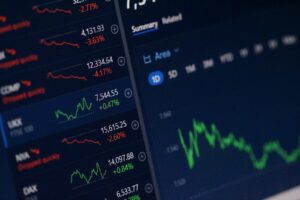
The US Federal Reserve is widely expected to keep interest rates unchanged this week, reinforcing a cautious stance amid mixed economic signals. Inflation has eased from prior peaks, but labor market resilience and uneven price pressures continue to complicate the policy outlook.
Holding rates steady reflects the Fed’s desire to assess the cumulative impact of past tightening. After one of the most aggressive hiking cycles in decades, policymakers are wary of overtightening and triggering unnecessary economic slowdown.
Markets have largely priced in a pause, viewing it as confirmation that rates may have peaked for this cycle. However, expectations for future cuts remain fluid, with policymakers emphasizing data dependence rather than a preset trajectory.
Employment remains a key variable. While job growth has moderated, wage pressures persist in certain sectors, keeping inflation risks alive. The Fed must balance these dynamics against slowing consumer spending and tighter credit conditions.
Financial markets are sensitive to the tone of Fed communication. Even without a rate change, language around inflation risks, growth outlook, and financial stability could influence equity and bond markets significantly.
The decision underscores a broader central banking shift toward patience. Rather than reacting to short-term fluctuations, the Fed is signaling that credibility now lies in restraint, not rapid reversals. For investors and businesses, this reinforces an environment of cautious planning rather than aggressive repositioning.
Turkey’s Finance Minister Simsek Heads to Hong Kong to Reassure Global Investors

Turkey’s Finance Minister Mehmet Simsek is set to meet investors in Hong Kong as part of a broader campaign to restore confidence in the country’s economic direction. The outreach reflects Ankara’s recognition that credibility with global capital markets is critical to stabilizing its economy.
Simsek’s message centers on orthodoxy. Since returning to office, he has championed tighter monetary policy, fiscal discipline, and regulatory normalization after years of unconventional economic management that unsettled investors.
Hong Kong, as a gateway to Asian capital, represents a strategic venue. Meetings with asset managers, banks, and institutional investors aim to communicate Turkey’s commitment to predictable policy and long-term reform.
Investor skepticism remains. High inflation, currency volatility, and large external financing needs continue to weigh on sentiment. Simsek’s task is to convince markets that recent policy shifts are durable rather than tactical.
Success could translate into renewed portfolio inflows and lower borrowing costs. Failure, however, would reinforce doubts and prolong financial pressure. The stakes are particularly high as global liquidity remains selective and risk-averse.
More broadly, the trip highlights how emerging-market finance has become increasingly diplomatic. Economic policy is no longer just domestic governance, it is an ongoing negotiation with global capital, where trust is earned through consistency rather than rhetoric.