When Institutions Are Tested, Pressure Surfaces in the Streets, the State, and the Digital Sphere
Periods of instability often reveal where power is most fragile.
From civic unrest in American cities to internal crackdowns within China’s military, authority is being reasserted under strain.
At the same time, Europe’s scrutiny of global tech platforms reflects growing unease over private control of public discourse.
These stories unfold in different arenas, but they share a common thread of accountability under pressure.
Together, they illustrate how governance is being renegotiated in an era of heightened visibility and dissent.
Minneapolis Unrest Rekindles Debate Over Policing, Accountability, and Civic Trust
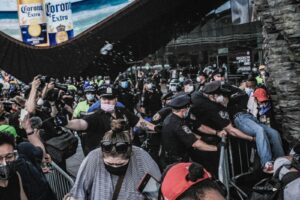
Renewed unrest in Minneapolis has once again placed the city at the center of a national conversation about policing, justice, and civic stability. Demonstrations erupted following a controversial incident that reignited long-standing grievances around law enforcement conduct and institutional accountability. While protests began peacefully, tensions escalated as frustration spilled into clashes with authorities, property damage, and a heavy security response.
For Minneapolis, the symbolism is particularly potent. The city has become a reference point in the broader U.S. debate over policing reform since earlier high-profile incidents reshaped public discourse and policy promises. Each new episode of unrest reopens unresolved questions: what meaningful reform looks like, how quickly it can be implemented, and whether trust between communities and law enforcement can realistically be rebuilt.
City officials framed the unrest as a public safety challenge requiring firm response, while community leaders emphasized the deeper structural issues driving repeated cycles of protest. This divide reflects a broader national tension between order and reform, where short-term stability often competes with long-term transformation.
Businesses and residents have also been caught in the middle. Local economic disruption, curfews, and security deployments have revived concerns about urban recovery, investment confidence, and social cohesion. For many, the unrest underscores how fragile progress can be when underlying grievances remain unaddressed.
At a national level, Minneapolis serves as a barometer. The unrest is not viewed in isolation, but as part of a pattern playing out across U.S. cities grappling with inequality, policing legitimacy, and political polarization. Each incident compounds public skepticism toward institutions that appear slow to change yet quick to enforce control.
Ultimately, the Minneapolis unrest highlights a central dilemma: governance in democratic societies depends not only on authority, but on consent. Without sustained trust, enforcement becomes cyclical, protest becomes inevitable, and stability remains temporary rather than durable.
China’s Military Purge Signals Deepening Control and Internal Discipline
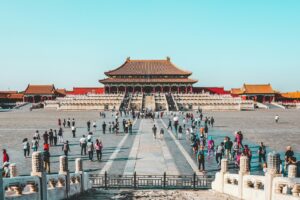
China’s ongoing military purge has drawn attention to the internal mechanics of power within the world’s largest armed forces. Senior officers have been removed or placed under investigation as part of what authorities describe as an anti-corruption and discipline campaign. Yet beyond official explanations, the moves signal a broader effort to consolidate control and reinforce loyalty within the People’s Liberation Army.
The timing and scale of the purge matter. China is navigating a complex geopolitical environment marked by rising tensions with the United States, regional security challenges, and an emphasis on military modernization. In such a context, leadership cohesion and obedience are viewed as strategic imperatives, not administrative preferences.
Historically, anti-corruption drives within China’s military have served multiple purposes. While corruption is a genuine concern in a force undergoing rapid expansion and procurement, purges also function as political tools, removing rival power centers and reaffirming centralized authority. This dual function makes external interpretation difficult but strategically significant.
For military personnel, the purge reinforces a culture of caution. Career advancement increasingly depends not only on competence, but on political alignment and perceived loyalty. This can strengthen command discipline in the short term while potentially stifling internal dissent or innovation over time.
International observers are closely watching the implications. A military under intense internal scrutiny may become more rigid in its hierarchy, but also more responsive to top-down directives. This has consequences for crisis management, decision-making speed, and regional signaling, particularly in flashpoints involving Taiwan or the South China Sea.
In essence, China’s military purge is less about individual wrongdoing and more about system control. It reflects a leadership philosophy that prioritizes unity and obedience as foundations of national power, even at the cost of transparency or institutional autonomy.
EU Probe Into Elon Musk’s X Escalates Global Tech Governance Battle

The European Union’s probe into Elon Musk’s X platform marks a significant escalation in the global effort to regulate digital power. At the heart of the investigation are concerns over content moderation, misinformation, and compliance with the EU’s expanding digital governance framework. For European regulators, the issue is not Musk personally, but whether global platforms can operate above regional rules.
X has positioned itself as a champion of free expression under Musk’s ownership, rolling back moderation policies and reframing its role as a neutral conduit for speech. European authorities, however, argue that neutrality does not absolve platforms of responsibility when harmful or misleading content spreads at scale.
The probe reflects a broader philosophical clash. The EU’s regulatory approach prioritizes harm reduction, user protection, and accountability, while Silicon Valley traditions often emphasize innovation speed and speech absolutism. X sits directly at the intersection of these competing worldviews.
For Musk, the scrutiny adds to a growing list of regulatory confrontations across industries, from electric vehicles to space and now social media. His leadership style, marked by public confrontation and ideological framing, has amplified the visibility of the case and heightened political stakes.
The outcome of the probe could have wide-reaching implications. A ruling against X would strengthen the EU’s position as a global standard-setter for tech regulation, potentially forcing platform-wide policy changes that extend beyond Europe. A softer outcome, on the other hand, could embolden platforms to resist regional oversight.
More broadly, the case underscores a shift in digital governance. Governments are no longer content to rely on voluntary compliance from tech companies whose platforms shape public discourse. The EU probe into X is part of a larger recalibration of power between states and technology firms in the digital age.