BLAKSOLVENT AI NEWS- 18/12/25
Power, Speed, and Control in AI’s Latest Chapter
Artificial intelligence remains one of the most influential forces shaping global technology, business strategy, and regulation. In recent months, AI development has moved beyond experimentation into large-scale deployment, prompting major corporations to restructure leadership, release more efficient models, and expand real-world applications. At the same time, governments and regulators are responding to the growing autonomy of AI systems, particularly in sensitive sectors such as finance. These developments reflect a period in which AI is not only advancing rapidly but is also being embedded into institutional decision-making and public-facing services.
Amazon Restructures Its AI Division Amid Intensifying Global Competition

Amazon has announced a significant reorganisation of its artificial intelligence operations as it seeks to strengthen its position in the increasingly competitive AI sector. The company confirmed that Rohit Prasad, a senior executive who has led key aspects of Amazon’s AI and generative AI strategy, will leave the company at the end of 2025. His departure coincides with a broader restructuring of Amazon’s AI leadership and operational framework.
As part of the reorganisation, Amazon is consolidating its AI model development, custom semiconductor design, and quantum computing initiatives into a single unit. This new structure will be led by senior executive Peter DeSantis, who is expected to oversee closer coordination between AI research and the infrastructure required to deploy advanced systems at scale.
The company has described the move as a strategic turning point, signalling a more integrated approach to AI development. By bringing multiple advanced technology teams under one leadership structure, Amazon aims to accelerate innovation and reduce internal fragmentation that can slow product development.
The restructuring reflects wider industry dynamics, as major technology firms adjust internal leadership and research priorities to compete more effectively in foundational AI models, cloud-based AI services, and next-generation computing technologies.
Google Introduces Gemini 3 Flash to Expand High-Speed AI Deployment

Google has released Gemini 3 Flash, a new artificial intelligence model designed to deliver faster performance while using fewer computational resources. The model is part of Google’s Gemini family and was introduced as a more efficient alternative to larger, more resource-intensive AI systems.
According to Google, Gemini 3 Flash maintains strong reasoning and multimodal capabilities, allowing it to handle text, images, and other data types while operating at higher speeds. The model is intended for broad deployment across both consumer-facing products and enterprise services.
The release aligns with Google’s strategy to make advanced AI tools more widely accessible by reducing costs and latency. Gemini 3 Flash is expected to be integrated into multiple Google platforms, including search features, productivity tools, and cloud-based AI services.
This development highlights a broader trend within the AI industry, where companies are increasingly focused on efficiency, scalability, and real-world usability rather than solely pursuing larger and more computationally expensive models.
UK Regulators Monitor Banks as Agentic AI Adoption Accelerates
BY BLAKSOLVENT NEWS
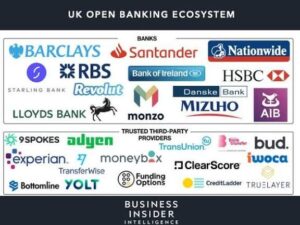
British financial regulators are closely observing the growing use of agentic artificial intelligence by major UK banks. Agentic AI systems are designed to operate with a higher level of autonomy, enabling them to plan, make decisions, and execute tasks with limited human intervention.
Several banks in the UK are testing these systems for customer-facing services, including budgeting assistance, financial analysis, and personalised money management tools. The aim is to improve efficiency and enhance customer experience through advanced automation.
However, the UK Financial Conduct Authority has raised concerns about the governance and accountability implications of deploying such autonomous systems. Regulators have warned that while AI can support financial services, responsibility for decisions made using these tools remains with the institutions that deploy them.
The situation underscores the tension between innovation and oversight within the financial sector, as banks push forward with advanced AI capabilities while regulators work to ensure stability, transparency, and consumer protection.