BLAKSOLVENT FINANCE NEWS- 17/12/25
Capital, Confidence, and Caution

Global finance is entering a delicate balancing act. While investor confidence remains elevated and capital continues to flow into risk assets, policymakers and institutions are navigating slower labour growth, uneven global funding commitments, and the long-term consequences of prolonged monetary tightening. Recent developments across development finance, asset allocation, and central bank policy reflect a market environment driven as much by optimism as by underlying fragility. These stories offer insight into how capital is moving, where confidence is concentrated, and why caution still lingers beneath the surface.
African Development Bank Secures $11 Billion to Support Low-Income Economies
BY BLAKSOLVENT NEWS

The African Development Bank (AfDB) has raised $11 billion for its African Development Fund (ADF), strengthening its capacity to provide low-cost financing to the continent’s poorest countries. The fundraising outcome exceeded the previous replenishment total but fell short of the institution’s initial $25 billion target, highlighting both progress and persistent gaps in global development financing.
The ADF serves as the AfDB’s concessional lending arm, offering grants and highly subsidized loans to support projects in infrastructure, agriculture, energy access, water systems, education, and climate adaptation. These funds are especially critical for countries with limited access to international capital markets and rising debt burdens.
A notable feature of the latest fundraising round was increased participation from African nations themselves, with 19 African countries contributing as first-time donors, signaling a shift toward greater regional ownership of development priorities. Major commitments also came from the Arab Bank for Economic Development in Africa and the OPEC Fund for International Development.
However, the absence of new funding commitments from the United States underscored changing geopolitical dynamics in development finance. In response, the AfDB has indicated plans to explore innovative financing tools, including partnerships with philanthropic capital and the use of capital market instruments, to expand the fund’s long-term impact amid growing infrastructure and climate financing needs.
Global Investors Slash Cash Holdings, Pointing to Heightened Risk Appetite
BY BLAKSOLVENT NEWS

Global fund managers have reduced cash allocations to 3.3 percent, the lowest level recorded since the Bank of America Global Fund Manager Survey began in 1999. The shift reflects strong investor confidence and a broad willingness to remain fully invested despite macroeconomic uncertainty.
Low cash levels typically indicate bullish sentiment, as investors prefer to deploy capital into equities, commodities, and alternative assets rather than hold liquidity. Technology stocks, particularly those linked to artificial intelligence, automation, and digital infrastructure, continue to attract the largest inflows, alongside selective exposure to emerging markets and energy assets.
While optimism remains strong, analysts note that historically low cash buffers can amplify market volatility. With limited sidelined capital available to absorb shocks, markets may be more vulnerable to sudden corrections triggered by unexpected policy changes, geopolitical events, or earnings disappointments.
Despite these risks, many fund managers continue to expect stable growth and easing monetary conditions in 2026, reinforcing the current bias toward risk assets. The data highlights a market environment where confidence is high, but margin for error is narrowing.
U.S. Federal Reserve Holds Rates Steady as Labour Market Softens
BY BLAKSOLVENT NEWS
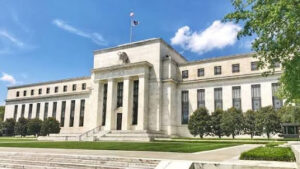
The U.S. Federal Reserve has maintained its benchmark interest rate following recent data indicating a gradual slowdown in labour market momentum. The decision comes after several rate cuts earlier in the year and reflects a cautious approach as policymakers weigh slowing job growth against persistent inflationary pressures.
Labour market indicators, including job creation and hiring trends, have shown signs of cooling, raising concerns about broader economic deceleration. At the same time, inflation has not fully returned to target levels, complicating the Fed’s path forward.
By holding rates steady, the Federal Reserve signaled its intention to remain data-dependent while preserving flexibility to respond to future economic developments. Financial markets have interpreted the move as increasing the likelihood of further rate cuts in early 2026, particularly if labour conditions weaken further.
The Fed’s stance continues to influence global financial conditions, affecting bond yields, currency valuations, and capital flows across emerging and developed markets. As central banks worldwide assess similar trade-offs between growth support and price stability, U.S. monetary policy remains a central anchor for global financial expectations.