BLACKSOLVENT STARTUP HEADLINES. | 20.10.25
When the Future Whispers: Startups Changing Labs, Chips, and Lives from the Inside Out.
Beneath the visible surge of social apps, flashy gadgets, and headline-grabbing artificial-intelligence models, a quiet momentum is mounting. It is not always loud or obvious but it is profound. Across three distinct domains, startups are reimagining how we discover, how we compute, and how we care for ourselves. In the lab, automation and AI join forces to accelerate science beyond human pace. In the data centre and chip-rooms, engineers are rewriting the rules of power and heat, enabling what was previously unthinkable. And in the domain of mid-life health, previously underserved demographics are gaining platforms of their own, powered by tech and data. Taken together, these stories suggest that the future isn’t yelling, it’s whispering. And those whispers are emerging in things that don’t always get centre-stage: infrastructure, modality, the pivot from front-end to bedrock. For founders, investors and innovation watchers especially in emerging markets, the message is clear-ish: the next waves of value may lie “inside out” rather than “outside in”.
Autonomous Discovery Meets Scale
BY BLACKSOLVENT NEWS

The company Lila Sciences has emerged from stealth with ambition and backing that many startups only dream of. Founded in 2023 and backed by venture studio Flagship Pioneering, Lila recently secured an additional US $115 million in a Series A extension, bringing its valuation to over US $1.3 billion and its total funding to around US $550 million.
What makes Lila noteworthy isn’t simply the size of its raise but what it is doing with the capital. The startup is building what it terms “AI Science Factories”: automated laboratories driven by AI models that generate proprietary experimental data robots that don’t just follow instructions, but refine hypotheses, run iterations and produce scientific insights.
The realisation: discovery isn’t just a human-led process anymore, it’s becoming a programmable, autonomous journey. For sectors like energy, semiconductors, pharmaceuticals and materials science, this could up-end the traditional model of slow, manual R&D. And for ecosystem players in Africa or other emerging markets, the implicit lesson is that value creation may lie not just in “apps for consumers” but in building platforms that merge robotics, automation and domain-specific AI. The challenge ahead will be enormous: lab infrastructure is expensive, scale-up is hard, regulatory oversight stiff but if it succeeds, the payoff could be transformative.
Re-engineering the Power Underneath Every Chip
BY BLACKSOLVENT NEWS
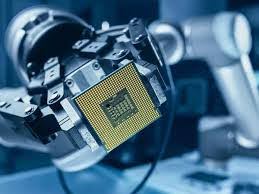
On the other side of the innovation spectrum, the startup Vertical Semiconductor—a spin-out from the Massachusetts Institute of Technology (MIT)—has raised US $11 million to commercialise what might look like an invisible problem: power delivery for AI data-centres.
Their technology uses gallium-nitride (GaN) instead of silicon and arranges transistors vertically rather than horizontally intended to reduce size, lower heat output, and decrease inefficiencies in converting millions of watts of raw power into high-speed computing.
Why this matters: As computing demands multiply, the constraint isn’t just “can we train bigger models?” but “can we deliver power, cool the system, sustain the infrastructure?” In many emerging markets—where energy costs are high, grid reliability poor, and cooling expensive solutions that reduce power and heat engineers can unlock entire new classes of deployment. For startups, this underscores that “hardware + infrastructure” remains a frontier of opportunity. It might not grab headlines the way consumer apps do but it may underpin the next decade of digital transformation.
Mid-Life Health Gets Its Digital Turn
BY BLACKSOLVENT NEWS

Meanwhile, the health-tech world is pivoting from broad-brush telemedicine to highly specialised verticals. Enter Midi Health, a startup founded in 2021 that focuses on perimenopause, menopause and mid-life women’s health. The company has just raised US $50 million in a Series C round (bringing its total funding to about US $150 million) and reports serving around 20,000 patients a week.
Midi’s proposition: build a virtual-care platform that isn’t “women’s health in general” but mid-life women’s health specifically not just reactive care but preventive, AI-empowered, data-driven. They’re launching an AI search engine tailored to women’s health, training providers specifically in menopause care, and offering “AgeWell” programmes for longevity beyond simple symptom relief.
Why this is significant: Historically, health-tech hype has centred on fertility, pregnancy or general wellness. But mid-life women’s health has been underserved and under-funded. Midi shows investors are now confident there’s value in focused, underserved-demographic care powered by technology. For regions like Africa, this signals a template: identify demographics that global players under-serve, build localised tech-enabled care models, scale through virtual + on-ground mix. The business challenges remain: acquiring users, proving clinical outcomes, navigating regulation. But the momentum is visible.