BLACKSOLVENT STARTUP FUNDING NEWS -13/10/25
New Frontiers in Funding
As the innovation frontier pushes outward, investors are putting their capital into startups that don’t just refine what exists they redefine what is possible. Whether through reviving neglected health sectors, automating essential infrastructure, or blending hardware and energy for sustainable living, the recent rounds reflect the new priorities: efficiency, inclusivity, and environmental concern. In the stories that follow, we see how entrepreneurs are chasing not just profit, but purpose in three very different arenas.
xAI’s Ambitious GPU-Backed Capital Raise
BY BLACKSOLVENT NEWS

Elon Musk’s startup xAI, founded in mid-2023, is reportedly preparing to raise up to $20 billion in its next capital round, according to a Bloomberg-based report covered by Reuters.
What makes this round noteworthy is that it’s being structured as a mix of equity and debt, with a sizable portion allocated specifically for acquiring high-performance Nvidia chips. The plan is to funnel approximately $7.5 billion in equity and $12.5 billion in debt, with Nvidia itself expected to contribute up to $2 billion in equity toward the chip-procurement part of the deal. The capital is intended largely for building or expanding data center capacity, particularly for xAI’s Colossus 2 infrastructure.
In the fast-moving world of large language models and AI infrastructure, hardware matters almost as much sometimes even more than the software that runs on it. The report of xAI’s impending $20 billion raise signals just how central that hardware dependence has become. An AI startup’s power is measured not merely in clever algorithms but in its ability to access, scale, and manage the computing infrastructure those algorithms need to shine.
xAI’s move is a bet on scale. It recognizes that the cost, availability, and integration of GPUs (graphics processing units) especially leading-edge Nvidia chips drive both performance and competitive advantage. By tying part of the raise explicitly to hardware acquisition, xAI is acknowledging that beyond software innovation, it must master supply chains, economies of scale, and the downstream logistics of building data centers. The debt component also reflects confidence that the revenue trajectory or strategic partnerships will justify taking on such obligations.
However, it’s not without risk. The AI hardware space is subject to global supply constraints, geopolitical regulations, and rapidly shifting architecture (e.g. breakthroughs that might render current generation GPUs less optimal). Debt, especially at this scale, increases financial leverage and risk: servicing that debt will require either strong revenue models or further rounds of successful fundraising. And while having Nvidia as a contributor helps, it also ties xAI’s fortunes more closely to the trajectory of its chip supplier—and those of competitors.
Still, this kind of raise underscores a broader trend: AI companies are no longer content to simply write code or build models. They are becoming infrastructure operators, balancing R&D with physical assets, financing strategies, and operational scale. For xAI, success will be measured not only in intellectual or product breakthroughs but in the reliability, cost efficiency, and raw power of its compute backbone.
Snappr’s $28 Million Boost and European Push
BY BLACKSOLVENT NEWS

Visual content platform Snappr, headquartered in Australia, has raised $28 million in its Series B round, bringing its total funding to $42 million. The round was led by Foundry, with contributions from Basis Set Ventures, Shrug, and Yes VC. Snappr is now using some of that capital to expand into Europe, launching in dozens of new cities.
Founded in 2016, Snappr connects individuals and businesses with professional photographers and editors; more recently, it has been blending AI-powered image generation and editing tools with its human creative workforce to offer visual content at scale especially valuable in marketing, branding, and e-commerce sectors. The funding will support deeper AI feature development, further product refinement, hiring, and expanding its footprint across European markets.
In the creator economy, visual content is king and the demand for consistent, high-quality, brand-aligned visuals is accelerating. Snappr’s growth story lies at the crossroads of human artistry and algorithmic augmentation. Their investment in AI, paired with their existing network of photographers and editors, positions them to serve the twin needs of scale and quality.
The WE $28 million raise is more than just money, it’s a signal of confidence from investors that creative industries will increasingly require hybrid models (humans + machine) to meet demand. Brands want bespoke content for social media, digital marketing, and immersive experiences; consumers expect visual richness everywhere. Snappr’s challenge is to keep the human touch while automating parts of content creation, editing, and distribution.
Geographic expansion adds another dimension. Europe brings cultural, regulatory, and market diversity. Success will require understanding varied visual aesthetics, local regulations (for image use, model releases, copyright), and logistic factors (photographer networks, editing standards, delivery speeds). Additionally, competition from generative AI tools for image creation is intense; Snappr must differentiate through quality, consistency, and trust but also efficiency.
Ultimately, Snappr’s journey underscores how the creator economy is maturing. Visual content isn’t a nicety it’s a core asset for many businesses. Platforms that can combine human artistry, AI augmentation, and scalable operations stand to define this space. For Snappr, the path ahead will test both managerial discipline and creative integrity.
Zingage’s $12.5 Million Seed Round to Bring Healthcare into Homes
BY BLACKSOLVENT NEWS
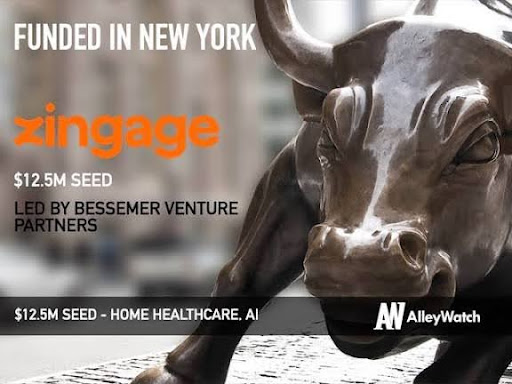
AI healthcare startup Zingage, based in New York City, has raised $12.5 million in a seed funding round. Its mission: to shift certain healthcare services from institutions into the home using AI tools. The company currently supports about 400 home healthcare agencies and roughly 50,000 caregivers via its platform. Its products include Zingage Perform (which uses gamification to encourage caregiver engagement) and Zingage Operator (an AI-powered app to automate back-office tasks such as scheduling, billing, and documentation).
The seed investment was led by Bessemer Venture Partners with participation from TQ Ventures and South Park Commons. Zingage’s model aims to address inefficiencies in existing home healthcare agencies, reduce administrative overhead, and improve both caregiver and patient experience by leveraging automation and tailored tools.
Healthcare is among the most personal of human needs and paradoxically, also one of the most bureaucratic. For many patients, especially those who are elderly, disabled, or prefer home treatment, the burdens of scheduling, billing, documentation, and coordination are not just annoyances they can determine whether a person receives timely care at all. Zingage aims to shift the locus of care by building tools that make home healthcare more efficient, manageable, and humane.
The company’s dual approach supporting caregiver engagement (via gamification) and automating operations addresses two of the thorniest problems in home health: human fatigue / turnover, and overhead costs that often eat up a large chunk of the budget. By improving both the “front-line” experience (caregivers) and the “back-office” reality (operations), Zingage hopes to create a platform that scales without sacrificing quality.
The funding though moderate compared to mega-rounds offers the runway needed to refine the product, deepen AI capabilities, and support more caregivers and home-care agencies. Deployment at this scale involves not just app development, but integration with health regulations, compliance, possibly insurance reimbursements, and data privacy. Home health is fragmented: different agencies, different states (if in the US), different standards. Success will depend on how well Zingage navigates that operational complexity.
Furthermore, there’s growing demand: aging populations, rising chronic diseases, and patient preference for in-home care make this shift both socially valuable and economically pressing. If Zingage can deliver on its promise, it could reduce strain on hospitals and clinics, lower costs, and make care more responsive and humane.