BLACKSOVENT AI NEWS | 09/10/25
THE Global Race to Control, Regulate, and Redefine AI
Artificial Intelligence has become more than a technology, it is now a stage upon which nations, innovators, and lawmakers perform a battle for influence, creativity, and control. From Europe’s billion-euro sovereignty push to Elon Musk’s daring creative experiment, and California’s groundbreaking whistleblower protection law, the narrative of AI in 2025 is no longer about innovation alone. It is about ownership, accountability, and identity.
In an era where code governs economies and algorithms shape perception, these stories reveal how humanity is struggling not just to build intelligent machines, but to define what kind of world they should serve.
Europe’s AI Sovereignty Gamble
BY BLACKSOLVENT NEWS

In a bold declaration of technological independence, the European Union has launched its “Apply AI” strategy, backed by over €1 billion in public funding. The plan, unveiled in October 2025, aims to integrate AI across healthcare, manufacturing, defense, energy, and pharmaceuticals sectors that define the continent’s competitiveness and resilience.
Beyond its economic promise, this initiative carries a deeper political message: Europe will no longer remain a consumer of American and Chinese technology. With the United States dominated by corporate AI giants and China racing ahead with state-driven systems, Europe’s leaders believe that sovereignty now depends as much on data and chips as it once did on borders and armies.
The new policy includes an AI Observatory to monitor technological trends and ensure compliance with the EU’s existing AI Act the world’s first comprehensive framework for responsible AI use. This legal scaffolding will require companies to meet strict standards on transparency, accountability, and risk management before their AI tools can operate within European markets.
However, even supporters admit the challenges are steep. Europe must cultivate advanced compute infrastructure, attract top AI talent, and bridge the gap between its cautious regulatory approach and the relentless pace of innovation elsewhere. Still, by pairing strong oversight with ambitious investment, the bloc hopes to chart a “third path” one where technological power coexists with ethical restraint.
Elon Musk’s Creative Frontier: When AI Becomes an Artist
BY BLACKSOLVENT NEWS

While Europe builds the foundations of sovereignty, Elon Musk’s xAI is redrawing the boundaries of creativity itself. In October 2025, the company announced an upgrade called Grok Imagine 0.9, designed not just to generate text or images but to create entire worlds. The goal: produce a fully AI-generated video game and a watchable AI-made movie by the end of 2026.
It’s an audacious vision to move AI from static content creation to dynamic storytelling. If successful, Musk’s system could become the first to merge neural creativity with interactive entertainment, challenging both Hollywood and the gaming industry at once.
Yet, beneath the spectacle lies a storm of philosophical and legal questions. Can a machine truly create art, or is it merely mimicking patterns learned from human imagination? If an AI’s training data draws from copyrighted material, who owns the output the system’s developer, the user, or the unseen artists whose work trained it?
Skeptics argue that AI still struggles with narrative coherence, emotional tone, and cultural nuance the essence of art. Others, however, see it as the next inevitable step in storytelling: where algorithms become collaborators, not just tools. Whether celebrated or condemned, xAI’s ambitions signal a future where the line between human genius and machine intelligence grows increasingly blurred.
California’s Whistleblower Law: The Beginning of AI Accountability
BY BLACKSOLVENT NEWS
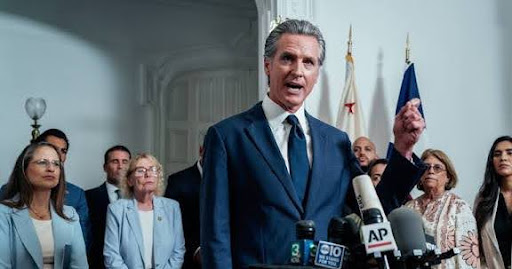
While corporations and nations chase AI supremacy, California is quietly rewriting the rulebook for AI safety and governance. In September 2025, Governor Gavin Newsom signed into law the Transparency in Frontier Artificial Intelligence Act (SB 53) the first U.S. legislation to protect AI whistleblowers and demand full accountability for high-risk systems.
The law offers legal protection to employees who report AI models or company practices that could cause “catastrophic harm” defined as damage exceeding $1 billion or threatening fifty or more lives. It also compels AI developers to publish risk-mitigation strategies, disclose safety test results, and report serious system failures to a state emergency office.
The roots of this act trace back to the controversies that hit OpenAI in 2024, when former employees claimed they were pressured into silence through restrictive exit agreements. That incident sparked a national conversation about transparency in an industry that moves faster than oversight can keep up.
California’s law sets a powerful precedent. It transforms ethical AI discourse into enforceable law, compelling companies to embed safety and auditing practices within their development pipelines not as optional gestures, but as obligations. If successful, this model could spread across other U.S. states and perhaps even influence international standards.
In the grander scheme, it symbolizes a shift: AI is no longer an unregulated frontier; it is entering the realm of governance, rights, and accountability where innovation must answer to law and humanity alike.