BLACKSOLVENT FINANCE NEWS | 7TH OCTOBER,2025
Financial Crossroads: Aid, Currency, and Regulation in Motion
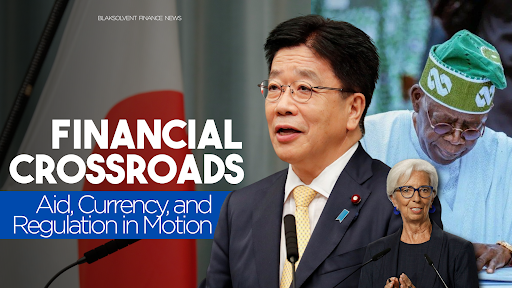
In the global financial landscape, stability is often the prize of timely reforms, regulatory clarity, and smart external support. Today’s developments show how states and institutions are leaning on all three: securing lending to shore up budgets, confronting exchange-rate pressures, and rethinking oversight of financial actors. These stories spanning Africa, Asia, and Europe illuminate how finance isn’t just about numbers, but about trust, policy, and the power to shape futures.
AfDB to Lend Nigeria US$500 Million in Budget Support Amid Reforms
BY BLACKSOLVENT NEWS
The African Development Bank (AfDB) has committed to lending US$500 million to Nigeria in 2025, as part of a greater US$1 billion budget-support programme spanning two years.
This assistance comes in recognition of several sweeping economic reforms pursued under President Bola Tinubu: elimination of fuel subsidies, unification of the foreign-exchange rate system, and enhancement of the tax base. The current tranche was approved by an AfDB board representative, with expectations for formal approval before year-end.
While the funds aim to provide breathing room for Nigeria’s finances, especially its power sector and public service obligations, challenges remain. Debt levels, inflation pressures, and investor perceptions will be critical in determining whether this support leads to durability or merely temporary relief.
Japan Warns of Forex Volatility as Yen Weakens After Political Shift
BY BLACKSOLVENT NEWS
Japan’s Finance Minister, Katsunobu Kato, has voiced concern over recent depreciation of the yen, which has weakened to about ¥150.62 per US dollar and crossed ¥176.35 per euro, representing its weakest levels in roughly two months.
The slide follows the election of Sanae Takaichi as head of Japan’s ruling Liberal Democratic Party, a result interpreted by markets as a signal that the government may favor expansive fiscal policy and resist tightening monetary policy. Kato emphasized the need for currency moves to reflect economic fundamentals, warning against disorderly fluctuations.
The implications are broad: a weaker yen raises the cost of imports (fuel, food, raw materials), which could ripple into inflation, affecting households. Furthermore, investors may reassess risk in Japanese assets if policy settings seem misaligned with macroeconomic pressures.
ECB President Christine Lagarde Calls for Tighter Rules on Non-Bank Finance
BY BLACKSOLVENT NEWS
In Amsterdam, European Central Bank (ECB) President Christine Lagarde urged regulators to tighten oversight of non-bank financial entities such as hedge funds, private equity firms, and credit funds. She emphasized that disparities in regulation between traditional banks and non-banks are creating systemic risks in the Eurozone’s financial system.
Lagarde cited that assets in non-bank financial institutions have grown from about 250% to over 350% of the Eurozone’s GDP since 2008, raising concern over “regulatory fatigue” and the risk of contagion in times of stress. She and other ECB officials propose that non-banks should be subject to macroprudential frameworks, especially regarding leverage, liquidity, and transparency.
The move seeks to ensure stability in Europe’s financial markets and reduce the chances that risks build up outside the regulated banking sector and eventually threaten economies. While some in non-bank finance argue that they already operate under constraints, regulators appear determined to level the oversight field.