BLACKSOLVENT FINANCE NEWS | 17TH SEPTEMBER,2025
Global Finance in Flux: Balancing Risk, Investment, and Policy
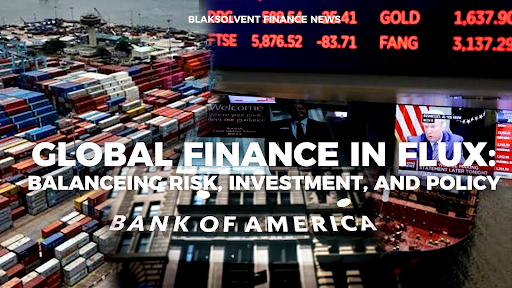
From Wall Street to Westminster to West Africa, the financial world is navigating a period of rapid change. Foreign investors are adjusting their strategies in U.S. markets with heavier reliance on dollar-hedged equities, major American financial institutions are deepening their footprint in the UK through billion-dollar commitments, and Nigeria is recalibrating its revenue policies after pushback from businesses over a new import levy. Together, these developments highlight how capital flows, regulatory decisions, and market confidence are shaping the global financial landscape. In today’s environment, governments, firms, and investors alike are being forced to strike a careful balance between opportunity and stability.
Foreign investors sharply increase dollar-hedged exposure in U.S. equities
By Blacksolvent News
Foreign investors have significantly boosted their use of currency-hedged strategies when buying U.S. equities, reflecting heightened concerns over exchange rate volatility and the strength of the U.S. dollar. According to recent data, nearly 80% of the $7 billion that overseas investors poured into U.S. equity exchange-traded funds (ETFs) over the past three months has been placed into dollar-hedged products. This marks a dramatic rise from around 20% earlier in the year, underscoring a major shift in global portfolio strategies.
Currency hedging allows investors to protect their returns from being eroded by fluctuations in the U.S. dollar. The dollar has remained relatively strong throughout 2025, driven by resilient U.S. economic performance and steady Federal Reserve policy, even as other major economies contend with slower growth and weaker currencies. For many foreign investors, failing to hedge against dollar movements could significantly diminish equity gains once converted back into their home currencies.
Analysts suggest the move into hedged ETFs signals a growing caution among global investors who still see U.S. stocks as attractive but are unwilling to take on additional currency risk. The shift also highlights how currency markets have become a central factor in cross-border investment decisions, with funds offering built-in hedging tools gaining popularity.
The surge in hedging activity comes as U.S. markets continue to draw international capital, fueled by optimism around technology, energy, and infrastructure sectors. Yet, with central banks in Europe and Asia facing pressure to stimulate their economies, the divergence in monetary policies has widened, intensifying currency swings.
Experts say the trend could reshape ETF flows globally, as more fund providers may expand their offerings of currency-hedged equity products to meet demand. For investors, the strategy reduces risk but can also add costs, making the balance between protection and performance a key consideration.
Overall, the shift illustrates how foreign investors are not retreating from U.S. equities, but are instead adjusting their approach to navigate a financial landscape where exchange rate dynamics are increasingly decisive in determining returns.
Major U.S. financial firms pledge nearly $1.7 billion in UK investments ahead of presidential visit
By Blacksolvent News
A group of leading U.S. financial companies has announced plans to invest heavily in the United Kingdom, committing a combined £1.25 billion (approximately US$1.69 billion) to projects aimed at boosting jobs and supporting economic growth. The announcement comes just ahead of a high-profile U.S. presidential visit to the UK, signaling both political and economic significance.
Among the firms making commitments are BlackRock, Bank of America, Citigroup, PayPal, and S&P Global, each pledging to expand their presence in the country through new offices, technology hubs, and service centers. Collectively, these investments are expected to generate around 1,800 new jobs across key cities including London, Manchester, Belfast, and Edinburgh, strengthening the UK’s position as a financial and technology hub.
For the UK, the timing is critical. The government has been working to attract foreign capital and restore investor confidence amid lingering concerns over post-Brexit trade dynamics, fluctuating economic growth, and competition with other financial centers such as Frankfurt, Paris, and Dublin. The commitment from major U.S. institutions is being viewed as a vote of confidence in the UK’s financial services sector, which remains one of the largest in the world.
Industry analysts note that the pledges also reflect a broader trend of deepening transatlantic financial ties. With the U.S. economy showing resilience and the UK eager to secure long-term investment partnerships, both sides stand to benefit. For U.S. firms, expanding in the UK offers access to European and global markets, a skilled workforce, and a regulatory environment that continues to adapt to post-Brexit realities.
The announcement also carries political weight, as it coincides with a U.S. presidential visit aimed at strengthening diplomatic and economic cooperation. Observers say the commitments underscore how financial markets and geopolitics often move in tandem, with corporate investment decisions reinforcing broader strategic partnerships.
If delivered as promised, the £1.25 billion in projects could not only create new employment opportunities but also stimulate growth in related sectors such as fintech, consulting, and data services. For local economies in cities like Belfast and Manchester, where regional development remains a priority, the impact could be particularly significant.
Overall, the pledges highlight a shared recognition by both U.S. firms and the UK government that strategic investment in finance and technology is key to future growth, ensuring that London and other UK cities remain central players in the evolving global financial landscape.
Nigeria suspends 4% FOB levy on imports after industry backlash
By Blacksolvent News
The Nigerian government has moved to suspend the controversial 4% Free on Board (FOB) levy on imported goods, just weeks after it was introduced by the Nigeria Customs Service. The levy, designed as a new revenue-raising mechanism, quickly provoked widespread opposition from importers, trade associations, and business groups, who warned that it would exacerbate the country’s already fragile economic situation.
Under the original directive, all imported goods would have attracted a 4% levy calculated on their FOB value that is, the cost of the goods before shipping and insurance. Business leaders argued that the additional tax would increase the cost of doing business, place upward pressure on consumer prices, and worsen inflationary trends at a time when households and companies are already struggling with high costs. Critics also feared it would undermine Nigeria’s trade competitiveness by discouraging imports essential for manufacturing and local production.
Finance Minister Wale Edun confirmed the suspension after a series of consultations with stakeholders in both the public and private sectors. He acknowledged the strong pushback from importers and industry leaders, noting that while government revenues must be strengthened, policy measures should not come at the expense of economic stability and growth. Edun emphasized that the levy will undergo a comprehensive review to ensure that any future framework for revenue collection is both fair and sustainable.
Industry groups welcomed the suspension as a relief, but they urged the government to exercise caution in designing new fiscal measures. They stressed that businesses are already under pressure from high interest rates, currency depreciation, and logistical challenges, and that any additional burden could stifle recovery.
Analysts say the suspension reflects the delicate balancing act facing the Nigerian government as it seeks to boost revenue collection in the face of budget shortfalls, while also managing inflation, supporting trade, and ensuring investor confidence. Nigeria’s dependence on imports for both consumer goods and industrial inputs means that sudden changes in import levies can have far-reaching ripple effects across the economy.
The decision also underscores a shift toward greater stakeholder engagement in economic policymaking. By pausing the levy, the government has signaled that it is willing to listen to feedback from the private sector, though questions remain about what alternative measures may be introduced to plug revenue gaps in the months ahead.
For now, the suspension is expected to ease tensions between the government and the business community, while offering temporary relief to importers and consumers already facing rising costs. However, the broader challenge of diversifying revenue and stabilizing Nigeria’s economy remains firmly on the government’s agenda.