FINANCE NEWS 9TH SEPTEMBER 2025
Shifting Grounds in Global Finance

The financial world is rarely static, it thrives on fluctuations, breakthroughs, and uncertainty. In the span of just a few days, we have witnessed three narratives that together reflect both promise and fragility in the global economy. First, the U.S. labor market, once the beacon of resilience, now shows signs of a slowdown, raising questions about whether the American economy can continue to shoulder global stability. Meanwhile, Tesla has pushed boundaries with a staggering $1 trillion proposal for Elon Musk, a move that underscores the growing intersection between innovation, leadership, and shareholder confidence. At the same time, the AI stock market once glittering with untamed optimism is beginning to show cracks, as investors tread cautiously amid fears of inflated valuations and long-term risks.
Together, these stories remind us that finance is not a linear progression but a series of interwoven waves. The slowing labor market hints at shifting domestic realities, Tesla’s audacious bet redefines corporate boldness, and AI’s cooling stock narrative highlights the limits of hype. As we stand on this precipice, it becomes clear: the future of finance lies at the crossroads of human labor, visionary leadership, and technological disruption.
U.S. Labor Market Slowdown Signals Fragility in Economic Momentum
BY BLAKSOLVENT

The United States labor market, long celebrated as one of the most resilient engines of the global economy, is beginning to show visible cracks. For months, economists pointed to strong hiring, steady wage growth, and low unemployment as the core reasons America dodged a deeper recession in the aftermath of the pandemic. Yet, fresh data now reveals a cooling in hiring trends, declining job openings, and growing layoffs in key industries, a reality that has injected caution into markets, policymakers, and households alike.
The slowdown is being felt across multiple sectors. Technology firms, which already faced rounds of layoffs in 2023 and 2024, continue trimming their workforces to streamline costs amid slower demand for digital services. Retail companies are scaling back hiring as consumer spending softens in the face of stubborn inflation. Meanwhile, the once-booming construction sector is cooling due to higher interest rates that have slowed the housing market. Collectively, these shifts tell a story of recalibration in an economy that may be losing its growth momentum.
The Federal Reserve’s monetary policy looms large in this equation. After more than a year of aggressive interest rate hikes, inflation has eased but remains above target. The higher cost of borrowing has dampened business investment and consumer demand. For workers, this means fewer opportunities and a tighter job market. For policymakers, the challenge is to find balance, how to cool inflation without breaking the backbone of the economy: employment.
Markets are reacting swiftly to labor news. Equities stumbled following weaker-than-expected jobs data, while bond yields adjusted as investors anticipated a possible shift in the Fed’s timeline for interest rate cuts. Economists warn that while a cooling labor market could help tame inflation, a sharp downturn risks pushing the U.S. into a full-blown recession.
Still, the slowdown is not uniform. Healthcare and professional services continue to hire steadily, reflecting areas of persistent demand. Moreover, the unemployment rate, though slightly up, remains historically low. These nuances highlight that the U.S. economy may not yet be in crisis but is certainly at a turning point.
The broader concern is psychological: a weakening labor market erodes consumer confidence. If households fear job loss, they are less likely to spend, further dampening growth. The domino effect can be profound, extending beyond U.S. borders, as global markets rely heavily on American demand.
Ultimately, the slowdown in the U.S. labor market is a signal. It warns investors, policymakers, and households alike that the era of runaway growth is ending, and a more cautious chapter is unfolding. How America navigates this transition will define the next phase of global economic stability.
Tesla’s $1 Trillion Proposal for Musk Redefines Corporate Ambition
BY BLAKSOLVENT
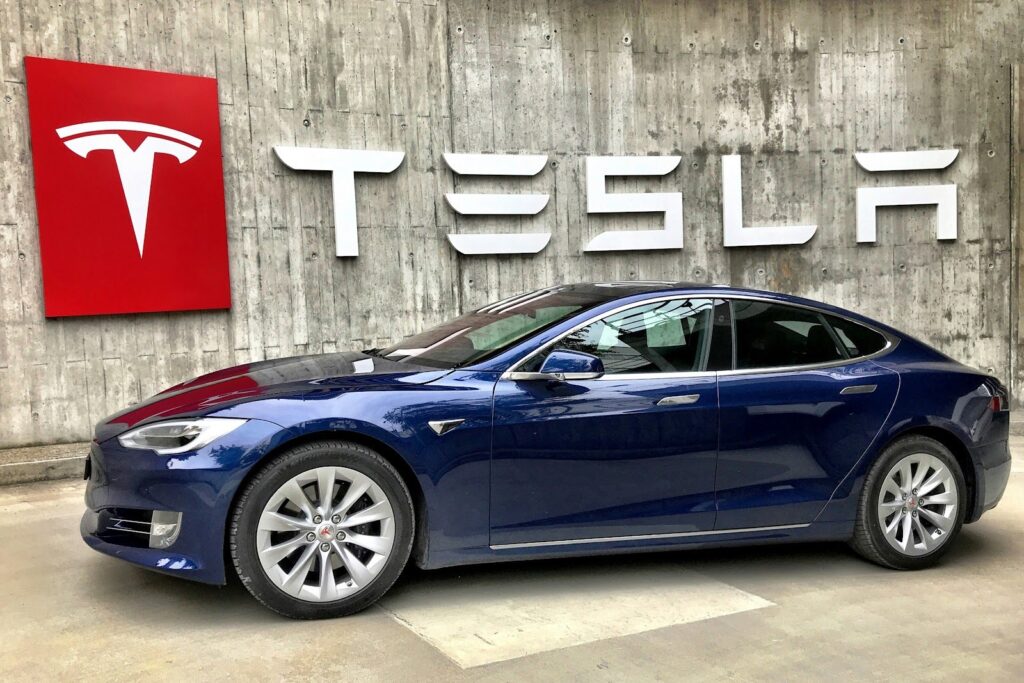
In a move that stunned Wall Street and Silicon Valley alike, Tesla has tabled a $1 trillion compensation package proposal for its CEO, Elon Musk, an unprecedented corporate bet on one of the most polarizing figures in business today. If approved, it would cement Musk as not only the highest-paid executive in history but also a symbol of the immense value, and risk that boards are willing to attach to visionary leadership.
The proposal, according to insiders, ties Musk’s potential earnings to Tesla’s long-term performance metrics, including market capitalization targets, production milestones, and innovation benchmarks. This structure mirrors Musk’s previous 2018 pay package, which was then valued at $55 billion and became one of the most controversial deals in corporate governance. That package triggered lawsuits, shareholder dissent, and debates about income inequality, yet Tesla’s valuation soared under Musk’s leadership, validating, at least partially, the audacity of the gamble.
The $1 trillion figure underscores how Tesla’s board envisions the company’s future. Tesla is no longer just a car manufacturer; it is an energy, robotics, and AI company with ambitions stretching into space via Musk’s other ventures. By tethering Musk’s fortune to Tesla’s trajectory, the board signals belief in his unique capacity to push boundaries.
Critics, however, argue that such an astronomical proposal sets a dangerous precedent. Shareholders and governance watchdogs worry about concentrated power, excessive rewards, and the risks of tying corporate health so tightly to one individual. They question whether Tesla’s success is truly Musk-dependent or if institutional strength can sustain the company in the long run.
Markets have responded with volatility. Tesla’s stock surged briefly on the news, fueled by optimism in Musk’s ability to deliver transformational innovation. But analysts caution that the proposal could backfire if perceived as corporate excess, particularly in a time when economic inequality is under sharp scrutiny.
At its core, the package is less about dollars and more about narrative. It frames Tesla as a company that thrives on boldness, risk, and charisma. It tells investors that Tesla will continue to operate not by conventional metrics, but by rewriting the rules of business.
Whether the $1 trillion proposal is approved or not, it has already achieved one thing: it has reminded the world that Tesla remains the stage for some of the most dramatic experiments in corporate governance. For Musk, it is another platform to test the limits of ambition. For Tesla, it is a declaration that the company’s future will not be incremental, it will be transformative.
AI Stock Caution: The Bubble Fear Emerges
BY BLAKSOLVENT

Artificial Intelligence has been the golden child of global markets for the past two years. From chipmakers riding the wave of demand for AI processors to software firms embedding AI into every conceivable product, investors poured billions into the sector, driving valuations to historic highs. But now, a new caution is sweeping across the financial world: the AI bubble may be forming, and cracks are beginning to show.
The concern stems from the pace of growth versus the fundamentals. While AI promises to revolutionize industries from healthcare to logistics, not every company branded as “AI-driven” has the capacity to deliver sustainable profits. Analysts point to soaring valuations of AI-linked stocks, many trading at multiples reminiscent of the dot-com bubble of the late 1990s. The fear is that hype, rather than revenue, is driving market behavior.
Recent market movements highlight the fragility. AI giants remain strong, but smaller firms have seen stock volatility as investors scrutinize earnings reports. Companies that overpromised and underdelivered face sharp corrections, and this trend is expected to accelerate as the market distinguishes between genuine innovation and speculative marketing.
For retail investors, AI stocks remain attractive but risky. Many are betting on “the next Nvidia” without fully grasping the technical or financial realities. For institutional players, diversification has become the keyword, they are hedging AI enthusiasm with investments in stable sectors like energy and consumer goods.
Policymakers, too, are watching closely. Regulators in both the U.S. and Europe are evaluating whether AI-driven hype poses systemic risks. Their concerns are twofold: financial instability if a bubble bursts, and broader societal risks if capital continues flooding speculative ventures while ignoring sustainability and accountability.
Still, AI remains undeniably transformative. Even cautious analysts admit that over the long term, AI’s integration into productivity, automation, and knowledge work could reshape economies. The challenge lies in navigating short-term volatility while not losing sight of long-term potential.
The rise of caution in AI stocks may not necessarily signal an imminent crash. Instead, it reflects a maturing market where investors are beginning to separate signal from noise. The next phase of the AI economy will belong not to those who shout the loudest, but to those who deliver results consistently.