Three Bold Moves into the Future of Tech, Media, and Marketing.
In three very different corners of the business world, a quiet revolution is underway. What connects a travel giant, a grocery chain, and a former fast-food company? A shared understanding that the future won’t wait,and only those bold enough to rethink everything will lead it.
Booking.com is no longer just booking hotels, it’s booking the future.
With generative AI moving from buzzword to backbone, the platform is reimagining the travel experience from spark to suitcase. Forget endless scrolling and clunky filters; the next phase is about seamless, intuitive travel planning, where AI acts as your personal trip curator. CEO Glenn Fogel isn’t just riding the AI wave, he’s steering it, positioning Booking.com at the forefront of a world where your next getaway begins with a single, smart prompt.
Fast Casual Concepts has left the kitchen and entered the boardroom,armed with data, creativity, and ambition.
Once rooted in the food business, FCCI has flipped its entire identity, diving headfirst into the high-stakes world of marketing. Through its new arm, GDS Lumina, the company is betting big on the power of storytelling, strategy, and digital transformation. It’s a gutsy move, but one that reflects the modern truth: brands that know how to communicate win. For FCCI, this isn’t just a pivot; it’s a total reinvention built for scale and relevance in a $600 billion industry.
Kroger, meanwhile, is proving that a supermarket can also be a media empire.
By consolidating its retail media and data analytics into one unified powerhouse, Kroger Precision Marketingthe grocery chain is turning shopper behavior into a strategic weapon for brands. Armed with one of the largest datasets in the retail world, Kroger isn’t just selling groceries anymore; it’s selling precision, speed, and insight. In the age of data, this is what market leadership looks like: smart, seamless, and radically customer-focused.
These three stories don’t just mark big changes within their companies, they signal a broader shift across every industry. The rules are being rewritten in real time, and the winners will be those who can fuse technology, insight, and bold strategic moves into something greater than the sum of their parts.
The future is arriving faster than ever. And if Booking.com, FCCI, and Kroger are any indication, it belongs to the reinventionists.
Booking.com Bets Big on AI: The Future of Travel Search Is Getting Smarter.
As artificial intelligence continues to weave its way into daily life, Booking.com is doubling down on the transformative power of generative AI to reshape the way people dream, search, and plan their next getaway.
During the company’s second-quarter earnings call on July 29, Glenn Fogel, CEO of Booking Holdings the parent company of Booking.com shared a bold vision of what’s next for the travel industry. At the heart of that vision? Large language models (LLMs) l, which are rapidly changing how people discover travel inspiration and make decisions.
“Millions of people are already turning to LLMs to ask questions, get recommendations, and do their research,” Fogel noted. “And one of the fastest-growing uses is for travel, figuring out where to go, what to do, and how to make it all happen.”
The company is eyeing these AI tools not just as customer-facing assistants, but also as a strategic lever to diversify its traffic sourcesan important move in an industry increasingly shaped by personalized digital experiences.
From spontaneous city breaks to bucket-list adventures, AI could soon become the co-pilot in every traveler’s journey, with Booking.com leading the charge in this next wave of tech-powered exploration.
Fast Casual Concepts Reinvents Itself: From Food to the Future of Marketing

Fast Casual Concepts, Inc. (OTC: FCCI) is making a bold leap from the kitchen to the cutting edge of marketing. In a strategic pivot that reflects the evolving demands of modern business, the company has exited the food industry and is now setting its sights firmly on the fast-growing world of marketing and brand strategy.
At the heart of this transformation is GDS Lumina, Inc., FCCI’s wholly owned subsidiary and the driving force behind its new direction. Positioned as a creative and data-savvy marketing engine, GDS Lumina will serve as the core of FCCI’s vertically integrated marketing business, delivering a full suite of solutions aimed at driving growth for clients across industries.
A New Vision, Powered by Purpose
“Marketing today isn’t just about selling, it’s about connection,” said George Anthanasiadis, CEO of Fast Casual Concepts. “It sits at the crossroads of creativity, consumer insight, and strategic execution. Businesses thrive when they can tell their story well, and with GDS Lumina, we’re building a company designed to help them do just that.”
The company’s leadership believes the pivot positions FCCI for significant value creation, both in terms of operational growth and shareholder potential. As global marketing spend continues to rise and digital transformation accelerates, FCCI sees this transition as a timely and high-upside opportunity.
Why the Shift?
While the food industry has long been a staple of FCCI’s past, the company recognized that its future lies in a more dynamic, scalable space. With GDS Lumina already laying the groundwork, FCCI aims to tap into a $600+ billion global marketing ecosystem leveraging everything from brand strategy and creative development to analytics and digital media planning.
Looking Ahead
This strategic reinvention isn’t just a name change or a new business line, it’s a full-scale reimagination of what the company can be. FCCI’s management is confident that this new chapter will not only expand its reach but also deliver long-term value for its shareholders.
Investor Note: As with any forward-looking business shift, FCCI reminds investors that future performance may vary due to known and unknown risks. Statements regarding plans and expectations are based on current assumptions and subject to change. For more details, refer to the company’s filings on OTC Markets.
In short: Fast Casual Concepts has hung up its apron and picked up a megaphoneready to amplify brands, tell better stories, and shape the future of marketing with GDS Lumina at its core.
Kroger Launches Unified Precision Marketing Hub to Power Data-Driven Brand Growth
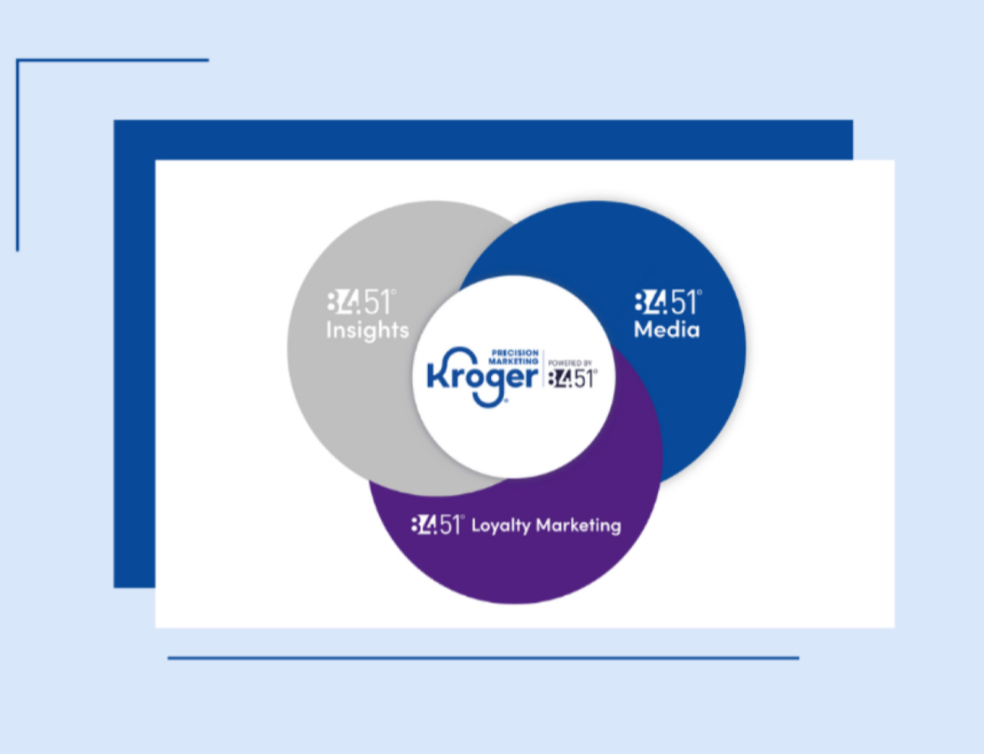
In a bold move to redefine how brands connect with consumers in the grocery aisle and beyond, Kroger is consolidating its retail media, data science, and customer insights into a newly streamlined powerhouse: Kroger Precision Marketing (KPM). This strategic overhaul is designed to help consumer brands move faster, think smarter, and grow bigger using Kroger’s treasure trove of shopper data.
As brands demand quicker insights, flexible media execution, and deeper growth strategies powered by data science, Kroger is answering with a one-stop solution. The reimagined KPM will now serve as a centralized hub, offering everything from promotions and assortment planning to media activation and performance optimization all under a single, integrated team.
“This isn’t just a corporate restructure, it’s the removal of barriers,” said Milen Mahadevan, President and CEO of Kroger’s analytics arm, 84:51. “We’re eliminating the friction between functions so we can move at the speed of our clients.”
Data-Driven Leadership for a Data-First Era
Spearheading the revamped division is Christine Foster, newly appointed SVP of Strategy and Operations, who emphasized the rising expectations placed on marketers today.
“Media performance isn’t enough anymore,” Foster said. “Today’s marketers are on the hook for total brand growth. That’s exactly what this structure is designed for helping brands turn precision purchase data into action across their entire organization.”
Supporting this vision are Nick Hamilton, SVP of Commercial Technology, who will lead tech innovation, and newly promoted VPs Jenny Holleran and Sam Walston, who will head up integrated client teams organized by industry vertical.
Part of a Bigger Digital Evolution
The unification of KPM comes on the heels of Kroger’s broader digital transformation. Earlier this year, the grocery giant created a dedicated e-commerce unit and elevated Yael Cosset to Executive VP and Chief Digital Officer. The goal: making digital sales not just scalable, but profitable. Kroger logged a hefty $13 billion in e-commerce sales in fiscal 2024, with digital revenue climbing 15% year over year.
Still, the company is navigating financial pressures announcing plans to shutter 60 underperforming stores after its proposed merger with Albertsons fell apart. Interim CEO Ron Sargent recently told investors that cost-cutting initiatives are underway across the board.
Retail Media’s Growing Market Share
Despite a recent dip in CPG ad spending, Kroger’s retail media business remains strong. CFO David Kennerly said in June that the division continues to grow “at a healthy rate”a reflection of a broader trend. Retail media is rapidly becoming a critical revenue stream for major retailers, with Walmart’s advertising arm growing 31% year over year in the U.S. during its latest quarter.
A 2024 report by Grocery Doppio projected U.S. grocery retail media networks to be worth $8.5 billion by year’s end, with the number of such networks expected to double within the next 18 months.
With Kroger Precision Marketing now refocused and recharged, the grocer is positioning itself not just as a supermarket but as a media and data powerhouse in an era where customer attention is the most valuable product on the shelf.